

You’d hardly call a director particularly perceptive for highlighting Lady Macbeth as the true power behind the throne, scheming and cajoling her husband’s bloody ascent to the crown. In her audacious, provocative and thoroughly compelling Macbeth (an undoing), however, writer/director Zinnie Harris goes much, much further – so far, in fact, that a couple of her characters seem confused as to whether Lady Macbeth is herself the King.
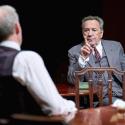
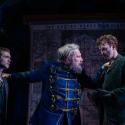
Harris modestly subtitles her rethink "after Shakespeare" – it’s the latest in her ongoing collection of rethinks of classic texts that have included This Restless House (after The Oresteia by Aeschylus) and Rhinoceros (after Ionesco) – and things begin modestly enough, at least before the interval. Macbeth (a bristlingly muscular but vulnerable Adam Best) and his wife discuss killing a king (Mark Mackinnon as a weary but imperious Duncan), and hold a party to celebrate Macbeth’s new job, where he’s sure to get an unwelcome visitor. After the interval, though, things really kick off, with plot shifts that cast an entirely new light on familiar events, a King who himself plummets into mental instability, minor characters now taking on major roles, and plenty more besides.
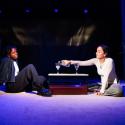
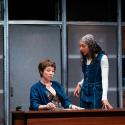
In Harris’s fascinating response to Shakespeare’s original, it’s Lady Macbeth who holds things together as her husband falls apart, defying rebellious lords and sorting endless paperwork in what seems like a serious attempt to govern Scotland. And Harris gets a gripping performance from the magnificent Nicole Cooper in that central role, driven and ruthless, certainly, but fragile, too, in her troubled family history.
And it would be all too easy to stop there, transforming Shakespeare’s original into the story of a strong but flawed woman and her perhaps inevitable fall from power. Harris does that, but so much more, too – not least in drawing witty attention to her own interventions in fourth wall-busting asides and linguistic anachronisms, or characters’ protestations that this isn’t the way the play was meant to be going. She even begins daringly with eldest weird sister Carlin (a wonderfully world-weary, cynical Liz Kettle, no relation) berating the audience as "misery seekers", out for nothing more than blood, despair and spectacle.
If that all sounds a touch too meta, what’s most impressive is the ease with which Harris locks her levels of tampering together so that they all stride forward confidently with the same intentions. Her language sometimes slides imperceptibly (or almost) away from Shakespeare, and sometimes stands in intentionally incongruous contrast ("Fucking Cawdor?" is Best’s incredulous response to news of his new thanehood, for example). And her meta-theatrical playfulness feels like just an extension of that, almost teasing us to consider her legitimately different outcomes and interpretations of the play’s events.
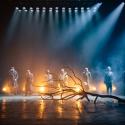
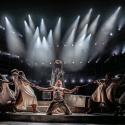
Designer Tom Piper’s steel-girder set and sound designer Pippa Murphy’s theatre-shaking thrums provide a strikingly austere setting for Harris’s vision, as if to expose it in all its rugged, flawed detail. And at three hours, and with a few tweaks that perhaps fail to convince quite as much as others, Macbeth (an undoing) is not without its minor issues. But as the play accelerates towards its increasingly harrowing yet almost inevitable conclusion, it quickly sweeps away any lingering doubts.
- Macbeth (an undoing) continues at Edinburgh’s Lyceum Theatre until Saturday 25 February
- More theatre reviews on theartsdesk



Add comment