English Touring Opera opened its spring season with Handel's Giulio Cesare – not a new production, but in a new guise. Typically for Baroque opera, the version of the work premiered in 1724 was very long. ETO previously took up the challenge by staging it in full over two nights. They then cut it down to a more manageable three hours (including interval), but that tour was interrupted by Covid, so now it's back for a full run.
Most of Handel's recitative is gone (thankfully), and the distribution of arias among the lead roles seems a little arbitrary, but a good sense of pace is retained. For the chorus, the company is engaging local choirs at each of its venues, here the Hackney Empire Community Choir. In an impressive coup de théâtre, the choir formed part of the audience, sitting at the ends of the balcony. But it proved to be a token gesture, as they only sang in two short passages, which could easily have been omitted.
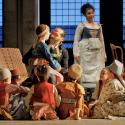
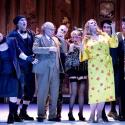
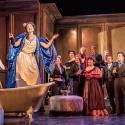
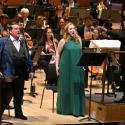
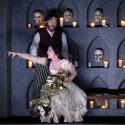
As the opera opens, Caesar (Francis Gush) has defeated Pompey, whom he has pursued to Egypt. There, Cleopatra (Susanna Hurrell) and her brother Tolomeo (Alexander Chance) are locked in a war of succession. Tolomeo murders Pompey, and sends Caesar his head, in an unsuccessful effort to garner his support. A plot strand develops with Tolomeo and his ally Achilla (Edward Hawkins) vying for the hand of Pompey’s widow, Cornelia (Carolyn Dobbin), and another with Pompey’s son, Sesto (Margo Arsace, pictured below, right with Carolyn Dobbin) seeking revenge on both of them.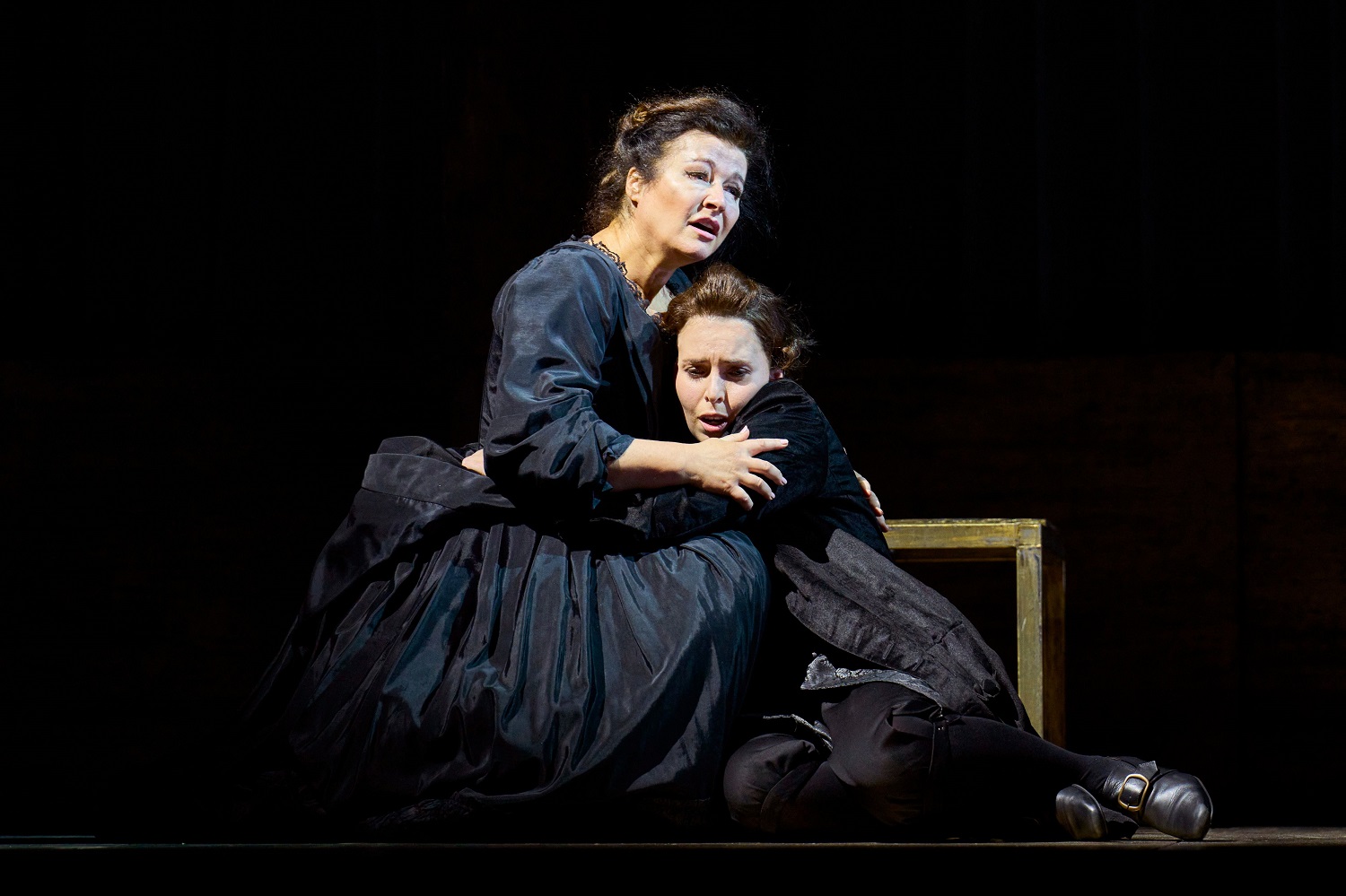 Meanwhile, Cleopatra seduces Ceasar, initially disguised as a commoner, Lydia (librettist Nicola Francesco Haym doesn’t make much of this artifice, nor do the costumes here). The final act opens with the announcement that Caesar has died in a sea battle, which Tolomeo takes as a sign of his ascendency, and he imprisons Cleopatra. But it is fake news – Caesar swam to shore and survived, and the story wraps up with him rescuing Cleopatra and the death of all her foes.
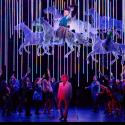
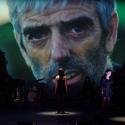
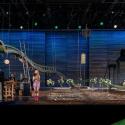
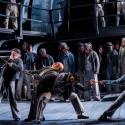
Director James Conway and designer Cordelia Chisholm take a non-committal approach to the Egyptian setting. The set is made up three tall walls in a muted patina gold. This proves an ideal medium for the lighting effects (designer Joe Kirk), though the changes are of mood rather than setting. Costumes suggest the London of Handel’s era, drab but coherent. Conway employs modest props, notably Pompey’s head, which is made of glass and is later shown to hold his ashes. In one climactic aria these are poured onto the stage and billow into the auditorium.
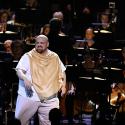
The cast is relatively small for Handel, but it requires careful casting for the three castrato roles. Clearly, the work was written as a vehicle for a virtuoso singer in the title role, which is filled with intricate runs and complex ornaments. Francis Gush tackles all this bravely. He can cope with the tessitura, and his tone is elegant. But the sheer complexity of the music, especially in the opening aria, sometimes proves too much. Fortunately, the role also includes much lyrical music, and there he excels.
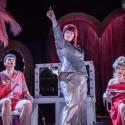
The best singing in this cast is from Susanna Hurrell and Alexander Chance as the siblings Cleopatra and Tolomeo (pictured below). Hurrell has a bright, rich tone and nimble articulation – she’s the star of the show. Tolomeo is presented as camp and over the top, and Alexander Chance is able to present the role as a welcome helping of comedy in the otherwise dour setting. His countertenor has a slightly covered quality that sets him apart. So too does his heavy legato, no doubt played up for the role.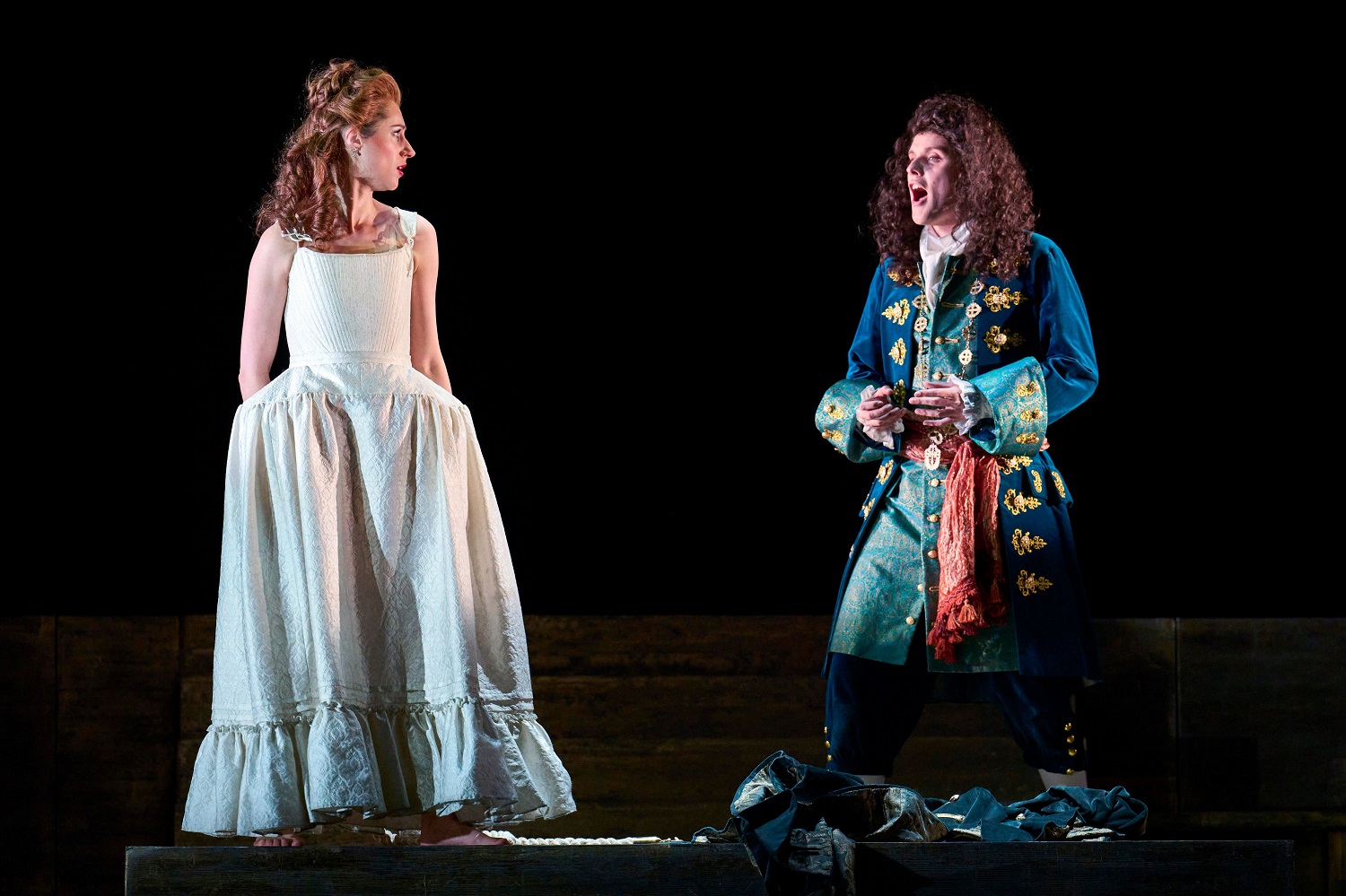 The other roles are delivered serviceably, but without any standout performances. Carolyn Dobbin, as Cornelia, has a mature voice, well projected but lacking warmth. Margo Arsane has the unenviable task of presenting the only trouser role in the production, as Sesto. Her voice is young and agile, but she struggles to find her place in a production where all the other men are played by men. Edward Hawkins is soft-toned as Achilla, Tolomeo’s lecherous accomplice, a role that surely calls for a darker and more menacing bass.
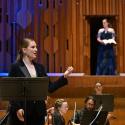
Conductor Sergey Rybin sets off the Overture at a sprightly pace, which he maintains for Caesar’s first, punishingly complex aria. But much of the later music is slower and more sensitively phrased. The Old Street Band is a period instrument pickup orchestra, their string sound warm, their rhythms nimble, and their accompaniments discreet. One aria is accompanied by a florid horn obbligato, which proved challenging, but the many woodwind solos were more successful.
Over the next few months, ETO will be touring the country with this production, along with Donizetti’s Lucrezia Borgia and Rossini’s Il Viaggio a Reims. As is now customary, all three will be seen first at Hackney, where the company is always guaranteed a warm reception, playing, as here, to an enthusiastic capacity audience.