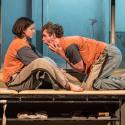
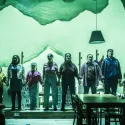
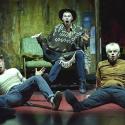
What a journey Jamie Eastlake’s play has had: his stage adaptation (which he also directs) of Jonathan Tulloch’s book The Season Ticket began life as a three-hander in 2022, when it was performed in a social club on North Tyneside. It has had various iterations since and now – with a greatly enlarged cast and multiple storylines – it has a short West End run.The show centres on “two reprobates from Gateshead", the titular Gerry (Dean Logan) and his best mate Sewell (Jack Robertson), two unemployed young men always on the lookout for a money-making opportunity (and comically, in Sewell’s case, his next meal).
The narrative drive of the show is their ambition to get enough money together to buy season tickets for their beloved Newcastle United Football Club, and the many obstacles that life throws in their way.
Threaded through it too, are scenes from Gerry’s troubled home life, which mirrors the turbulent events in the club’s boardroom with an unpopular owner and a foreign takeover. (The book was written in 2000, but the play’s themes are timeless.
So we meet Gerry’s single-mum sister Claire (Chelsea Halfpenny), whose singing skills may get her a passage away from the gloom, his put-upon mum (Katherine Dow Blyton), his bullying dad (Bill Fellows) and his other sister, Bridget (Erin Mullen), who is living on the streets.
It’s easy to dismiss this as “It’s grim up North” but it does feel like a ticklist: poverty, deprivation, post-industrial collapse in the bigger picture and, domestically, fractious families, marital violence and sexual abuse. It’s a lot to pack in, but the creators endeavour to characterise all of those elements, adding song and dance numbers and even a charming puppet dog owned by the scary Brabin (Becky Claybourn), who threatens Gerry and Sewell.
Much of the evening is a charming caper and there are some solid comic moments – made even funnier if you know the Tyneside demotic or follow football – and the dance numbers give the evening some much needed energy. But the show as a whole is messy and the many elements confuse rather than paint a cohesive picture. It is, however, performed with a lot of heart.