

Berlioz's intended companion for his Symphonie fantastique was Lélio, or the Return to Life - an assemblage of mostly magical earlier pieces strung together with an autobiographical narration. That's a rarity these days, but so is an all-Berlioz programme with a more familiar work to preface the iconoclastic Symphonie, and we should be grateful to Simon Rattle with a much-expanded Orchestra of the Age of Enlightenment for such an imaginative choice.
The concept, it seems, was for a gauzy, dreamy take on a less fantastical slice of autobiography, Harold in Italy - which despite its Byronic nod, is much more about Hector in the Abruzzi during his time at the French Academy in Rome - followed by a lurid, no-hold bars interpretation of Berlioz's most celebrated work.
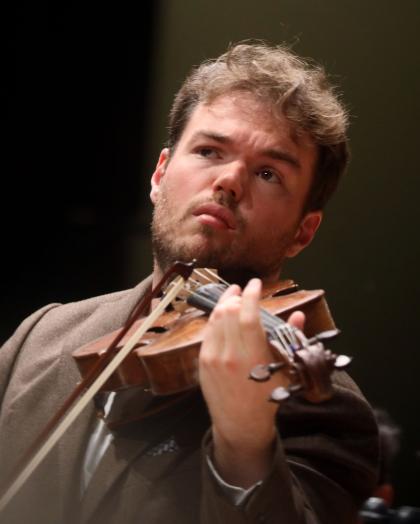
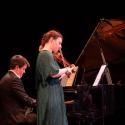
Harold just about came off on its own very daring terms. It seems Rattle and the OAE were fine-tuning to the high sensitivity of the marvellous viola soloist, Timothy Ridout (pictured right). He is merely a figure in a landscape who disappears some way into the finale. Ridout and Rattle seem to have taken a leaf out of the dramatic presentation of Antoine Tamestit, who joined the Orchestre Révolutionnaire et Romantique and John Eliot Gardiner in a Prom walkabout around the entire orchestra. It worked because of Tamestit's extrovert personality, and the following-through of the idea. Here, not so much; once Ridout had wandered in to join his fellow strings, he eventually came to the usual place at the front of the stage and stayed there until his premature exit.
His sound is more delicate, certainly more introverted than Tamestit's - more Hamlet than robust Harold, taking up his song in the first movement as a soulful Orpheus. Rattle and his players adjusted beautifully, even if it sometimes felt as if there were a gauze between us and them. The Pilgrims' Procession with its doleful tolling bell, the country merrymaking, were fleet and discreet. Even the Brigands who cause Harold to leave in disgust, having tried his inspirations out on them to no avail, only to be heard with other solo strings - here offstage - back with the religious folk, weren't as rough and rude as they can be. A fascinating interpretation, then, if not a definitive one. It got an instant standing ovation, perhaps deserved, but the viola isn't the star and Dubliners are rather ready to rise to their feet at any opportunity.
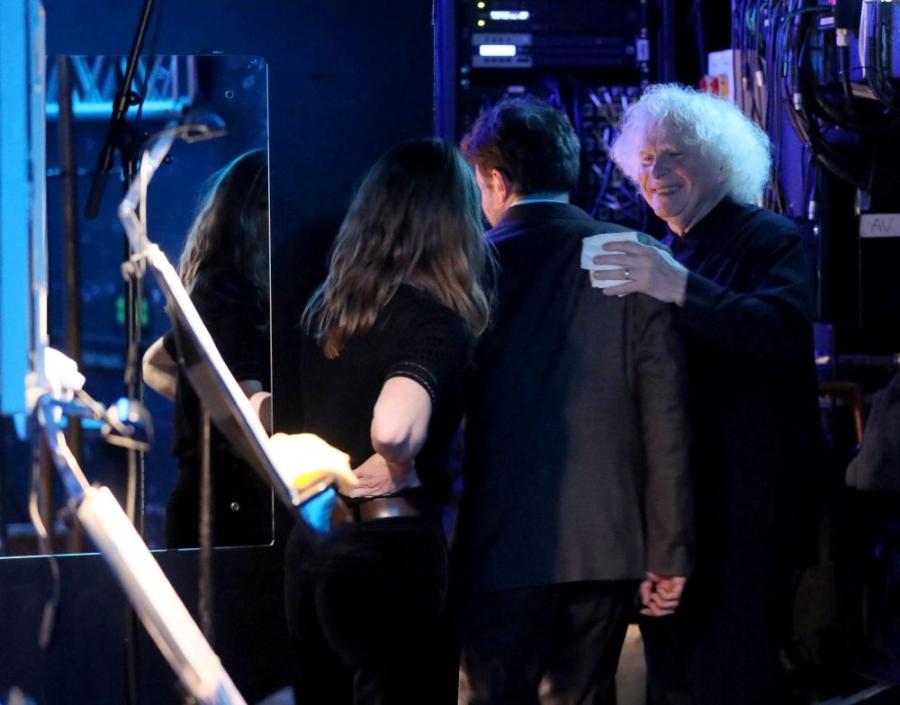
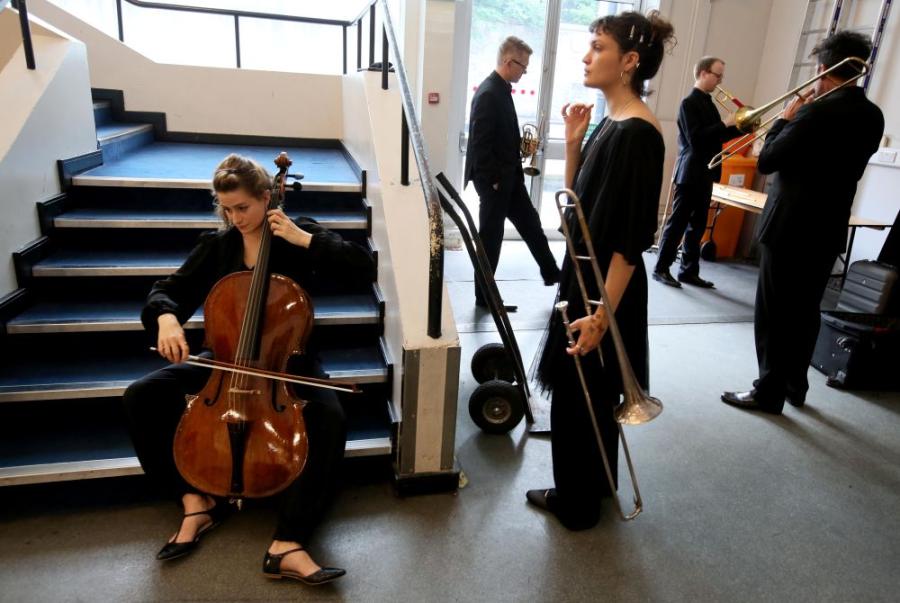
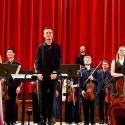
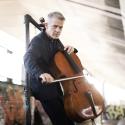
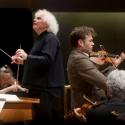
If I wasn't happy to join one for this performance of the Symphonie fantastique, that had nothing to do with the fabulous playing of the expanded orchestra. You might not have guessed the strings were period-instruments, but there were very distinctive sounds from the woodwind, above all the bassoons, and, especially, the brass, with low growling beneath the March to the Scaffold - the most successful movement in this interpretation, repeat included. Two ophicleides - forerunners of the tuba - were listed for the coarse representation of the "Dies Irae" at the Witches' Sabbath; I could only see one, but the result was impressive (some of the brass players and a cellist pictured below).
I've often found Rattle as a conductor more interested in micromanagement than sustaining the long term argument. That was true of the "Passions" in the opening movement. Odd tempo relations - the point where the oboe starts to lead us to a big climax lost tension - and over-punchy accents made this feel all the more a work about effect rather than sustained argument (it shouldn't be).
The waltz lacked initial charm, the "Scene in the Fields" after an opening call from cor anglais to a too-distant, bubbly oboe, which works best placed above, not offstage, was too choppy. The serenity gets disturbed, it's true, but not in as mannered a way as this. Yet the thunder of the four timpanists in reply to the now-lonely cor anglais player was consummate, all the special effects in the "Dream of a Sabbath Night" perfectly placed. The wackier the effects, the more successful the performance. But it wasn't one to celebrate Berlioz's long-limbed melodies.





Add comment