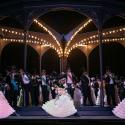
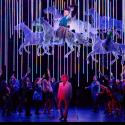
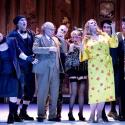
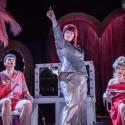
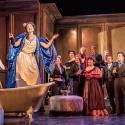
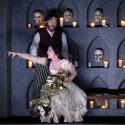
One question dominates any staging of Dialogues des Carmélites. How will the production team deal with the cruelty and tragedy in the 12th and last scene when all of the nuns, one by one, go through with their vow of martyrdom and calmly proceed to the guillotine, singing the Salve Regina? No spoilers here, but this new production at Guildhall School (a very different one from that staged in 2011) sticks to a tone which is calm, and humane. For that considered sense of unity, this is a production well worth seeing.
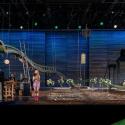
Scenographer takis, director Martin Lloyd-Evans, and lighting designer Robbie Butler have made a production which concentrates the audience’s attention on the characters and on the text. The scenery is minimal and symbolic, it never gets in the way, and there is much clever and allusive use of hanging stage flats. (These do have the habit of occasionally swinging gently like Foucault’s pendulum, but that – I guess – is their fate.)
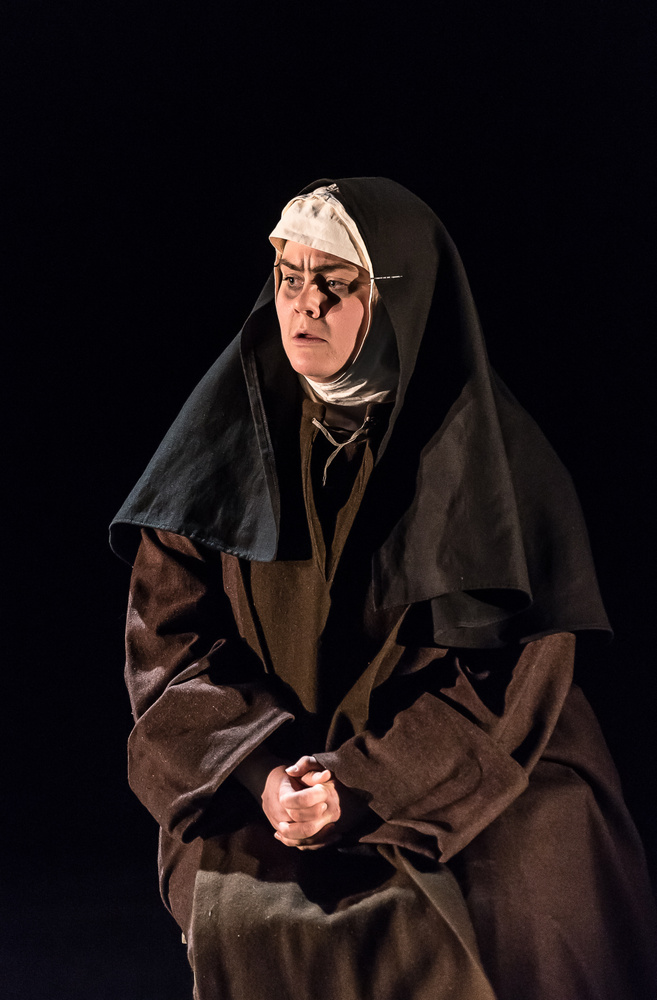 Poulenc explained one of his priorities in the composition in the very early stages of the composition of Dialogues des Carmélites. In a letter to Pierre Bernac as he was getting going very rapidly with the project in 1953: he referred to “a very clear orchestration to let the text pass through”. So the tough challenge for non-native speaker singers at the beginning of their singing careers is to bring out the clarity and intent in the libretto which Poulenc extracted from a play by Georges Bernanos (1888-1948). Recordings and recent productions – like the Brussels one with Véronique Gens in the role of the second Prioress Madame Lidoine – set the bar high. In this Guildhall production the singers in the first of two casts who did best were Claire Lees as Soeur Constance (delightful, even fitting in a bit of Whoopi Goldberg Sister Act dancing), Chloe Latchmore as Mère Marie and the tenors Eduard Mas Bacardit as the Chevalier and Daniel Mullaney as the Aumônier (they will reverse roles in the second cast). Blanche (Lucy Anderson), the old Prioress (Georgia Bishop, pictured above) and the second Prioress (Michelle Alexander) all gave affecting and vocally secure performances, but I wanted more of Bernanos’ textual subtlety to shine through.
Conductor Dominic Wheeler’s sense of pace and balance throughout and the orchestral standard was very high indeed. The strings led by Enyuan Khong played with clarity. Flutes, clarinets and bassoons all had a great night. The writing for the horns is merciless and there were very occasional, forgivable mishaps. Tuba player Anna Carter underpinned a wonderful moment in Act II with delicacy and poise. Carmélites is a tricky work but its uniquely subtle strengths shone through last night.