When it was last staged at the Royal Opera 34 years ago, 33-year-old Bellini's swansong felt like a baggy monster barely justified by some brilliant singing (chiefly from June Anderson and Dmitri Hvorostovsky). Lisette Oropesa now adds remarkable acting to the star vehicle, but even Richard Jones can't do that much with an unwieldy drama, despite his usual signature elements and symmetries. The verdict remains that theatrically one-dimensional bel canto museum pieces like this are best done in concert.
Bellini did pull the drama off, with a concise series of dramatic confrontations, in his greatest opera, Norma; here the plot gets off to a slow start, most of an over-long first act devoted to setting up the pretext for beleaguered heroine Elvira's madness. She's lucky at first; in improbable alliances between Roundheads and Cavaliers - here just Puritans and Royalists, the distinction not always clear - her father has decided she can marry putative enemy Arturo. But when Arturo realises that an imprisoned noblewoman is Charles the First's widow Henrietta Maria, he helps her escape, disguised by Elvira's veil. Cue mental collapse which will serve for another act and a half.
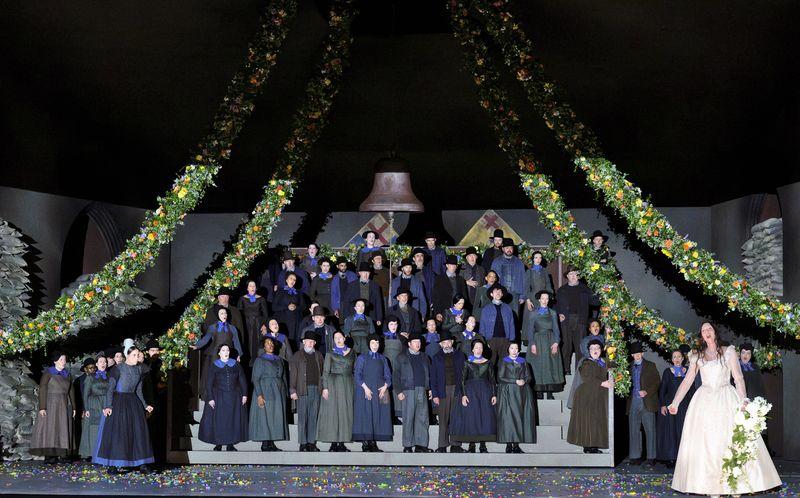
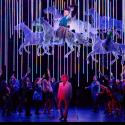
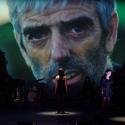
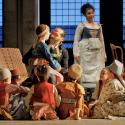
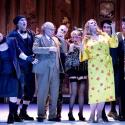
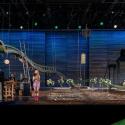
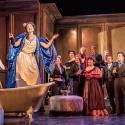
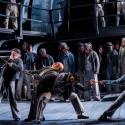
Jones collaborates effectively as always with movement director Sarah Fahie to get a very prominent chorus onstage and off, usually in blocks, and actors help with the conflict scenes, though not without a Pythonesque touch or two. Women's confinement is represented in Hyemi Shin's typically austere but effective designs by a chapel room, at first with a portrait of Arturo (used by Jones later in typical style) where Elvira (Lisette Oropesa) immures herself against unwanted marriage to nasty-from-the-start Sir Riccardo Forth (Andrzej Filończyk), only to have her kind uncle Sir Giorgio Valton (Ildebrando D'Arcangelo) tell her that dad is letting her wed her true love. Later it becomes a prison cell where Enrichetta is pestered by importunate male Puritans and later released by Arturo and his fellow Royalists.
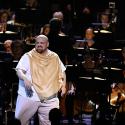
Marcela Rahal as the Queen manages to make a strong mezzo impression with very little material, which is probably as well since another fully-fledged aria or duet at that stage would probably sink the drama, such as it is, completely. The first memorable number is some 45 minutes in, Elvira's too-good-to-be-true bridal Polonaise, Oropesa projects charismatic instability and full upper-reach phrases, the fastish vibrato in the voice suitable for the nervous Elvira. The men can only present their vocal calibre at first: fine in all three cases, the high tenor Demuro who will have to pull off a top F in Act Three, convincingly Italianate baritone Filończyk and now-veteran bass D'Arcangelo. Of these, only Filonczyk has much of an opportunity (or ability) to characterise, and Jones gives him brute force in focused spades (there's even a suggestion that he may rape Elvira in her room once he's let Arturo get away at the end of Act One).
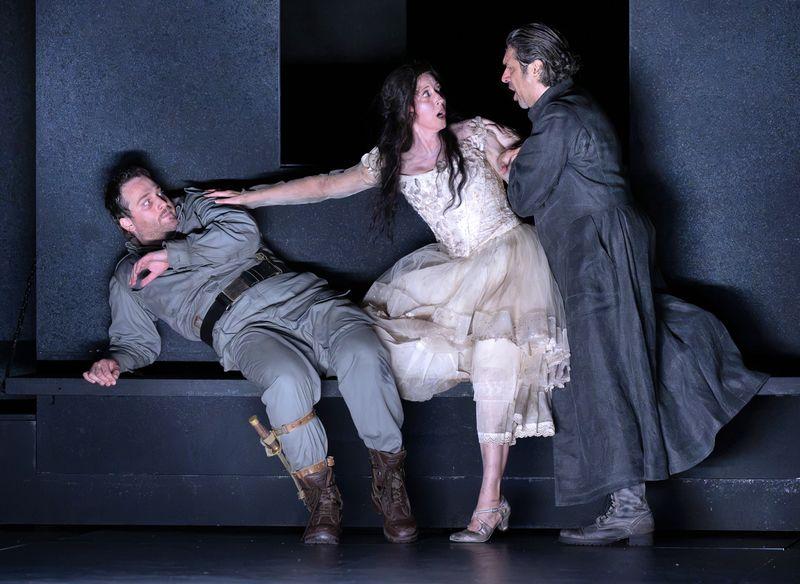
The second act provides the justification for the opera: Elvira's limpid mad scene with its great cantilena, an opportunity for the central character to articulate her feelings of love and desertion. Oropesa didn't quite move me to tears here, but she presses all the right buttons and the dramatic gestures feel real (including one spectacular flop out of the window of the chapel, now with its back wall facing us). Jones lets the focus stay on her, the two men to the side, and Adam Silverman's lighting offers a dramatic switch to full moon.
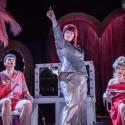
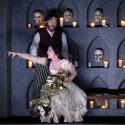
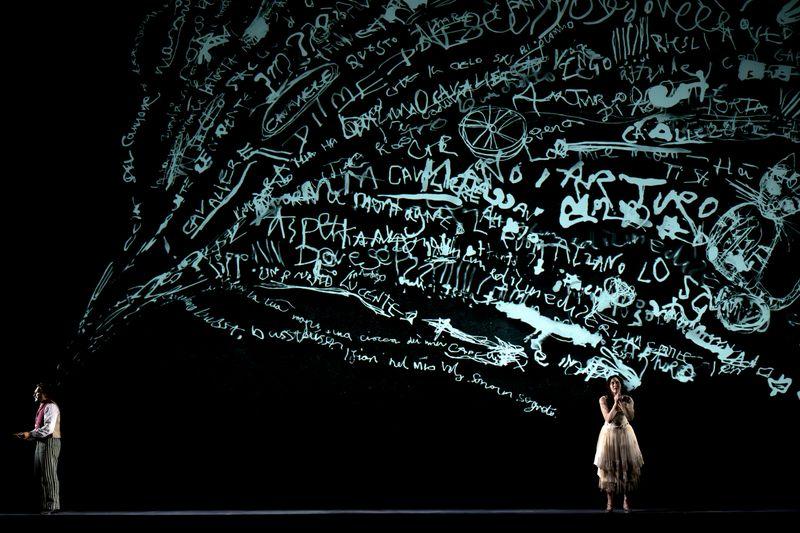
In Act Three the chapel is the Valton vault, with lit skulls, an appropriate venue for the lovers' uneasy reunion; though the top F is hardly lovely, Demuro does it, and other high notes show us his usefulness in the role. Bellini's happy end is ridiculously perfunctory, the kind of thing Brecht and Weill mocked in the messenger-reprieve finale of The Threepenny Opera, so I don't blame Jones as he goes for a sensationalist curtain (no spoilers). His echoes and revisits are always thoughtful, sometimes powerful, as when the elegant writing between scenes and acts goes off the rails with Elvira's mad scrawls to the absent Arturo (pictured below). The boos last night were totally unwarranted.
The chorus deliver well throughout, vibrant in condemnation of the presumed traitor, but Riccardo Frizza's handling of a score which only goes outside the realm of conventional orchestration in a couple of solos (horn, trumpet onstage - very fine) doesn't have the supreme support and space we witnessed from Maurizio Benini in the Irish National Opera Norma. Time for a Royal Opera revival of that classical masterpiece, now that there are sopranos around able to sing it.