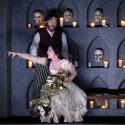
One completely joyous moment has eclipsed all my other impressions of this Glyndebourne Entführung revival. By the end of Act 1 of the opera, the character of Blonde has been talked about – and in this production, briefly seen – but not yet heard. We then have one of Mozart’s brilliant reveals. Her first vocal entry is the aria “Durch Zärtlichkeit und Schmeicheln” (with tenderness and flattery) which opens Act 2. For me, Julie Roset delivered a moment of utter magic with a glorious vocal presence and coloratura based on extraordinary musicianship. Having heard and reviewed her brilliantly selected and delivered song album with pianist Susan Manoff, M’a Dit Amour (Alfa, 2026) I was hoping she would not just make her mark, but also electrify the stage. She did both.
Her mesmerisingly strong and completely irresistible portrayal of the sparky character of Blonde (“I am an Englishwoman, born free; and I’ll defy anyone who tries to force me to do anything!”) is going to get stronger during the run – and thereafter – and that is an exciting prospect. I have memories of the great Lillian Watson who used to completely own the part in the old house at Glyndebourne throughout the 1980s (the 1980 production is preserved on video), and one can only hope that Roset’s Sussex reign will prove equally long-lasting and defining.
That affinity and history with Mozart is such a strong part of what Glyndebourne is about. It was a Mozart house before it was anything else, and in all of the period since the early 1950s there has only ever been one slightly disorienting summer (2018) without any Mozart.
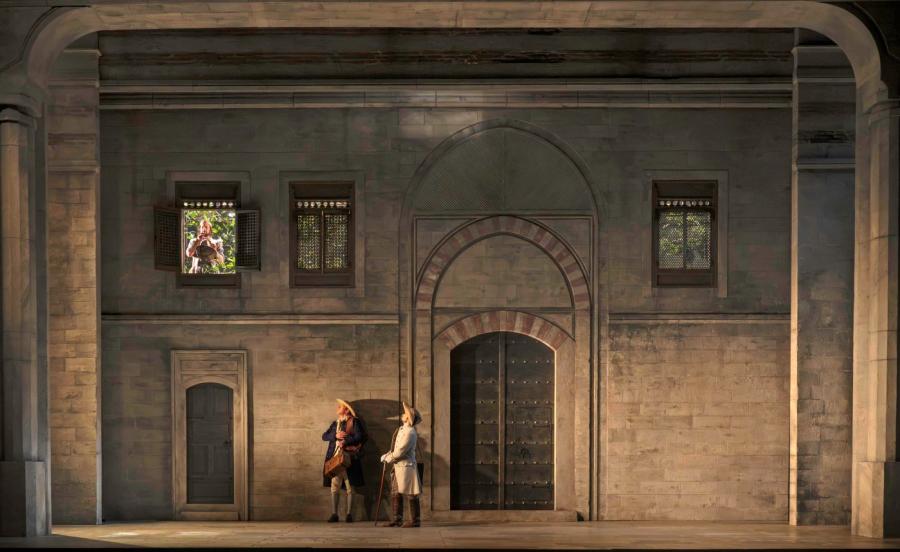
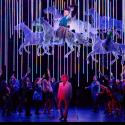
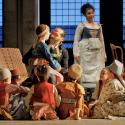
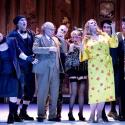
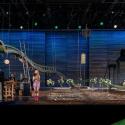
The 2015 David McVicar production of Entführung respects that deep tradition and above all values the work. It reinforces the order, geometry and architecture and balance of the piece. Vicki Mortimer’s design, placing the action firmly in the eighteenth century has a really strong visual appeal and it is stunningly well lit by Paule Constable (photo above © Glyndebourne Productions Ltd by Bill Knight). I was puzzled, incidentally, that the creative team were not present to take a bow on opening night. The involvement of an excellent group of primary school children bring both a heart-warming charm and a note of optimism to the show.
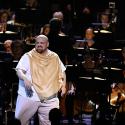
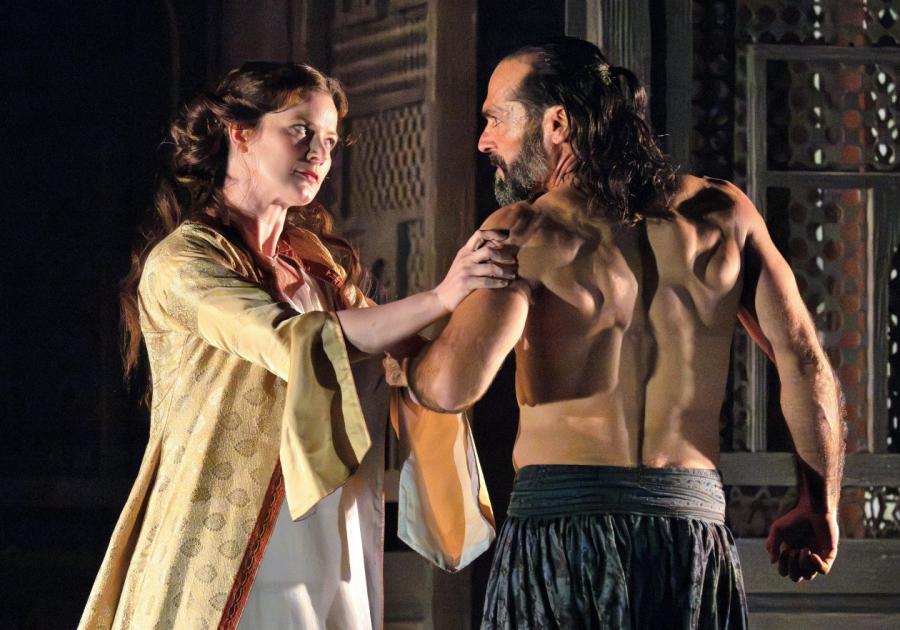
In addition to Roset, there are other fine performances, virtually all of the cast new to the production, and with a significant American cohort. I enjoyed the vocal poise and fine musicianship of Liv Redpath as Konstanze, and her spoken German had both empathy and clarity. The Osmin of Michael Mofidian, a singer originally from Glasgow, was a wide-ranging, fascinating and convincing portrayal, but I missed the deep resonance of a true basso profundo. Thomas Cilluffo in the dramatically tricky role of Pedrillo appeared to have a moment where comic improvisation was required when a door failed to open. He will have better nights. Franck Saurel in the speaking role of Pasha Selim is the only principal who returns from the original 2015 production. I was riveted by his heavily French-accented German, but if I am honest, much more of a talking point around me was his improbably worked upper body (picture below of Saurel below with Liv Redpath as Konstanze by Bill Knight).
Others are bound to differ, but I found Evan Rogister’s management of tempi, with the frequent application of the brake as an expressive tool quite wearing, and also increasing the likelihood of a discrepancy between pit and stage. I think of the gold standard of finding/ holding/loving a tempo as being set by René Jacobs in this repertoire, and Jacobs makes far more use of varying instrumental colour from the period, and playing with contrasting weight of sound as a way to create contrast and character (as in his 2015 recording of Entführung), rather than subverting the underlying pulse. Hopefully this will also improve during the run.
That reservation aside, it was good to be reminded that Mozart at Glyndebourne on a glorious summer day will always be one of the ultimate bucket-list experiences. And to have witnessed Julie Roset on her debut at the house – and completely, defiantly, splendidly in her element – was an unforgettable treat.