Buxton International Festival, long known for its explorations of some of the less well-known parts of the opera repertoire, this year features two of the best-loved, alongside its other fare.
Its first two nights saw a new production of La Traviata (jointly with Norwich Theatre, to which it will go after the Derbyshire spa town’s summer festival is over), and a borrowed one from Scottish Opera and Opera Holland Park of The Merry Widow (seen last year both north of the border and in London).
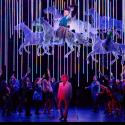
The Verdi is a staging of which no good producing house would need to feel ashamed. BIF has sometimes had to trim its operatic sails to the financial winds in the past, but there’s no sign of that on this occasion. James Hurley, who masterfully directed Puccini’s La rondine for Opera North in 2023, has followed some principles similar to those he applied then (the stories have aspects in common). The setting is dated later than the one that the original libretto – based on Dumas’ The Lady of the Camellias – envisaged, but not too late for its clash of emergent and respectable moralities to have its critical force. And he’s brought a couple of dancers in, to liven up both the opening scene and Flora’s party (though the BIF chorus is game for some hoofing, too: Corina Würsch is assistant director and in charge of movement). The costumes and frocks (Zahra Mansouri) are in late 19th century mode and very glamorous.
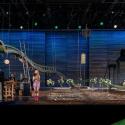
Elliott Squire’s set is an intriguing conceit, based on the appearance of a jewel box known to have belonged to Marie Duplessis, the woman behind the Dumas novel. It’s magnified to giant size and opens out in different ways to reveal half-enclosed spaces that evoke the settings of the opera – Violetta’s Parisian apartment, the country retreat she escapes to with Alfredo, the location for Flora’s party, and the final bedroom scene, while using it with the remainder of the stage can also symbolically indicate a contrast of intimate and public (particularly as Hurley stages Act Three) which is a part of the narrative.
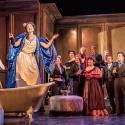
There’s a play of ideas of light and darkness, with Violetta repeatedly recoiling from bright light, and the whole tale beginning with men in black appearing from shadows during the Prelude to Act One (evoking, I imagine, the real-life auction of Marie Duplessis’ property after her death – not a new idea, but still a good one). One theme I didn’t quite take to was the bathtub into which drinks are repeatedly poured in that scene, and which becomes a kind of podium for Violetta to sing from. A symbol of lavish excess, perhaps? It’s used for the dancers to cavort in and re-appears for Alfredo to emerge from at the outset of Act Two (in the country hideaway), which gives it some justification, I suppose.
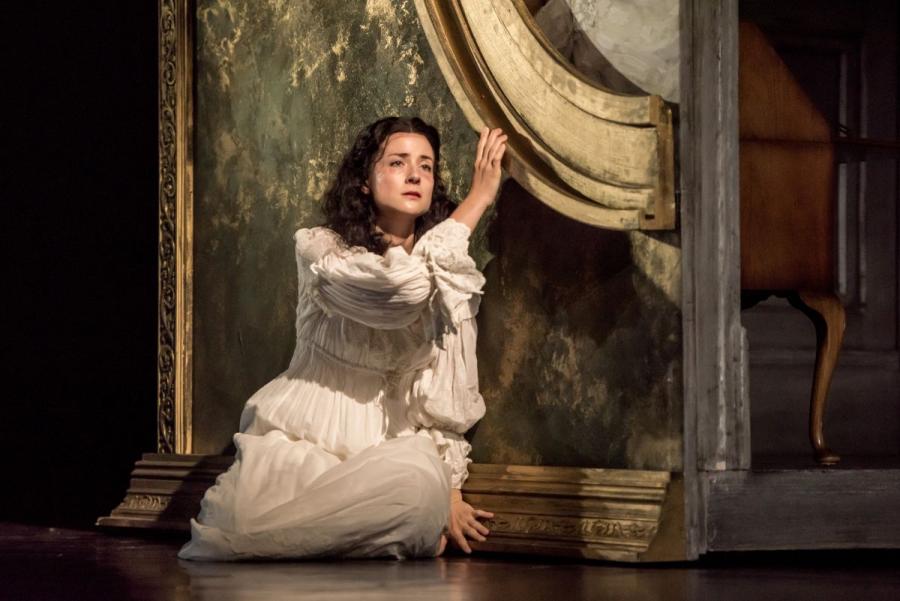
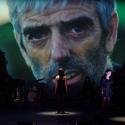
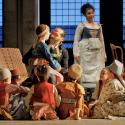
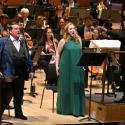
BIF artistic director Adrian Kelly conducts the festival orchestra and a gifted team of soloists, with strong support from the festival chorus. For his Violetta he has Alexandra Nowakowski, who, unlike some other singers of the role, is young and slender enough to look like a 24-year-old with consumption. Her voice has a rich lower timbre and is controlled, sweet and soulful. She injects imaginative feeling into her singing, too – "Sempre libere", for instance, not just an avowal of freedom but carrying the frisson of a woman experiencing Romantic love for the first time, and "Ah, dite all giovine" is as tender as "Amami, Alfredo" is passionate. Her final scene is very well acted – more through stance than imitation retching – and "Addio de passato" is sweetly lighter-toned and beautifully ended (pictured above).
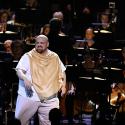
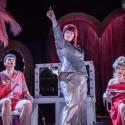
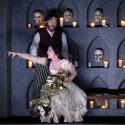
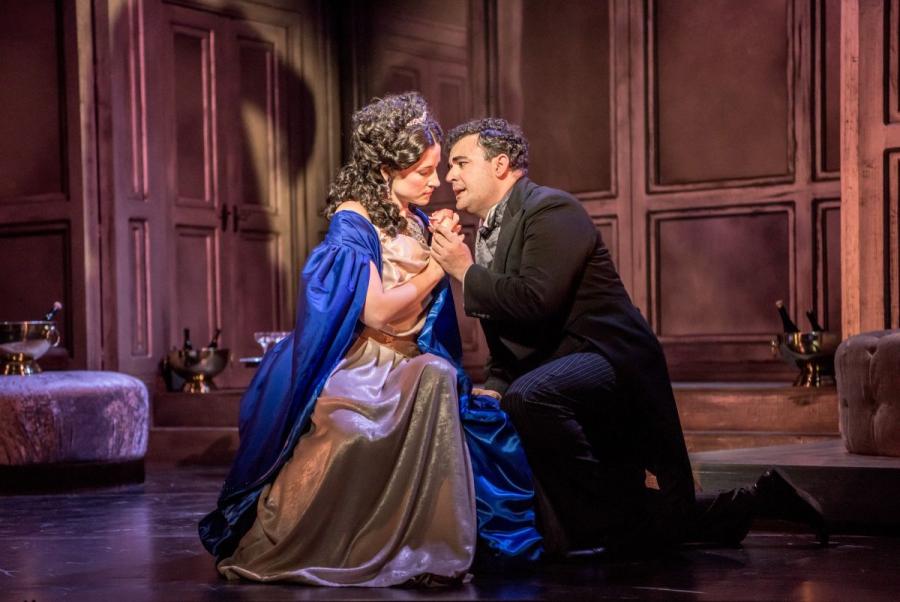
Alfredo is Tigran Melkonyan: a little stiffness in his demeanour suits the part, and he can deliver the big moments strongly, though he sometimes sings a fraction under his notes. The final scene is his best, and the duet-cadenzas are very well handled by both of them throughout (pictured below). And Giorgio Germont is sung by André Heyboer. His role, it seems, is to be puritanical and hypocritical – not the only way to characterize the anxious father (Piave and Verdi gave him touches of humanity, too), but his firmly resonant baritone carries that impression most of the time. He softens his tone for "Pura siccome un’ angelo", which, as it becomes wheedling, is still pretty much repellent, but I think intentionally so.
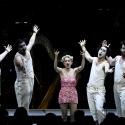
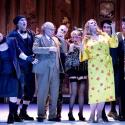
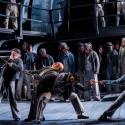
John Savournin’s 2025 version of The Merry Widow for Opera Holland Park and Scottish Opera, with D’Oyly Carte Opera, re-writes the story in an imagined world of 1950s New York mafiosi (pictured below). Relocating an operatic story in Mafia-land is not a new idea – indeed, the very wheeze represents a kind of in-joke for the cognoscenti, since Jonathan Miller’s famous production of Rigoletto of 1982. The reason for doing it this time? “The stakes are raised across the board,” says Savournin in a director’s note – he means for comedy, but I guess it could have been said for any other plot.
He’s right in one way, since his show has an English-language script by him (and lyrics by David Eaton), which furnish plenty of opportunity for comic lines and references to cliché phrases such as “sleeping with the fishes” – even visual gags including violin cases at the ready, corpses dragged across the stage and the Don bringing on a concrete mixer he got for his birthday. All good fun, but it’s making pure comedy out of something that was always a gentler, whimsical fantasy – yes, with satirical edges to it, but fundamentally a love story with a heart (at least that’s how I feel about it).
One result of the dislocation has to be that most people speak with New York (or extremely squawky Noo Joysey) voices, and those with supposedly Hungarian or Russian origins talk in very thick East European drawl, which unfortunately at some points challenges audibility.
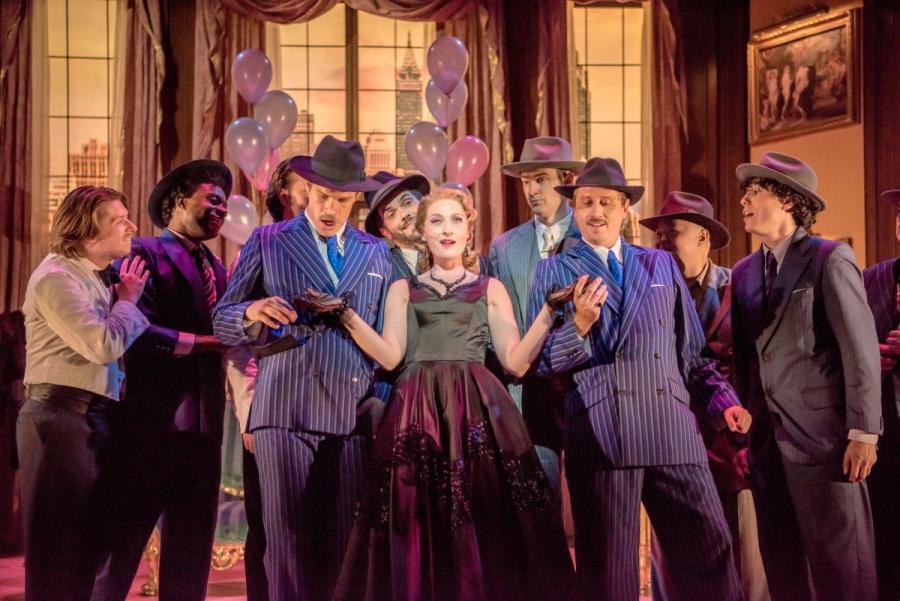
But the large cast are all excellent performers, even if hamming it up is their main function: Richard Burkhard as the Don, crucially; and Paula Sides, Scottish Opera and Opera Holland Park’s Hanna, reprising the role again. Dominic Sedgwick is a worthy interpreter of Danilo, with the looks and the voice; and the dancing is really good (Kally Lloyd Jones the original choreographer and Merry Holden revival choreographer). Iwan Davies conducts the Buxton International Festival Orchestra with skill, and they give him a crisp and full sound when required.
- Further performances: La Traviata 15, 18, 22, 25 July; The Merry Widow 14, 17, 21, 24 July
- More opera reviews on theartsdesk