Sometimes operas – even immensely powerful ones – simply don’t make complete sense, and we can see why Dr Johnson dismissed the form as an “exotic and irrational entertainment”. Then again, that sounds fun, and also a fair description of much of Saint-Saëns’s Biblical blockbuster Samson et Dalila. At Covent Garden, in this comeback for Richard Jones’s 2022 production (with Benjamin Davis as revival director), the exotic parts certainly shine. None more so than the nuanced, heartfelt duo of SeokJong Baek as the love-struck Hebrew hero and Aigul Akhmetshina as his Philistine seducer. That’s a vocal pairing sufficient to bring any house, or temple, down.
Jones’s in-your-face, sometimes positively lurid, settings, and Hyemi Shin’s designs, deliver both the dark-hued beleaguerment of the captive Hebrews and the gaudy triumphalism of their Philistine oppressors. We enter a dream-space far from the modern Middle East (thank all the gods for that) that veers from monochrome vistas of oppression to venues of tacky hedonism quite as camp as Butlin’s – and with an entertainment offer to match. In the pit, Alexander Soddy – an opera-house hero-in-the-making himself – drives the orchestra through an intensely idiomatic and stylishly accented reading of this protean score. Yet the whole experience doesn’t – maybe it never can – quite hang together.
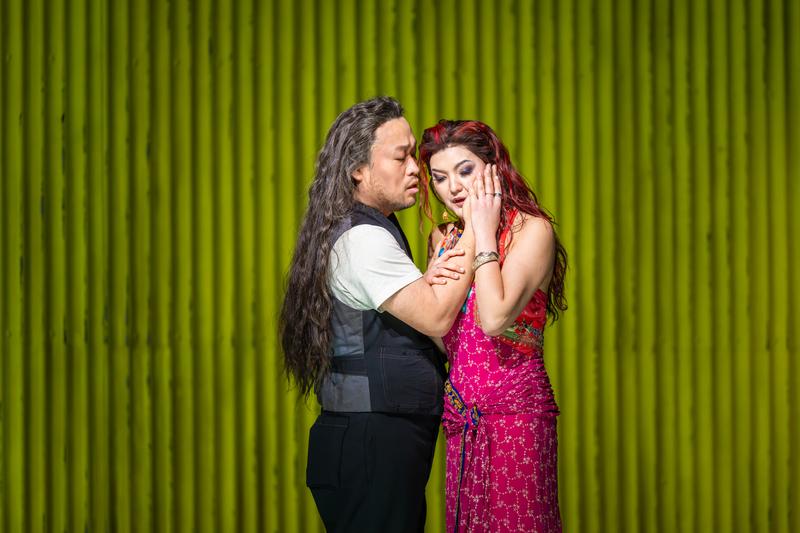
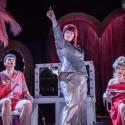
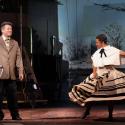
At the core of this “irrational” incoherence, Akhmetshina’s Dalila (pictured above with SeokJong Baek) must somehow incarnate scheming calculation, patriotic rage and genuine passion on the flip of a coin. She has a fabulous instrument under her control to effect these turns, and here she benefits from a motivational boost in her kinship with the Philistine commander (Abimélech) Samson slays. Yet there’s something opaque, Iago-like, in her revenge. Not that we care that much when, with her lover shorn and blinded, the third act sashays off into the wild orientalist kitsch of the Bacchanale that precedes the hero’s pillar-crunching retribution.
Each of these elements beguiles. In this swift, busy and many-hued production (right from lighting designer Andreas Fuchs’s scarlet backdrop at the start) we don’t often pause to scrutinise the joins – or lack thereof. Yet so powerful, musically and dramatically, is the erotic tryst and betrayal that separates the ritual grandeur of the first act from the pantomimic frenzy of the third that the most bling-filled spectacle can’t make up for what we lose. Perhaps that is the point.
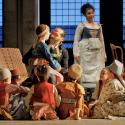
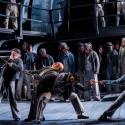
The Handelian opening, with its strong traces of the oratorio that Saint-Saëns planned to compose, gives the Royal Opera chorus (directed by William Spaulding) a showcase for their own formidable, indeed Samson-ite, powers. Soddy’s crunching low strings in the prelude have partnered a silent panorama of harassment and oppression (the Philistine heavies in garish orange-and-blue gym-wear). Then the drab-clad Hebrews soar above servitude in the fugal choral numbers that land with suitably awe-inspiring gravity.
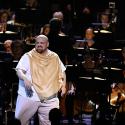
It’s curious, if characteristic, that Saint-Saëns’s scattergun genius should write this austere, antique beauty into the beginning of a piece that ends with the silly and bathetic musical antics of the Bacchanale. Baek’s Samson wearily hauls on the temple set (with its tiered interior) himself, and at the outset sounded a little winded by his labours. Granitic choir and boisterous orchestra combined meant that he took a little time to assert his presence. Once he did, Baek absolutely ruled the scene, although his deep-lying tenor – especially in the love scenes – seldom has the stone-crunching heavyweight tread of some Samsons.
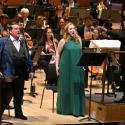
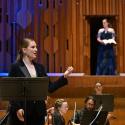
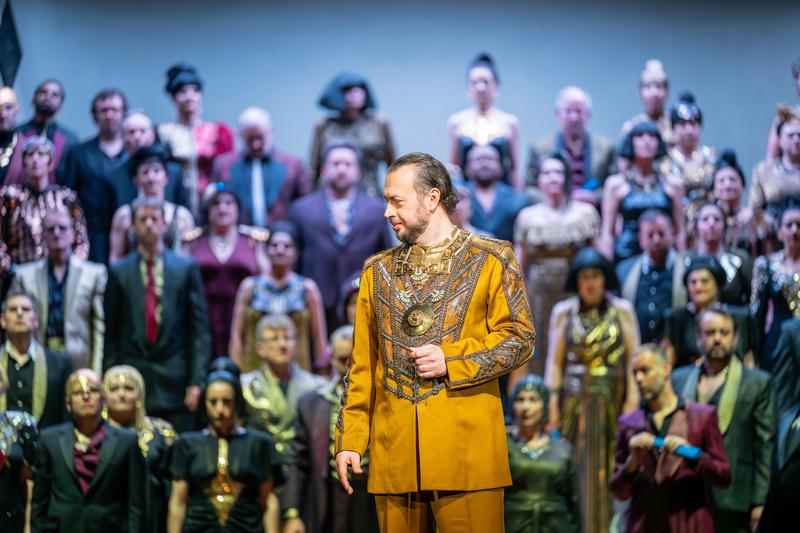
Ossian Huskinson’s red-trousered Abimélech taunts the mourning Hebrews in a saltily villainous bass-baritone before (in a spotlit box at the corner of the set) the enraged Samson does away with him. Solemnly executed, the Hebrews’ choral hymn of deliverance lends Baek a platform to display the fragility (of soul, not voice) that accompanies his liberator’s fervour. Both Lukasz Goliński (as Philistine High Priest, pictured below) and William Thomas (Samson’s hobbling Rabbi) sang for their rival creeds with refinement and authority.
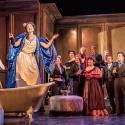
When Dalila finally appears, she comes as an avatar of spring, preceded by a procession of priestesses of the god Dagon, and clad in the colours of dawn, or of blood. Akhmetshina, it seemed to me, sought, as the ranking Carmen of our time, to dial down the Carmen-like aspects of this role. From her, ravishing, invocation of the season – “Printemps qui commence” – onwards, she strove for a reflective inwardness to balance the upfront sensuality we expect. That problem of motivation became a kernel of unfathomable mystery. Never overemphatic (indeed, a little subdued at first), she steered clear of the stereotypical temptress, while exploiting every shade of a supremely flexible mezzo voice that enthralls in quiet moments (often spellbinding) as much as grand ones.
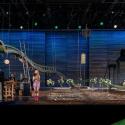
Dalila’s shattering cry of horror at Abimélech’s corpse partially, not wholly, solves the puzzle of her vengeance. In her second-act house (a bare, multi-purpose revolve with strategically placed window and door), her retributive plotting with the High Priest (“Pour poison into my heart”) convinces. But still it can’t prepare us for the overwhelming tenderness to come. Feet on table, lazy, sultry, here she does sound rather Carmen-esque – but it doesn’t last. Samson arrives, and “Mon coeur s’ouvre à ta voix”, their iconic aria-turned-duet, smoulders with a fierce, low glow. Akhmetshina’s vocal control extends to thrilling dynamic switches into almost-whispered, but exquisitely sung, lines. “Softly awakes my heart,” as the old translation says, while Baek’s “Je t’aime” compressed a world of conflicted longing in one phrase.
Compared to (say) the mighty Jon Vickers and Shirley Verrett – available on a Royal Opera DVD – they don’t blast you into orbit. Strangely, though, this production already well-known for the grotesque accoutrements of its staging allows plenty of room for subtlety, vocal and emotional, from its principals. Meanwhile, Soddy’s woodwinds gurgled, fluttered and rippled in quivering ecstasy. His brass never sounded strident, and the orchestral palette as a whole had a well-blended delicacy that, again, contrasted with the livid hues on stage.
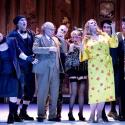
After Dalila has seduced the secret of his superpower mane out of her lover, that grotesquerie takes centre-stage. But not before (back in the spotlit box) the blinded hero laments his downfall with rounded, resonant nobility. For the Bacchanale, Jones goes full Eurovision, with a squad of dancing hunks and Dalila atop a ziggurat of steps as a spangly disco diva. This year’s Philistine entry easily wins the audience vote, even if it’s “nul points” from the buffs.
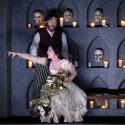
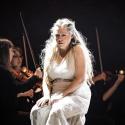
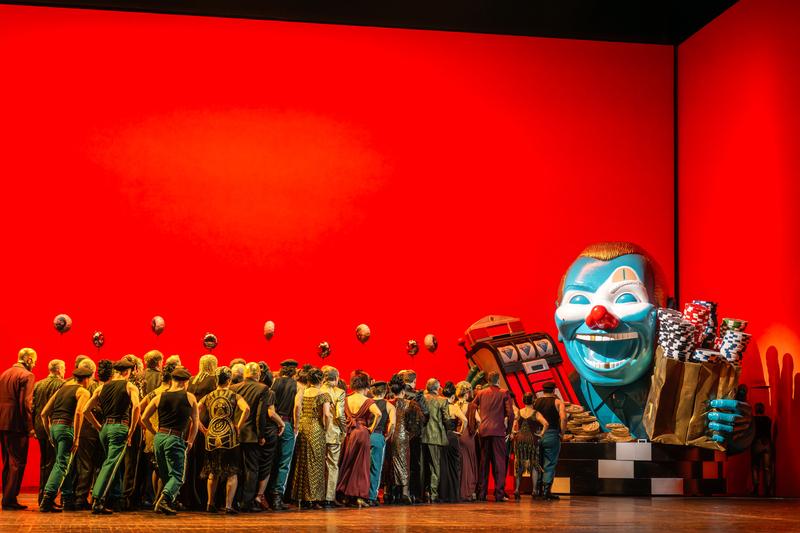
Kudos to (especially) Nicky Gillibrand’s costumes and Lucy Burke’s choreography for the zest and sparkle of this all-you-can-eat feast of camp – not to mention Shin’s monstrous Dagon idol (pictured above), holding fruit machine and gambling chips. (Dagon = chance, whim, fatalism; Jehovah = destiny and providence.) Soddy tore into the pseudo-oriental score with mischief and panache. But we’ve moved a long way from the heart-shredding intensity of the second act, and maybe not even Saint-Saëns could tell us exactly how we got here. When Samson recovers his strength enough to shop the show, it almost comes as a relief.