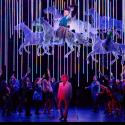
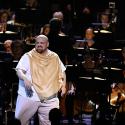
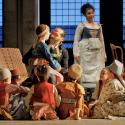
“La bohème, Tosca, Butterfly: you just know where you are with them, don’t you?” If the bar-chat at the opening night of the Opera Holland Park 30th anniversary season was anything to go by then La fanciulla del West still has its work cut out to make it onto the podium of Puccini all-stars. But the composer’s Western not-quite-tragedy (three cheers for a heroine still live and very much kicking by the final curtain) has a delicious score flecked rich with melodic gold, and just enough celluloid silliness to keep things entertaining.
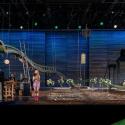
Anyone who still remembers Opera Holland Park’s most recent staging (2014’s update to the atomic tests in Nevada) may be relieved that director Martin Lloyd-Evans leaves the gimmicks at home, playing it absolutely straight. Designer Anna Reid gives us an almost-too sumptuous set-up for the town Minnie dismisses as “this hole”: handsome wooden facades and saloon doors, and a cosy cabin for Minnie’s assignation with the mysterious “Dick Johnson” – though the snowstorm got a laugh on the hottest night of the year. The effect is quietly cinematic, letting Puccini’s score do the talking.
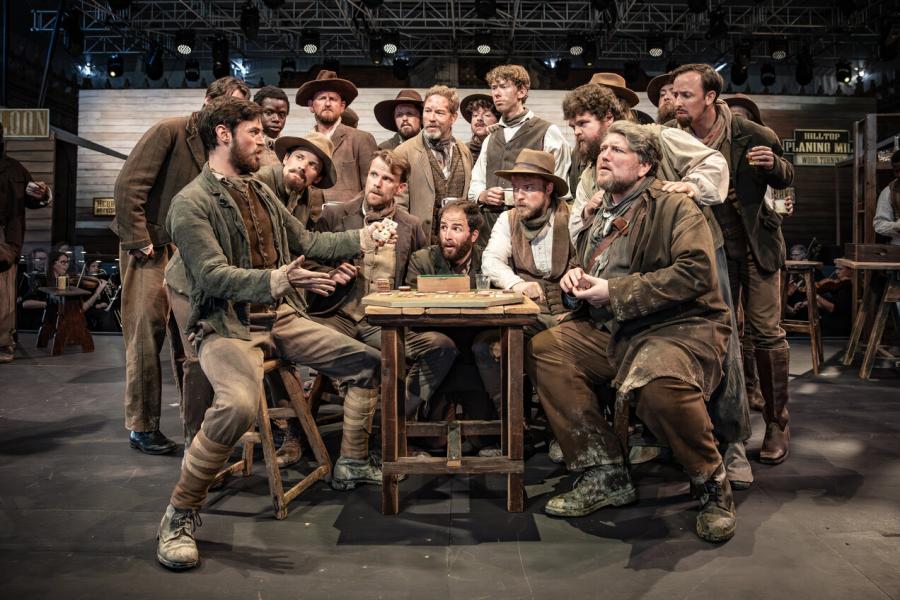
It's always a tough ask for the pocket-sized City of London Sinfonia to find the breadth in the big Italian scores this company has made its USP. Ettore Panizza’s reduced orchestration hits all the marks, but there was only intermittent sense of the wide open musical vistas it invites in a rather unsettled opening-night account. Conductor Matthew Kofi Waldren works hard to tame the big score, but neither orchestra nor a large, all-male chorus struggling with blend, really felt in the groove until the climactic confrontation of Act III.
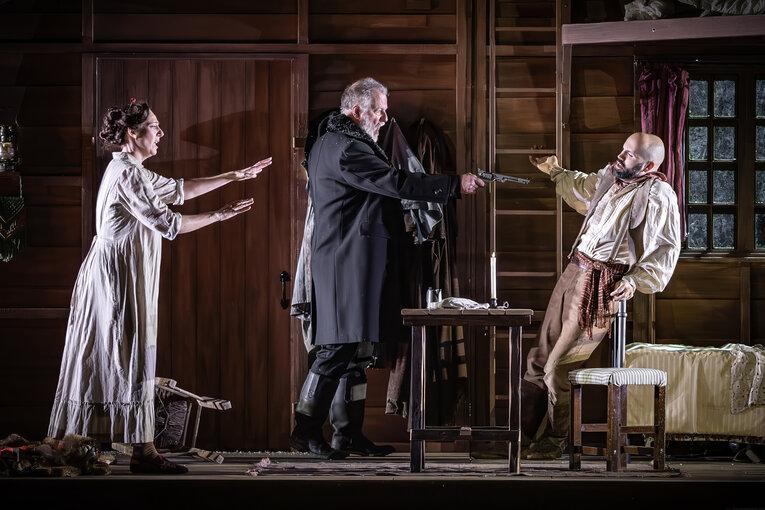
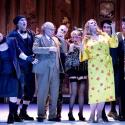
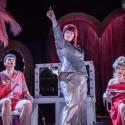
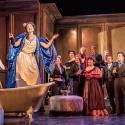
The headline of this production is South African soprano Amanda Echalaz’s role-debut as Minnie (pictured above, left). Echalaz (as we saw most recently in 2024’s Tosca) reliably holds the stage, capable of huge subtlety of emotional gesture. Her Minnie is an appealing balance of mother and ingénue, spinster and sharpshooter. The tension courses through her body in Act II as Johnson prepares to make his move – quite a different figure to the matronly comforter of Act I, or Act III’s force of nature. Her vulnerability is rarely far below the surface, making you hope like hell her happy ending survives beyond the redemptive final farewell (all dry ice and glowing portal in an unexpected moment of whimsy from Lloyd-Evans) and curtain. Vocally it’s a mixed bag: huge and glowing with warmth in the middle of the voice, pleasantly charry at the bottom, but often wild and snatched above the stave.
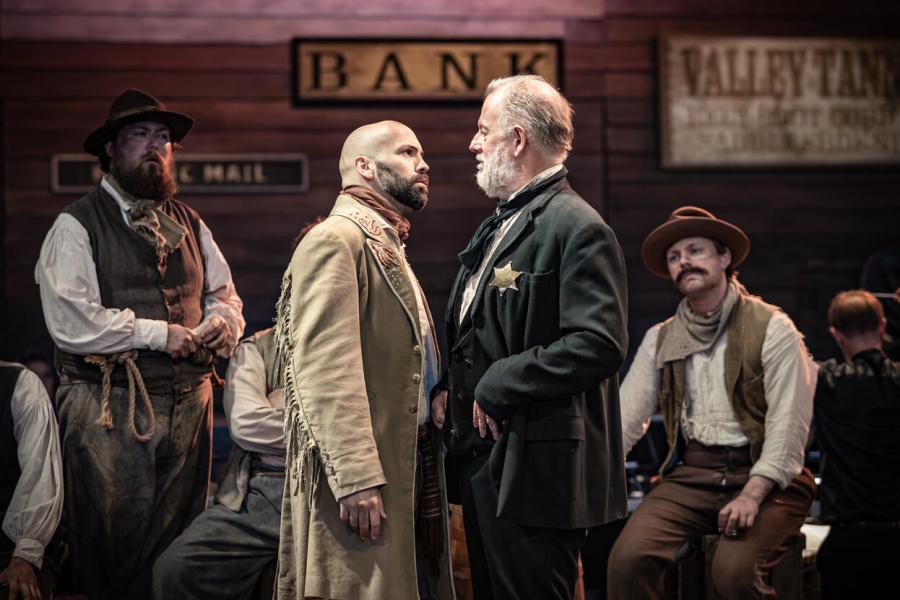
It's an uneven pairing with José de Eça’s neat but smaller-sized Dick Johnson, a little grain and grit in his youthful tenor finally blooming into brilliance in “Ch’ella mid creda libero e lontano”. But there’s plenty of swagger from this young Portuguese tenor, and gravitas is amply supplied by veteran Robert Hayward’s Jack Rance (pictured above, with de Eça) – world-weary, with one last throw of the dice in him. It’s punchily sung, and Hayward is a powerful, looming presence among the fluid movement (deftly choreographed by Roisin Whelan – making the tricky stage space with its projecting “apron” look entirely natural) of the chorus.
No shortage of cameos in this show. Kezia Bienek packs a whole show’s intensity and silent backstory into Wowkle, and Zwakele Tchabalala is a sparky Nick – a barman who seems to have strayed into Puccini from Donizetti or Rossini. Alaric Green’s Ashby is beautifully, resonantly sung, and Aidan Edwards is a charismatic Sonora.
So is there gold in them there Sierra Nevada hills? More than enough to justify a visit to this sparky Fanciulla that might still not have Tosca’s name-recognition or Bohème’s guaranteed audience, but which gives its tuneful melodrama both barrels. And if you’re still not convinced, there’s always Turandot to come to Holland Park for later this season.