If you find endless riches in Hugo von Hofmannsthal's words and Richard Strauss's score for their "Comedy for Music", as I do, you'll be very happy to catch Bruno Ravella's deliciously staged fantasy again. This was my third time. It had a difficult birth at Garsington during the Covid era - no touching for the 32-year-old Marschallin and her 17-year-old lover Octavian in the opening bedroom scene - then went to Dublin, where Irish National Opera had assembled a remarkable cast with three Irish leading ladies. A fourth, Niamh O'Sullivan, is central in making this Garsington revival a glowing success.
O'Sullivan has the rare advantage of a distinctively mezzo timbre with a full and gorgeous upper range (the travesti role was written for a soprano). Her Octavian reacts vividly to every situation, and knows when to be still and inscrutable in the mayhem his non-cousin fortune-hunting Baron Ochs injects into the household of his nouveau-riche, arms dealing son-in-law-to-be (or not, as the plot has it).
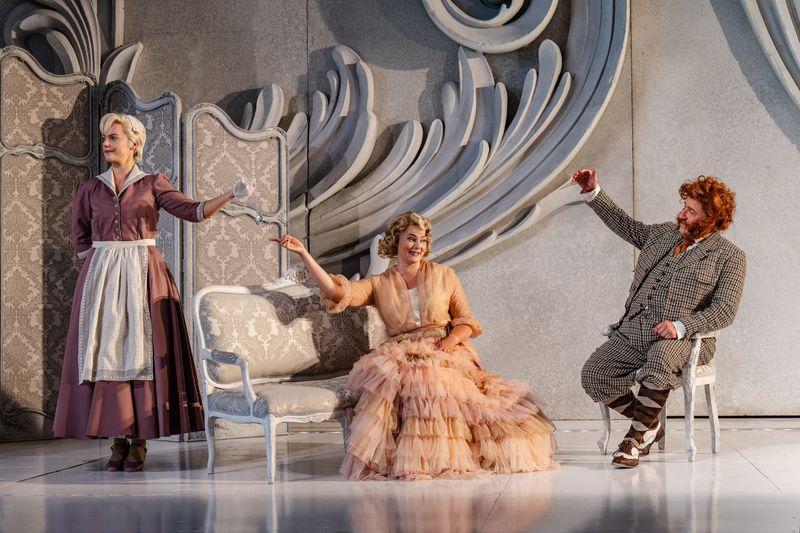
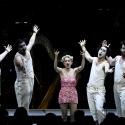
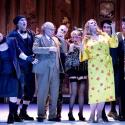
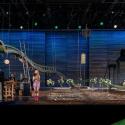
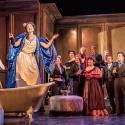
In the crucial final scene of Act One, where the Marschallin's disgust with men like her husband and Ochs meets with her philosophical reflections on human transience, it was this Octavian's bewildered reactions which moved me to tears. Matilda Sterby is as lovely a Marschallin as her fellow Swede Miah Persson was first time round (pictured above with O'Sullivan as "Mariandel" and Andreas Bauer Karnabas as Baron Ochs). But it's a very full, rich soprano and sometimes needs more scaling-back in the intimate surroundings of the Garsington pavilion (the phrase at the beginning of the famous trio was close to deafening). She does the Grace Kelly look in the yellow dress as well as Persson, too - it makes Gary McCann's slightly odd clash of giant sworls and grey in Act One work (the second and third acts look fabulous, and are superbly lit by Malcolm Rippeth).
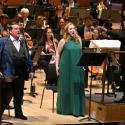
Not so the Philharmonia, already playing a reduced version of the score by Eberhard Kloke. Unlike some, I thought the climaxes were suitably rich and lush in the surroundings, but I don't understand why Kloke has to fiddle with the slimmer passages; the piano jars at times. Nevertheless, Finnegan Downie Dear has an authoritative whale of a time with Strauss's chameleonic writing, and from Octavian's first reflective lines onwards proves super-sensitive to his singers' needs for space.
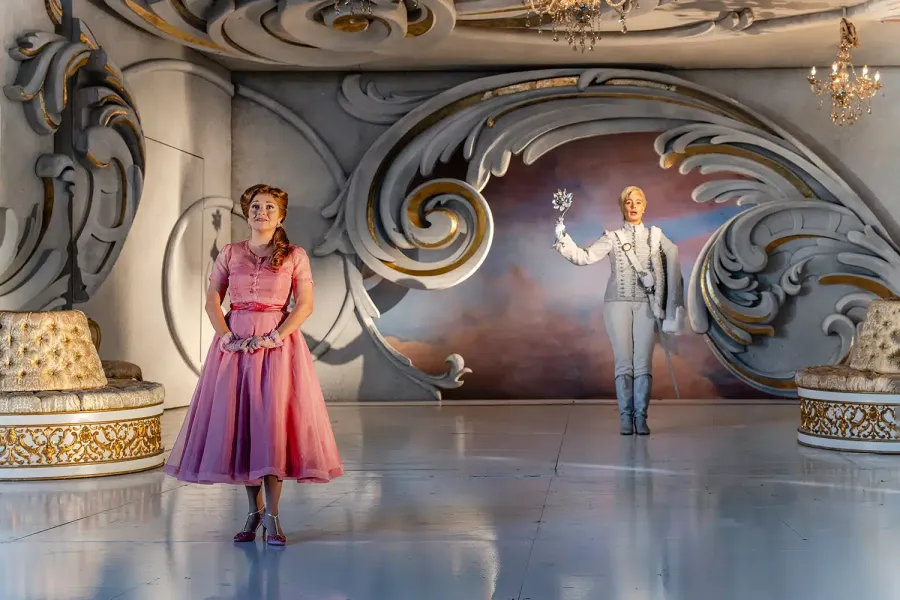
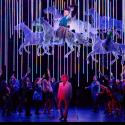
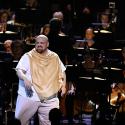
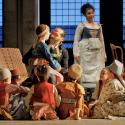
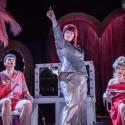
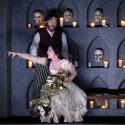
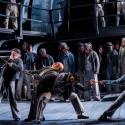
There are no weak links in the cast. Soraya Mafi (pictured above with O'Sullivan in the Presentation of the Rose), in my experience the best-ever Gilda for Irish National Opera, catches every facet of the spirited teenager who rejects marriage with a disgusting older suitor (Ravella is more subtle than some with the excess male presence in Faninal's palace, having the men lined along the walls lean in and out at key moments). Andreas Bauer-Karnabas is an Ochs you'd be happy to see anywhere in the world. The red whiskers do the ridiculous job for him so that he doesn't have to overdo the comedy or the grossness; he has the bass notes but also the refulgence for the glorious waltz-sequence which brings down the curtain on Act Two, Ochs's fantasy of multiple female servants, while Sian Griffiths excels by singing intriguer Annina's reading of the letter to him from "Mariandel" (Octavian caught in disguise by him in Act One) in the rustic tones of the faux-maid.
Griffiths plays well alongside Robert Murray's Valzacchi, while Ben McAteer pitches the fluster of Sophie's unfortunate father just right. Smaller roles offer special pleasures, especially Ana-Carmen Balestra, Llinos Haf-Jones and Clover Kayne as the three orphans petitioning the Marschallin in the Act One levee. It's a bit puzzling why the Italian tenor sings the first verse of his intermezzo-number offstage, but when he comes on for the second - higher-pitched and excellently taken by Egor Zhuravskii - it turns out it's her gardener who's touched the Marschallin's heart.
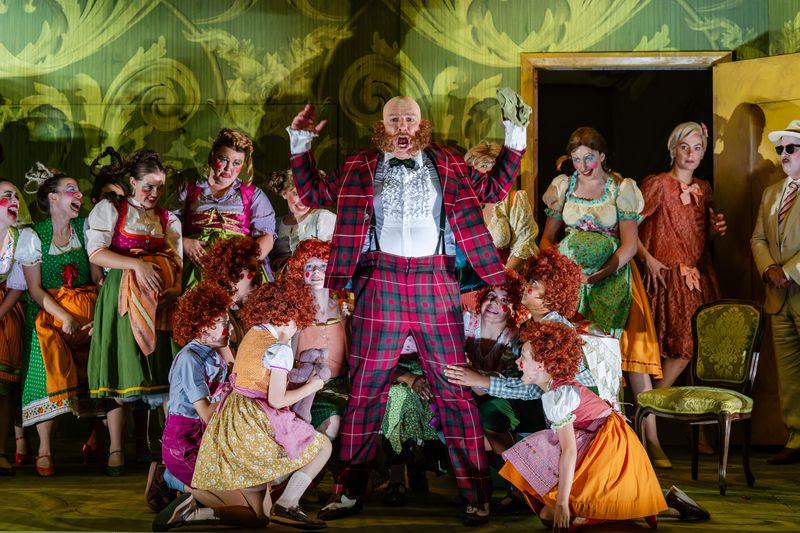
The Ochs-humiliating masquerade of Act Three has Ravella coming up with ideas as piquant as Richard Jones's at Glyndebourne - in this case pregnant country girls played by the tavern ladies and a brace of red-headed kids. At the immaculate curtain call these quasi-Annies are cued onstage by rococo Cupid Kamari-J'siah Robinson, a miniature star in his own right. And his playout comes after a trio as sublime as they come. Garsington has long proved it's now the absolute equal of Glyndebourne in many of its production, and this may be the richest of them all.
- Der Rosenkavalier at Garsington Opera until 29 June. Martin Winkler sings Ochs on 25, 27 and 29 June
- More opera reviews on theartsdesk