

Literally the first masterpiece of the 20th century (premiered on 14 January 1900), Tosca has had to wait until the second quarter of the 21st to arrive on the Glyndebourne stage. That delay tells you much about Glyndebourne, and about the lingering odour of distaste and even revulsion that for a long time hung in polite operatic circles around Puccini’s “shabby little shocker”.
This political melodrama makes its gorgeous tunes shine against a gruesome backdrop of power, pain and fear. Director Ted Huffman (on his Glyndebourne debut) must contend both with audience expectations about a now-familiar favourite packed with melodious set-pieces, and the need to prove why this once-taboo article should still unsettle, even upset, us.
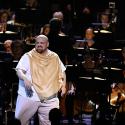
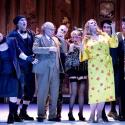
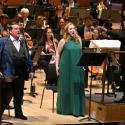
For the most part, he carried his precious Ming vase safely across the shiny Sussex floor. Caitlin Gotimer’s heroic Roman diva Tosca, and Matteo Lippi’s persecuted artist Cavaradossi (pictured below), involve and uplift enough to keep the musical foundations of character and its expression firm. Vladislav Sulimsky’s Baron Scarpia lends the torture-loving, lust-driven security chief enough nuance to complicate his sheer depravity. Robin Ticciati conducts the London Philharmonic Orchestra – arguably this production’s stand-out performance – with a bar-by-bar attentiveness to the protean colours of what sounds in his hands like a properly revolutionary, 20th-century, score. From those opening, clashing, “ugly” chords, this Tosca plants us musically in the heart of grimly conflicted modernity.
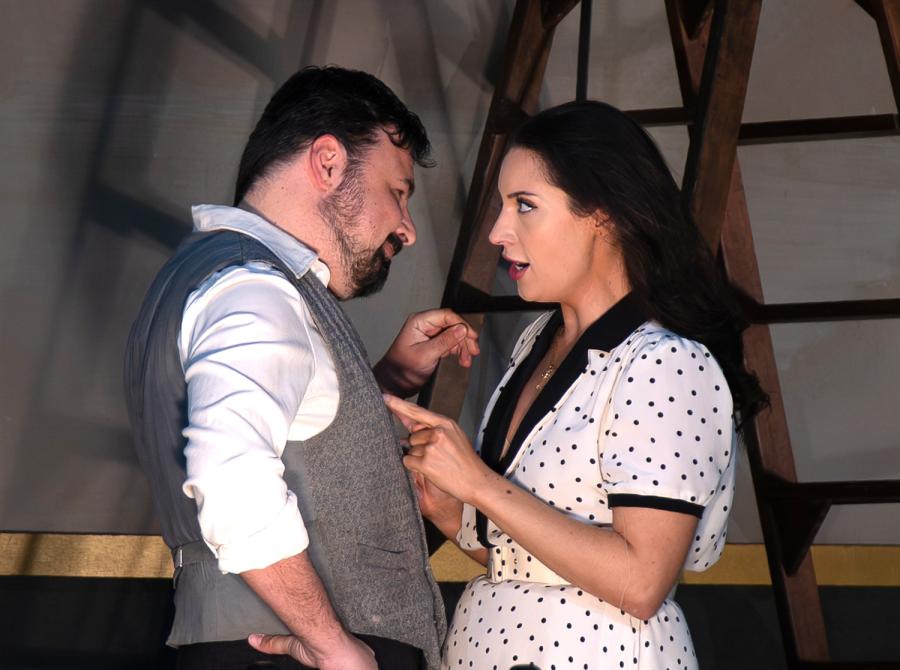
Huffman has relocated the action from Rome in 1800 to that popular operatic terrain of uniforms, bullying and bureaucracy we might call Non-Specific Fascism. He has taken the Neo-Realist cinema of post-Mussolini Italy as his chief visual touchstone (especially Rossellini’s film Rome: Open City). But precise period touches matter less than a sense of the permeable boundary between surface decorum, ritual and convention, and the blood-washed inferno of cruelty and coercion that lies, scarcely hidden, underneath. That crust breaks open in grotesque, spectacular fashion during the third-act prelude (probably too explicitly for some Tosca traditionalists). But from the off we sense that the pretence of order plays out just above a hideous abyss.
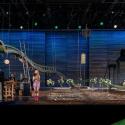
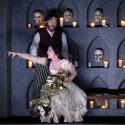
Huffman is tradition-conscious, not tradition-bound: in the first act Gotimer’s Tosca has a red shawl, not scarlet gown (costumes by Astrid Klein make telling, never overstated, points). The church of Sant’Andrea, where Cavaradossi paints his rather unappealing large-scale Madonna – pictured below – and where the fleeing dissident Angelotti seeks refuge, has a shabby drabness lit by the artist’s harsh lamp. (DM Woods’s lighting set private gloom and shade against intense public glare.) Federico De Michelis makes a firm-toned, well-drawn Sacristan, and Kristina Lindroos a touchingly mangled but defiant Angelotti: the smaller roles have no weak link.
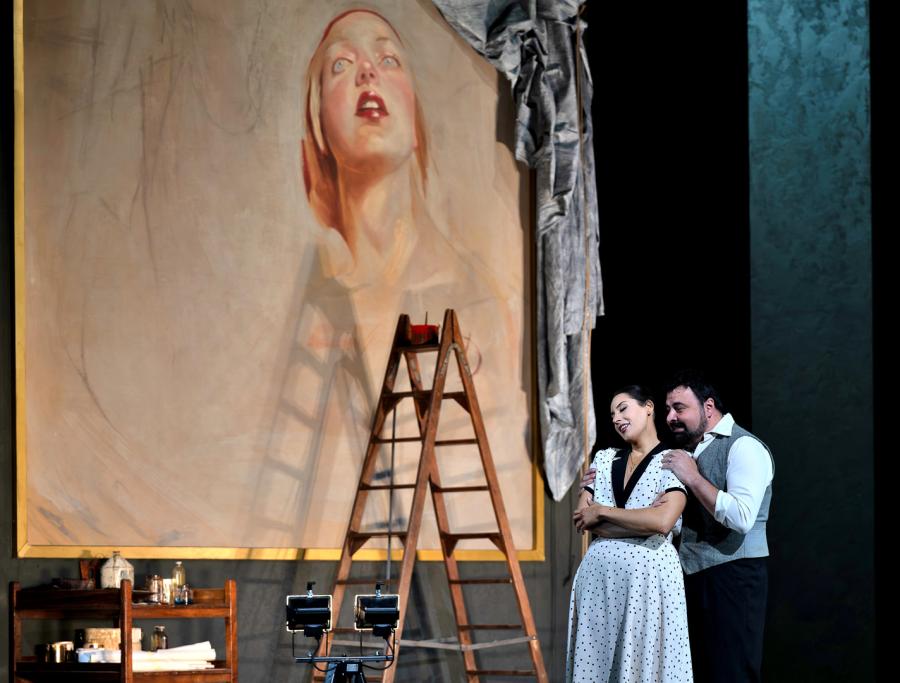
In their opening banter and squabble, Lippi and Gotimer conveyed in their singing an easy, flirtatious sparkle that sounded a long way from the stiff mating-dance of pachyderms you can hear with some revered singers in these roles. Physically, they still sometimes look and move more like strangers rather than lovers, but that might change as the run extends. Gotimer in particular does skittish and sensual effectively, before she does saintly, while Lippi’s warmly delivered “Recondita armonia” landed more as casual fancy than grand signature theme. Neither singer seemed to want to play all their vocal cards at this stage.
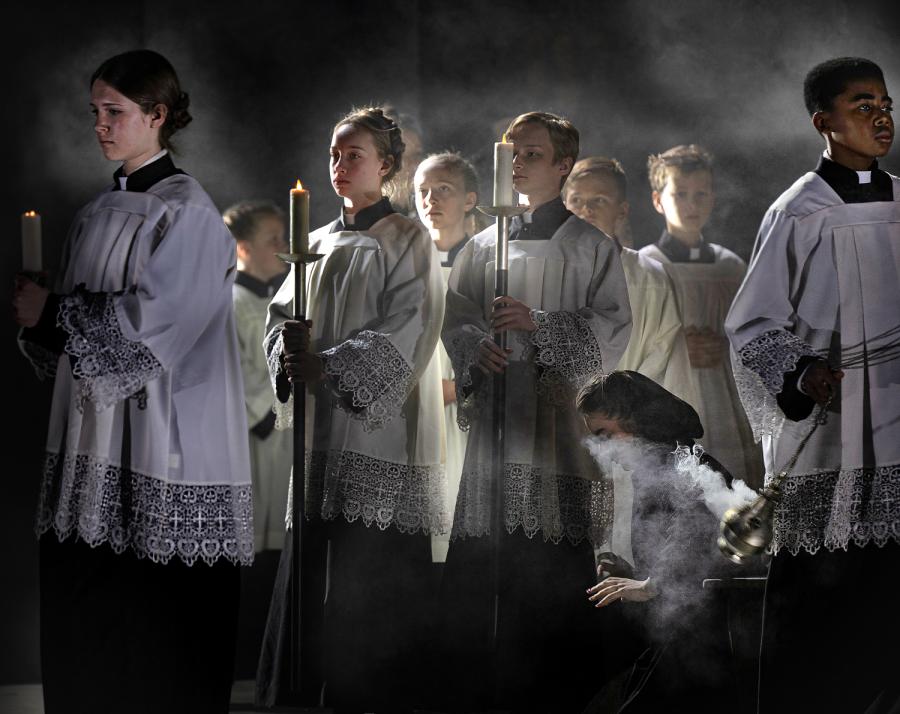
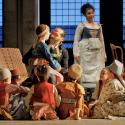
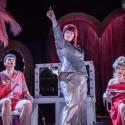
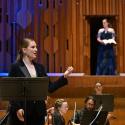
Early on, Sulimsky’s Scarpia mastered a deceptive urbanity as well as deep-dyed thuggishness. Huffman shows us gory evidence of his torturer’s art almost from the start, which may serve to mitigate the impact of later horrors. But in the crucial collision between the serene piety of the congregation’s Te Deum and the tyrant’s profession of faith in lust and force, Sulimsky’s baritone managed a creepily charismatic authority, as he claims Tosca has made him “forget God”, as well as chilling libidinous cynicism. Augmented by members of Glyndebourne Youth Opera and the Trinity Boys Choir (pictured below), the chorus do strong, idiomatic justice to Puccini’s meticulously-researched evocations of the actual sonic landscapes of his Rome.
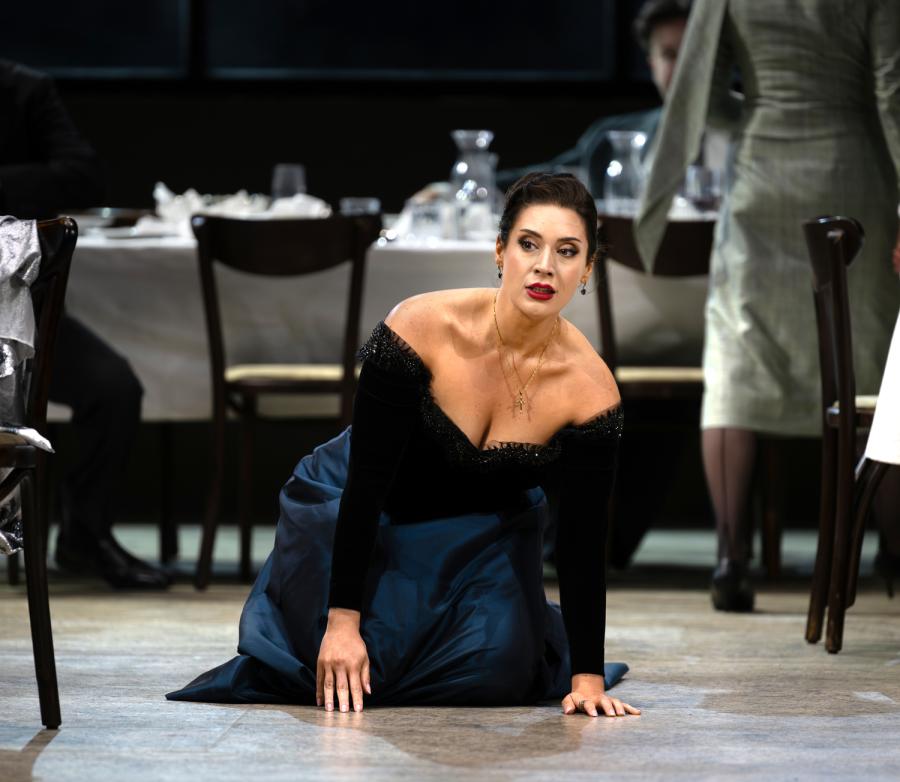
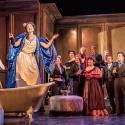
If Huffman played the first act fairly straight, the second saw him make a more personal mark. Scarpia’s den in the Farnese palace becomes, in Nadja Sofie Eller’s set, a sort of white-linen eatery with Art Deco styling. Crucially, the police chief’s gofers and underlings sit, or stand, around and watch proceedings. So Tosca’s intimate ordeal as Scarpia tries to bargain her virtue for Cavaradossi’s liberty becomes a public humiliation. Forget the sepulchral Gothic lair of some productions: this was cruelty naked and spotlit. Those watchers, for me, took up too much stage oxygen. But Gotimer held her own: the soprano was cultivated in tone and heartfelt in expression, while Sulimsky – as a kind of gleeful, Andrew Tate-like sexual vulture – relished the evil without villainously chewing the scenery.
The tortured artist’s offstage screams visibly lacerated Tosca’s soul but left the Scarpia enforcers utterly unmoved. Yes, we know that oppression dehumanises its perpetrators too, but we never quite saw how. When “Vissi d’arte” came, however, Gotimer added enormous tenderness to forlorn courage as she sat at a table and quietly, not timidly, grieved. Huffman rather downplayed Scarpia’s stabbing; Gotimer briefly scrubbed the floor but had no Callas-style dumb-show in the aftermath before she lugged the punctured predator offstage.
Huffman saved his boldest strokes for the silent action that accompanied the lovely pre-dawn prelude to the final act. Blended bells (Puccini took care to get the Roman tuning right) and shepherd boy’s song announce truths in music that may outlive the agonies of unjust politics and corrupted humanity. Ticciati and the LPO – from mighty yearning strings to mordant brass and soulful woodwinds – capped an evening of flavourful playing that made a wholly convincing case for Puccini as boundary-pushing innovator.
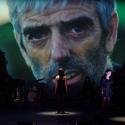
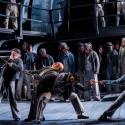
Yet it was hard to concentrate on the band as, in a Sant’Angelo castle made over into execution ground, we saw Scarpia’s men drag bloodied bodies to a cliff and throw them off. This searing tableau of repression, lit by the lights of a waiting car, took us deep into the modern hell of dictatorship, whether in Fascist Italy or assorted tyrannies today. Still, this wordless pageant of slaughter surely made it tougher for Lippi and Gotimer to make their final love duet convince before the supposed “mock” execution that will, of course, be the real, deadly thing.
That said, their voices, and their personal interaction, intensified both in fervour and vulnerability. Lippi’s “E lucevan le stelle” said everything that you might want a first Glyndebourne outing for the aria to say. It had muscle, it had lustre, it had long-breathed delicacy and sumptuous, confident phrasing across his tenor span. But this was a Tosca that insisted we have to prioritise realism over romance. The heroine’s ending was brutal, uncompromising and abrupt. In this version, the last great Romantic melodist left us with the darkest kind of 20th-century blues.
Comments
Tosco a 19th century work
The year 1900 (the clue is in the number). Is the last year of the 19th century, not the first of the 20th. The Common Era began at the beginning of the first year, the year one CE (what used to be called AD), so the first century ended at the end of the hundredth year. And so on. The 20th century began on 1st January 1901. It was celebrated as such at the time.