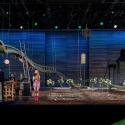
When Billy Budd, too-innocent hero of Britten's opera by way of Melville's trouble-at-sea novella, bids farewell to the Rights o'Man, his superior officers prick up their ears at the implications of mutiny. It's a ship he hymns, but the connection is first and foremost with Thomas Paine's revolutionary tract.
Paine spent several years in Lewes, the Catholic-hating community and near-perfect town just over the chalk cliffs from Glyndebourne, where Michael Grandage's production of the opera is playing to thunderous acclaim (and just a few reservations from a handful of us). Opposite the house where the great man lived and worked, the Tom Paine Printing Press and Gallery has only just set up shop. As far as I'm concerned, it's another good reason to think, or at least dream, about having a house in Lewes. Peter Chasseaud, who also has a blog devoted to the Press, has run off on his 18th-century printing press a very covetable set of typographical prints from the block illustrated above, in which the words "mutiny" and "Claggart" - the inky-black villain of the piece - co-exist alongside the hero's name and the aims of Paine. It's further cause for rejoicing after last year's bicentenary celebrations of Paine's death, and a connection I hadn't even thought about until I walked the streets of this ever-fascinating town. Do give yourself time there if you're visiting Glyndebourne.