How do you tell a story as complex as the eugenics movement, which is pursued afresh in writer-director Stephen Unwin's new play All Our Children? Its idealistic origins lie in Britain with Francis Galton in 1883, before leading to forced sterilisation of the disabled in several countries, starting in America in the 1920s and continung in Sweden into the 1970s; its legacy is today’s screening for conditions such as Down Syndrome.
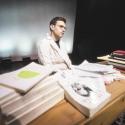
One way is to focus on eugenics’ nadir in Nazi Germany, when mentally and physically disabled children and adults were deemed "lives unworthy of life". Unwin, a seasoned director here marking his writing debut, narrows his focus very tightly indeed, setting his play over the course of one long wintry day, in a fictional hospital near Cologne. From such hospitals, over 70,000 German children and adults were dispatched to out-of-the-way "euthanasia" centres where they were killed by carbon monoxide. Later, the technique was transferred to the gas chambers of the extermination camps, and the genocide that ensued so horrified the world that the Nazis' industrial slaughter of the disabled has never received the same attention. Unwin has sought redress via this claustrophobic chamber piece, with its central character, Dr Victor Franz (Colin Tierney, pictured below), on stage for almost the entire duration.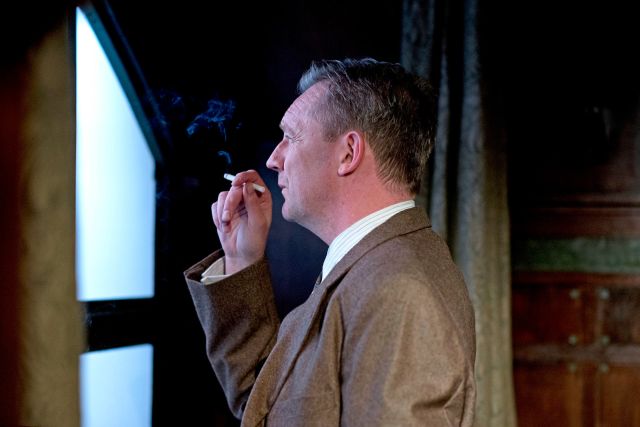 It’s January 1941 and Dr Franz, a middle-aged paediatrician with a worrying cough, is woken by his housekeeper, Martha. Over the next 100 minutes, we never leave his cosy office, with its wood-burning stove and shelves filled with files describing his young patients’ disorders. For the last three months, Dr Franz has been assisted by a zealous Nazi administrator, Eric Schmidt (Edward Franklin); their task is to select which of the hospital's incurable children are to be sent off in the special buses with their whitewashed windows.
There’s a fortnightly quota set by head office and an urgency to implement the programme. The Nazi view is that the disabled are "useless eaters"; they use medical resources needed for wounded soldiers; they threaten the procreative health of the German people. Kindly Martha appears ignorant of the patients’ fate, grateful merely that her own children are normal. Schmidt is fanatical and impatient with the doctor, haranguing him when he lacks enthusiasm for the task
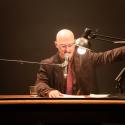
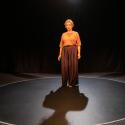
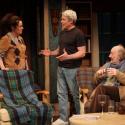
Dr Franz is self-medicating with cognac, cigarettes and wine; he’s no ardent evangelist for the eugenic cause, just a banal cog enabling an evil machine. There are occasions when the language used in the dialogue pulls its punches; perhaps it's too hard to inflict the vile Nazi terms used to describe people with disabilities without offending modern sensitivities. One of the most distressing aspects of the "euthanasia" programme was how many families consented to their disabled relatives' murder, hearts hardened by the insidious propaganda of disgust.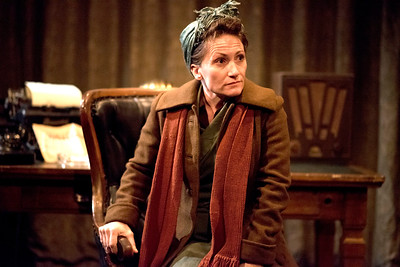 Unwin brings in a mother who did not consent, Frau Pabst (Lucy Speed, pictured above). She enters Dr Franz's office wanting to see her epileptic son, but it’s not allowed. Speed is outstanding as an uneducated woman who has put her trust in her social superiors; her dawning realisation that she and her son have been betrayed provides the play’s most dynamic scenes. The drama then becomes more obviously didactic with the appearance of David Yelland playing the historic figure, Bishop von Galen, a Catholic aristocrat who denounced Nazi eugenics from his pulpit and in the press.
Unwin has meticulously researched the history and here imagines a fiery encounter between the outraged Bishop, the weak paediatrician and the fanatical young Nazi administrator. Class, religion, morality and the poisonous economic and political legacy of Versailles all inform the debate, which is perhaps tied up a little too neatly at the end. And while it is true that Bishop von Galen’s public condemnation played a large role in ending the gassing of the disabled, their murder continued through starvation, lethal injection and other means in institutions which were in the majority run by Christian organisations. This is a brave and challenging play, admirably staged in the intimate Jermyn Street theatre; it makes for powerful if uncomfortable viewing.