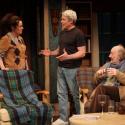
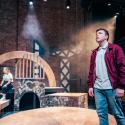
An Ulster playwright who insists she's British, a childish American star hung up on Irish Catholic tropes - played by a very grown up actor, Matthew Broderick - and a theatre director who's not as woke as he claims meet in the director's London apartment on the eve of rehearsals. With hilarious results? At times, yes. and Belfast-born David Ireland knows how to structure his three-hander even if you see the ground being laid for the ultimate crisis. In her programme note, Abbey Theatre Artistic Director Caitríona McLaughlin claims that the play, directed by Ciarán O'Reilly of New York's Irish Repertory Theatre, is "profoundly serious" and "insists on complexity". I didn't find it so, but I did laugh a lot.
Broderick has a peculiar, mostly soft-grained delivery; I couldn't quite work out if it was entirely in the line of his character, Jay Conway, who seems more vacant, less frequently self-assertive than I imagine Ireland intended him (I'd love to have seen Woody Harrelson in the 2023 London production, eloquently described here by Helen Hawkins). But in the first scene Max Baker as director Lee Carver plays skilfully off his bombast and banalities.
There's a deadly silence when the actor, remembering a scene from a film in which Rutger Hauer's terrorist holds a gun to his head and asks him to make a, shall we say, difficult choice, turns it into a real-life hypothesis. The audience gasps. Will Carver take the bait? Unfortunately, yes.
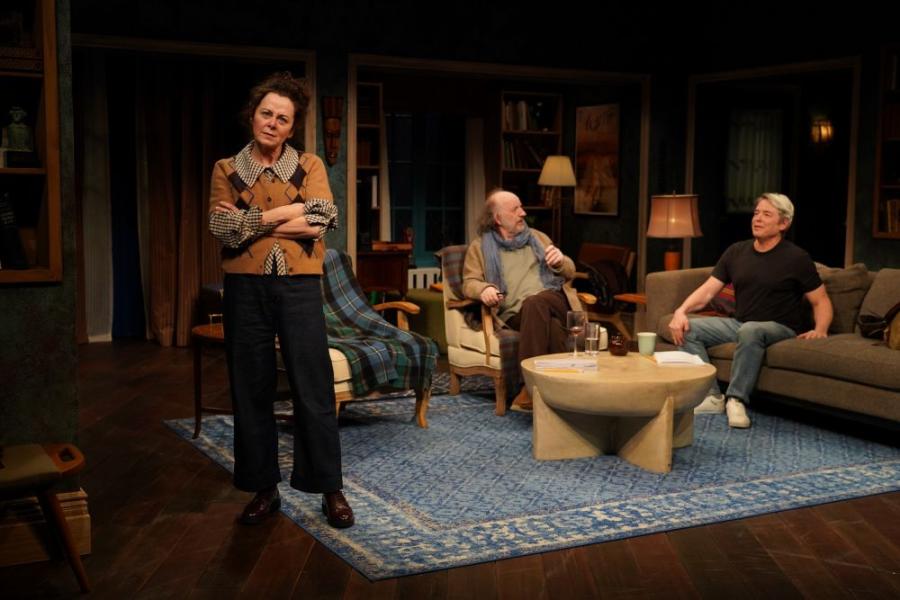
No spoilers other than to say that Princess Diana and Margaret Thatcher are invoked, but this is set up for massive repercussions once Geraldine Hughes's Ruth Davenport combatively enters the room. We slowly learn that Conway's character is a violent bastard. He's prepared his ludicrous version of a Northern Irish accent, but thinks he's come to play a Catholic Republican, while our writer, fiercely insistent on her Britishness and - it turns out - one of Northern Ireland's most reactionary types, has created a violent Protestant activist as her protagonist. There will be no room for "Irish dancing", as Conway hopes, nor for his insistence on wearing an eyepatch.
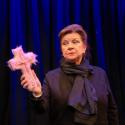
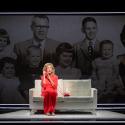
There's room here for the nuances McLaughlin claims of the playwright; they don't emerge. But maybe that's not his intention: the broad satire develops each of the three characters, from polite beginnings, as true to type, just increasingly more explosive and violent. Davenport's revelation, no surprise to us, that she voted Conservative and for Brexit triggers a tirade from Carver The ending, involving an Oscar statue Conway carries around with him, "my truth...to remind myself that I mean something to the world", seems abrupt and incongruously brutal, as if Enda Walsh has somehow exploded into a drawing-room drama. Hughes (pictured below) just about carries it off in the most varied of the three performances.
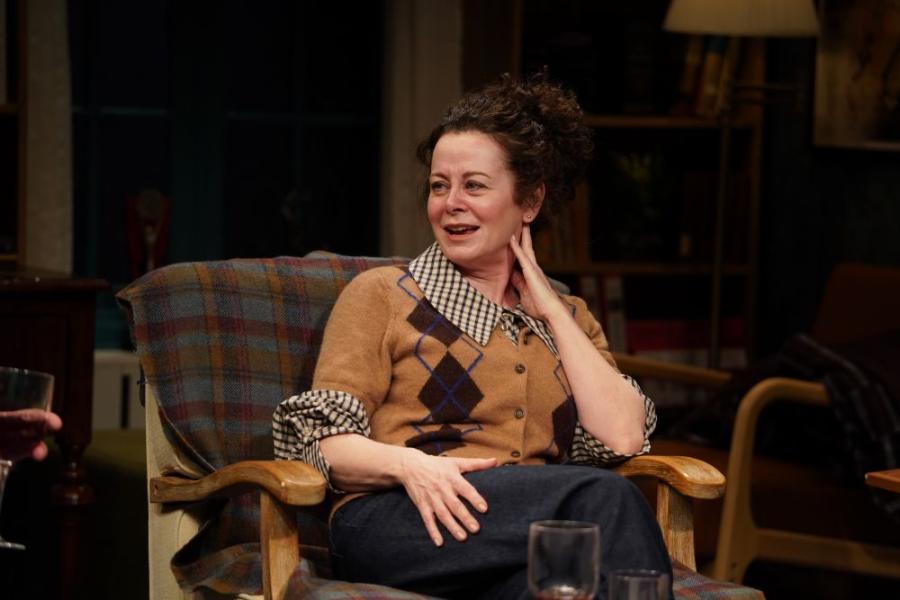
It was fascinating to be among a Dublin Irish audience, absorbing with very vocal reactions David Ireland's relatively unusual take as a former Ulster Protestant. But while it's a very entertaining 90 minutes, skilfully acted, it doesn't provoke the debate and further thoughts one might have hoped in the way that a mesmerising one-hander recently staged in the Abbey's Peacock Theatre, Frank McGuinness's Do You Come from Gomorrah?, continues to do months after its premiere.