Kwame Owusu’s 55-minute one-hander does just what it says on the tin: it features a young student who dreams he is drowning. But its brevity is no bar to its being a dense and intense experience, worthy winner of last year’s Mustapha Matura Award.
Nineteen-year-old gay Malachi (Tienne Simon) has gained a place at university in Bristol to study English Literature. He adores reading, especially books by Black authors and, above all, sci-fi and fantasy. But his arrival at uni is blighted by a recurring dream that intensifies with each iteration: his room is at the bottom of the ocean, and a watery beast there is threatening to break down his walls.
What the dream means will be fleshed out by Malachi’s revelations, notably about the boyhood friend who came out with him but later proved an unfaithful lover, a discovery that has kickstarted Malachi’s nightmares. He’s more confident about his sexuality now, primed for a new start, but the nightmares show he is still being stalked by something. Now his challenge is to identify it and keep his terrifying night visions from invading his waking life.
New sources of insecurity present themselves at college, which he arrives at 24 hours too early, having got the date wrong. Keen to embrace a new life, he heads for the welcoming dance party, where, to his horror, "Mr Brightside” is the anthem of choice. His first seminar the next day is no better: a small room full of a sea of white faces, dominated by the self-important pronouncements of a student called Barney, whose (unconscious?) racism Malachi is keenly tuned into from the off.
Starting to be disillusioned, he then tries “finding his people" at a student clubs meeting, but there’s nothing for him at this essentially white middle-class affair, where four kinds of a cappella group are on offer. Finally, hidden in a corner, he finds a stall for the Black Queer Society, run by a striking second-year music student called Kojo, whose party that night Malachi attends avidly, already sure Kojo can be the life-raft that will help him navigate the new waking nightmare of his life. 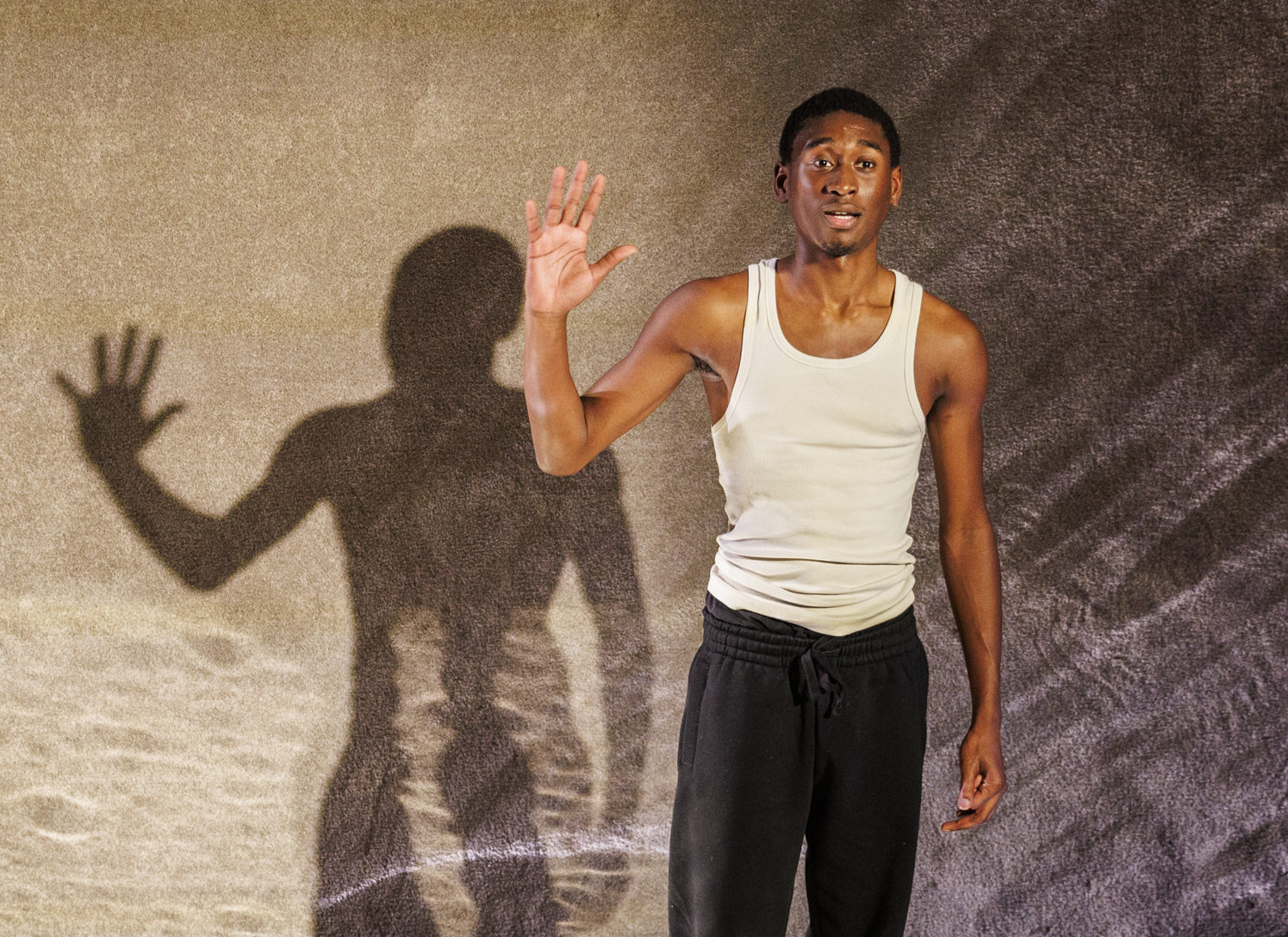 This is a poetic piece of writing, almost incantatory in the nightmare sections, where you can hear Malachi’s dialogue almost turning into a rap lyric. It’s also a simple way of depicting the arrival of acute anxiety in a young Black man’s life. How Malachi wishes he was still 16 and kicking a ball around a park – he hasn’t had to make new friends since ice-baths were a thing on Facebook. He’s funny, a sharp observer, and wholly likeable.
As is the playwright. If you ever need to know what entitled young white people sound like to a Black person, check out Owusu’s characterisation of Barney in full flow, a man with “a furrowed brow that was either deep thought or mad constipation” (Malachi’s bet is on the latter) who bends the spines of his books.
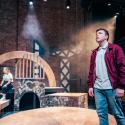
Simon peoples this simple narrative with easy charm and athleticism, tackling all the accents: the 6ft 5in Scottish former marine whose car wing-mirror he inadvertently hits with a poorly aimed football; Emily the Geordie and Laura the Derry girl, whom he meets at the college dance; Ade the motormouth at Kojo’s party; and in particular his classmate Barney, whose relentless pretensions Malachi sees right through.
Where the production excels in particular is in its sound design (by Holly Khan), which with total simplicity uses echoing knocks and thuds to underline the arrival of the nightmare beast; these cleverly turn into heartbeats as the beast closes in on Malachi’s real life. The set is equally simple but effective, using a plain mushroom-coloured carpeting for the floor and back wall that takes on a swirling sea-like patterning as the nightmares arrive (lighting is by Joshua Gadsby).
This is the kind of studio-scale gem the Bush has become so good at staging, a terrific showcase for its performer and writer-director.