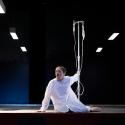
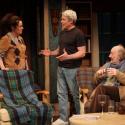
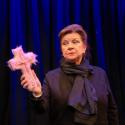
There was always going to be one Borat moment in this festival. And it came courtesy of the Albanians, who, for comic effect, in the middle of their Henry VI, Part 2 indulged in the gratuitous harassment of a mentally handicapped person. It got the biggest laugh of the show from the expats, suggesting it's still quite a rib-tickler, disabled-bashing, in Albanian culture. It was an instructive reminder that you invite the globe to the Globe at your moral peril.
The other parts of the warring Henry VI trilogy were being presented by two other Balkan countries: a Serbian Part 1 and Macedonian Part 3. Albania, Serbia and Macedonia: the only Balkan countries that haven't yet gone to war with each other. Still, they've all had their fair share of troubles over the past two decades. So it was strange that the only production that seemed to engage with this past (however subtly) was the Serbs'. They referenced old nationalist songs, invested a round table with the status of a disintegrating body politic, and delivered the political machinations that sees implacable foes in bear-hug embraces with a brilliant, dry, dark humour.
Martin Mirchevski's short, limping Richard had a fantastic what-did-you-expect-of-me look as he dispatched his rivals
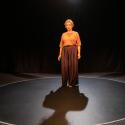
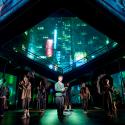
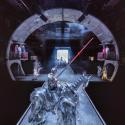
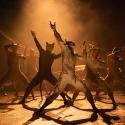
As one of the oldest theatre companies of the region and hailing from one of the most sophisticated city cultures in Eastern Europe, the National Theatre of Belgrade unsurprisingly also delivered the slickest and most inventive production of the three. The ensemble acting was magnificent. On stage throughout, the troupe slipped and slid from one scene to the other with a virtuosic fluency. Not easy when you have so many characters and battles and, to be honest, a plot that doesn't show off Shakespeare at his best.
Then again, it strikes me that the less well-regarded the play the more fun we English tourists (my second-generation Serbo-Croat only got me so far) are likely to have at this Shakespeare festival. Shakespeare in English is least fun when it's in full battle mode. But when language is not in play, it is precisely these non-verbal elements - the battles, the slapstick - that make things manageable and decipherable. Animated with a tremendous, physical storytelling skill by the Serbs, the character-jammed, battle-fuelled, screed-clogged Part 1 became the easiest to follow and enjoy.
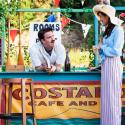
It was good to see national stereotypes being adhered to throughout. The Serbs excelled at arguing, fighting and holding grudges. The Albanians were exceptionally Albanian, delivering outstanding moustaches, a superlative pirate and an array of esoteric costumes that either sourced the kingdoms of the ancients or the lands of the gimp. The Macedonians did a fine line in wailing and baggy trousers.
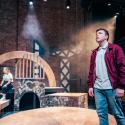
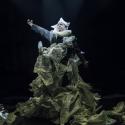
After the Serbs, the Macedonians also offered the most interest theatrically. They had the richer play and their actors rose to the task superbly. Martin Mirchevski's short, limping Richard (soon to be III) had a fantastic what-did-you-expect-of-me face as he dispatched his rivals, and was never less than brilliant when periodically whipping himself up into a Mussolini-like lather. The direction from Californian John Blondell was crude but effective.
Slow-motioning was the order of the day. The Balkans are clearly very fond of that effect. It was interesting to see the progress of Henry VI as he wound his way: conceited in Serbian, conflicted in Albanian and finally mad in Macedonian. It was also interesting to watch the development of the female sex through these three male-dominated plays. In Part 1 the only woman, Joan of Arc, is but a cipher. By Part 3 the women are running the place, the Macedonian National Theatre of Bitola adding to this impression by changing Warwick's sex.
All in all, an intriguing day. One inevitably yearned to understand more. Especially when the acting in the Serbian and Macedonian productions was at its peak and the verbal resonances began to excite those native speakers around us. But mostly I was left wondering whether anyone had told the Albanian National Theatre that this wasn't Eurovision.