If heart were art, there would be no stopping The Unlikely Pilgrimage of Harold Fry, the 2012 Rachel Joyce novel that became a film and then a stage musical, seen first at Chichester last summer before arriving on the West End. As it is, I'm afraid I stumbled at the first hurdle of plausibility. Let's just say that if I had someone important in my life dying of cancer - as in fact has happened - I would do everything I could to get there as fast as I can.
That is decidedly not the route taken by Devon's own Harold Fry (Mark Addy, inheriting Jim Broadbent's screen role) who embarks upon the long journey north to the Berwick-upon-Tweed hospice where his onetime friend Queenie Hennessey (Maggie Service) is dying: Joyce returned to this character in her 2014 novel, The Love Song of Miss Queenie Hennessey, suggesting further options for film and stage adaptations to come.
Getting on in years and not always steady on his feet, Harold forges ever onward, encountering a cross-section of humanity along the way and becoming a Pied Piper of sorts to a citizenry ready and available to cheer him on. (Imagine the ramped-up role that social media would play in this same endeavour now.)
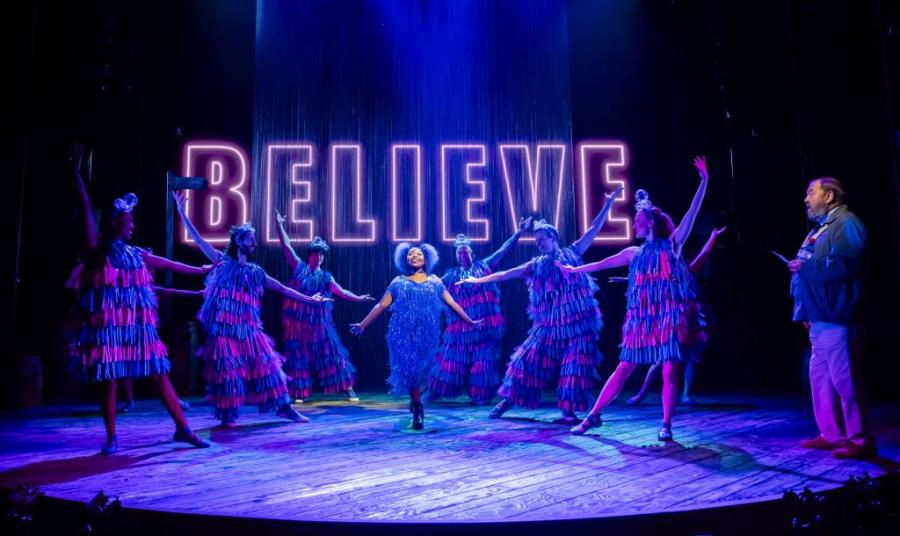
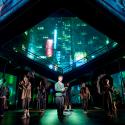
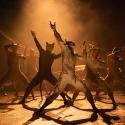
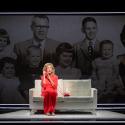
The result allows Joyce, as her own adaptor, to partner with composer-lyricist Mike Rosenberg (aka Passenger) in a musical picaresque. Katy Rudd's production shifts between Harold's patient wife Maureen (a plaintive Jenna Russell, seen at one point enfolding the curtains of her home around her) and the colourful, none-too-convincing folks he comes across on foot. Those include a gay couple whose duet is the strangest song I've encountered in a musical in years, which itself follows a faux-inspirational ensemble number led by Garage Girl (Nicole Nyarambi, pictured above) that sets the hesitant Harold on his way.
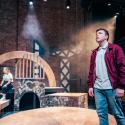
Time shifts allow glimpses of Harold's worklife of old, whilst the impish-seeming figure of The Balladeer (Noah Mullins) ends up doing thematic double duty in a way best left as a surprise. Mullins has taken over this part from the fast-rising Jack Wolfe, who played it in Chichester. The gifted nonbinary Australian performer in his UK debut shares some of Wolfe's insouciance even if their spritelike presence, wreathed hair and all, seems ideally suited to early Stephen Schwartz - Pippin and Godspell surely beckon as logical follow-up titles, should Mullins be interested.
Much has been made of the material's similarity to The Curious Case of Benjamin Button, which I don't really see, except that both are new British musicals in a landscape that could always use more of the same. Benjamin Button is for the most part rooted to Cornwall, its score immediately distinctive and tangy and tethered to lyrics that neatly amplify the themes at hand. Time and again in Harold Fry, by contrast, the lyrics don't sit easily on the melodic line: a tougher edit is needed to make this a score that fully sings, notwithstanding an inevitable anthem in the rousingly titled "Rise Up".
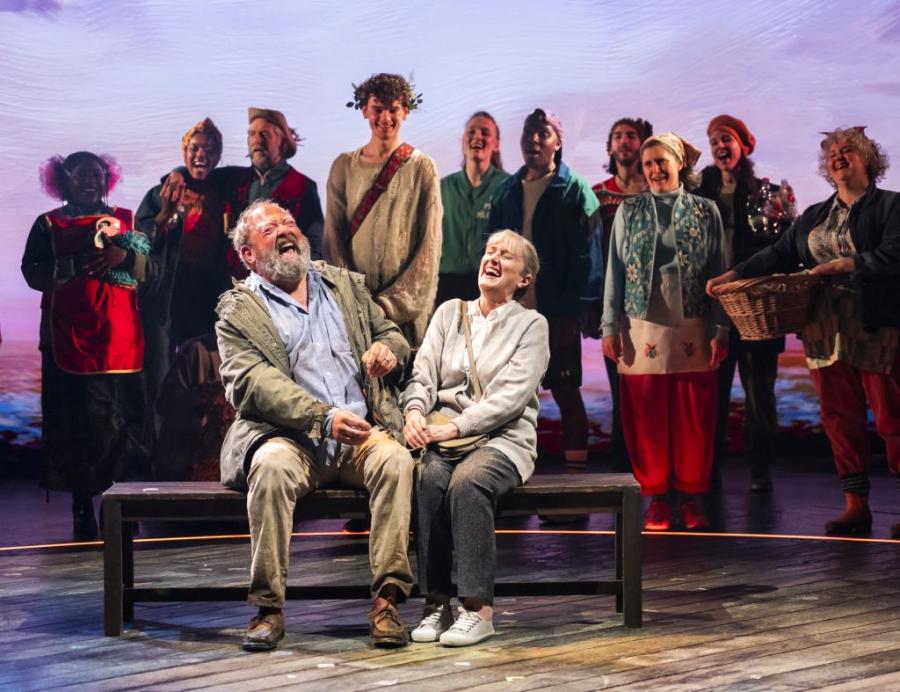
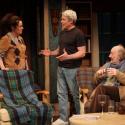
One also tires of the emotional gerrymandering, much of it improbable and unearned. (Oh for a dollop somewhere of wit or irony.) Samuel Wyer's circular design adapts to Harold's footfall as needed, clearing space to allow choreographer Tom Jackson Greaves's company to let rip physically in a way not available to someone of Harold's advancing years. But whilst Addy (pictured above with Russell) is hugely likeable throughout as a beneficent folk hero for our fractious time, the show's life lessons remain, for me anyway, delivered by rote, as opposed to the substance of the best art, which gets discovered surprisingly, spontaneously along the way.