If insanity is doing the same thing over and over and expecting different results, repeatedly unfunny Harvey isn’t just a study of madness, but a punishing example of it. Mary Chase’s dusty 1944 farce about a man hallucinating a 6ft 3in rabbit has slapstick trappings, but, in Lindsay Posner’s flat revival, the pace and energy of a straggling funeral procession.
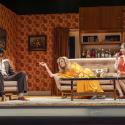
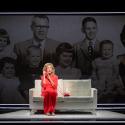
Chase’s placid, overlong paean to escapism – which somehow beat The Glass Menagerie to a Pulitzer – soothed her anxious wartime audience, but it’s thin pickings for a modern crowd; little has been done to instill contemporary resonance. Instead, this transfer of Don Gregory’s 2012 Broadway production boasts a slick veneer, with a starry cast and handsome Peter McKintosh period set revolving between the wood-panelled library of Elwood P Dowd’s (James Dreyfus) inherited East Coast estate, the sentimentalised dive bar he frequents with imaginary furry friend Harvey, and the psychiatric facility in which his socialite sister Veta (Maureen Lipman, pictured below) tries to incarcerate him.
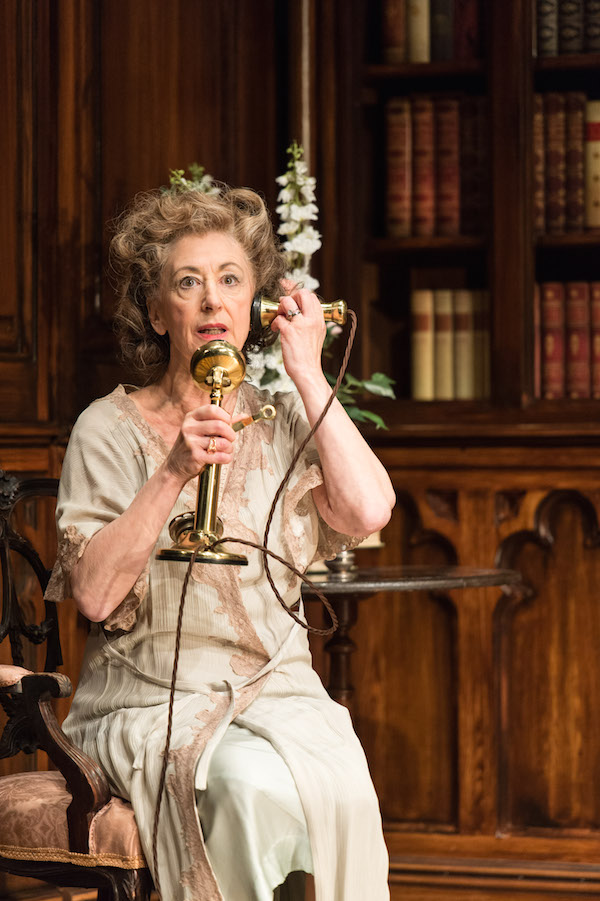 Fatally, the telegraphed action matches the revolve’s languid tempo as creaky misunderstandings and contrivances pile up, some recounted in distinctly undramatic fashion. Harvey lacks the inventiveness and thematic reach of work like Lars and the Real Girl or Trafalgar Studios’ recent The Ruling Class, which use delusion to wittily interrogate cultural norms. There is some suggestion that the core issue is Elwood’s anarchic cross-class socialising, not his visions, and dependent Veta’s real motivation for having him committed is financial, but Chase’s world is ultimately too benign to demonstrate the supposed brutality of reality, or for Elwood’s innocent to seem truly remarkable.
Nor is the psychology behind the middle-aged bachelor’s return to childlike ingenuousness satisfyingly scrutinised. What prompted his eagerness for constant connection rather than surface niceties, and what’s the significance of his increased alcohol consumption and decreased libido? Dreyfus veers into camp, but it’s unclear whether this is a deliberate choice by Posner, offering a deeper explanation for Elwood’s social outsider role, or a by-product of the show’s wild tonal variation.
If there’s little cohesion, the contagiousness of Elwood’s liberating lunacy at least provides some supporting entertainment. Plain Jane niece Myrtle (Ingrid Oliver) finds kooky romance with a brawny orderly (Youssef Kerkour), as do bickering Dr Sanderson (Jack Hawkins) and Nurse Kelly (Sally Scott). Both subplots are skimpy, but the crisp delivery and combatant chemistry of the latter pair makes theirs an absorbing runner. Lipman’s deft line readings and physicality enliven a limited role, and David Bamber finds poignancy in his psychiatrist’s unravelling, though even he can’t do much with the stubborn recurrence of a magical MacGuffin injection. Desmond Barrit and Felicity Dean struggle with a cartoonishly apoplectic judge and shrill ditz respectively.
Elwood declares he’s swapped smart for pleasant, and his creator seems content to do the same, abandoning the ramifications of this mysterious apparition in favour of an apologia for artless congeniality. Fluffy as a bunny, but lacking its teeth.