There are probably two distinct audiences for the latest adaptation from Les Enfants Terribles, The House with Chicken Legs: the young teens who lapped up the fantasy novel by Sophie Anderson on which it is based, and the adults who came with them. The latter may not be as enraptured as fans of the book by the piece’s staging, not to mention its almost three-hour length.
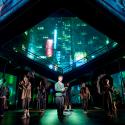
The piece made its debut at Manchester’s HOME venue, where it seems to have had a favourable reception. The QEH, though, is a different kind of space: quite steeply raked and with inadequate acoustics, which make it hard for the production to project as emphatically as it needs to. Miking up the cast has proved counter-productive, amplifying a tendency in some of them to shout their lines. And the set and props couldn’t help looking a bit lost, especially seen from above rather than closer to eye level.
Which is a shame, as there is potentially promising material here for some stage magic and winning characters. The story uses familiar figures in Slavic folklore, especially Baba Yaga, who, in her more witchy, child-eating manifestation, pops up in Dvorak’s Rusalka. Here she is the benevolent kind of yaga, a baba (grandmother) who shepherds the souls of the recently dead to the gateway in her house that will lead them to the stars.
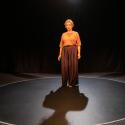
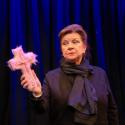
Living with her Baba (Lisa Howard) is Marinka (Eve de Leon Allen), a 12-year-old whose destiny it is to be the next yaga. This means she will live for possibly hundreds of years on the border between life and death, in a house that can run on its chicken legs from location to location. But Marinka is tired of all the moving around, especially as it prevents her from staying anywhere long enough to make friends there. When a football lands in her garden, followed by the boy who kicked it, Ben (Michael Barker), a chance to make a human connection presents itself.
Even more providentially, when the chicken legs then take the house on to a desert area, a young girl, NIna (Elouise Warboys), arrives who is apparently not dead, though her mother and sister have already sickened and died. Marinka now has a friend, if only briefly. But even the short time she spends with Nina proves dangerous to both Nina and Marinka’s grandmother, who, to repair the damage, must take Nina through the portal to the stars herself, and never come back.
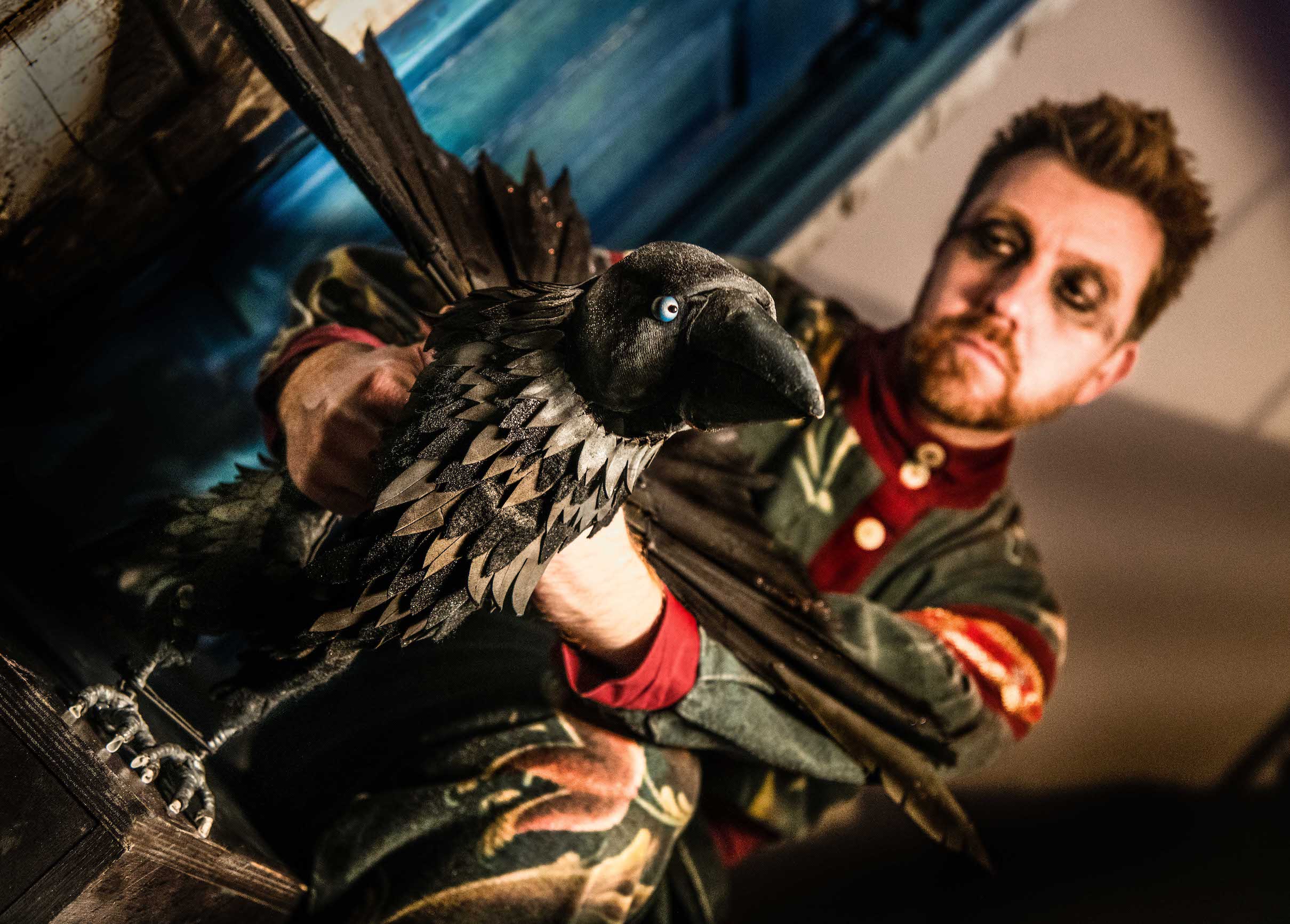 As a metaphor for acceptance of death, the story is a fertile and potentially poignant one. But the mood of the production now becomes brash and noisy, as Marinka’s house moves on to New Orleans. There, a Dia de los Muertos is in full swing, and a new yaga (Stephanie Levi-John) with a broad southern accent arrives, kitted out in a Day of the Dead skeleton outfit, to guide Marinka back to her destiny. Finally, there is a resolution of a calmer kind that comes with a degree of emotional heft.
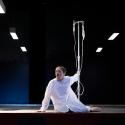
From the front stalls, it’s possible all of this would have been more engaging, the one-liners funnier, the stage magic more magical. In the rear stalls, though, the puppets brought on to represent Jack, Marinka’s helpful jackdaw friend, and her parents with her baby-self are lost against the background of the puppeteers’ bodies. More disappointingly, the house’s chicken legs appear just once, kept in motion by pushes from Marinka and Nina, but just marking time on the spot, not actually travelling anywhere. And the two items onstage that are properly mobile, the house and the gateway, have to be moved around by stage crew, which dilutes the magic still further.
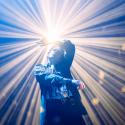
The most successful moments come when the video projections are in play – typically as backdrops, but also as representations of the swirling void though the portal at Baba’s house, or the starry skies through which Marinka travels and tumbles, in which shooting stars appear. (Video design is by Nina Dunn.) Helping to move things along, too, is Alexander Wolfe’s jaunty, klezmer-like music, ably played by the six-strong cast.
But I left wishing adaptor Oliver Lansley had found ways to cut the material by at least a third, and to pick up the pace of the rest (possibly with more use of projections for scene changes?) Those who haven’t read the book could also do with more hand-holding from the off, rather than being dropped straight into the story at the deep end, straining through the iffy acoustics to work out who is who and what is happening. For a troupe renowned for their storytelling prowess, this is a must.
- The House with Chicken Legs at the QEH until 30 December
- More theatre reviews on theartsdesk