The habit of art - a favourite topic of late, or so it would seem - gets a pummelling in The Line, a sort of Several Decades in the Atelier with Edgar (as in Degas) that would defy even Stephen Sondheim to shake a wordy and dour play into impassioned life. Henry Goodman brings his customary fervour to an assignment whose published text is dedicated to him, but Timberlake Wertenbaker's bitty drama seems like a blueprint for the TV mini-series that in different televisual times would surely lie in wait.
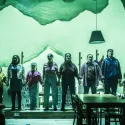
Until that happens, we have an Arcola Theatre premiere that is flavoursomely Gallic to look at, thanks to a William Dudley design that turns every corner of a tricky space into a repository for Degas' artistic output, or that of his young acolyte, Suzanne Valadon. But for someone who wrote near-definitively about the moral and cultural imperatives of art in Our Country's Good, Wertenbaker settles this time round for a standard issue bio-play replete with the inevitably hokey death scene that actors just as predictably love even as audiences roll their eyes.
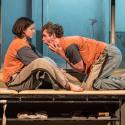
Along the way, we find a shifting triangle of sorts, with Degas caught platonically between two women: the street-wise Valadon (Sarah Smart), a one-time circus performer who falls under the senior painter's sway, and the older artist's ceaselessly severe housekeeper, Zoe Clozier. That role is played by a tight-lipped Selina Cadell, a wonderful actress here underused except for an eleventh-hour monologue explaining the two hours of severity that have come before.
"I don't want you in [Degas'] life," Zoe has previously made plain to Valadon, a fiery angel whose own way with language - and you thought Edith Piaf was bluntly spoken! - indicates that she's not above giving those who stand in her way the figurative finger and worse. We're meant to find Valadon a sparky free spirit, after a fashion, whose own art blossoms as her accent is refined. Smart, alas, can't get beyond the character's shrill contours; why anyone would willingly choose so extended a period with her as protégée goes unexplained. It's instructive to learn that Valadon was the first female artist to paint a male nude, and her sketches form part of the composite, deliberately makeshift feel of the set as gallery-in-process. But on this evidence, much the most interesting personage sounds like her errant son, who, alas, remains offstage throughout.
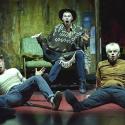
Instead, we get meditations on realism and a quick canter through the Dreyfus affair, along with the requisite name game that allows Goodman to luxuriate in a French accent as ripe as eyebrows that at times acquire a life of their own. (Smart, by contrast, mispronounces several of Valadon's apparently numerous lovers, among them Erik Satie, but that is a presumably deliberate choice so as to indicate the character's lack of learning.) The actual art of making art flickers only intermittently to life, supplanted by observations like "I locked up my heart in a pink ballet shoe". Goodman, as ever, has intensity to burn, but you feel him straining to provide drama where all too little exists, the actor at times lapsing into the vocal curlicues and grandstanding remembered from his West End Tevye in Fiddler on the Roof.
The director, Matthew Lloyd, was behind Goodman's recent Almeida and West End turn in Duet For One, a fiercely centred performance in which this febrile actor provided the psychiatric sounding board for Juliet Stevenson in distress. There's anguish to burn implicit in The Line, not least as regards a career that in Degas' case was not marked by uninterrupted happiness and praise. (Show me an artist who would claim theirs was.) What a shame, then, that so charged a landscape should come off as overly literary and polite. "I did taste beauty and I made beauty," Degas says by way of a parting shot, in which case we want - no, need - to taste it, too.
The Line is booking until 12 December.