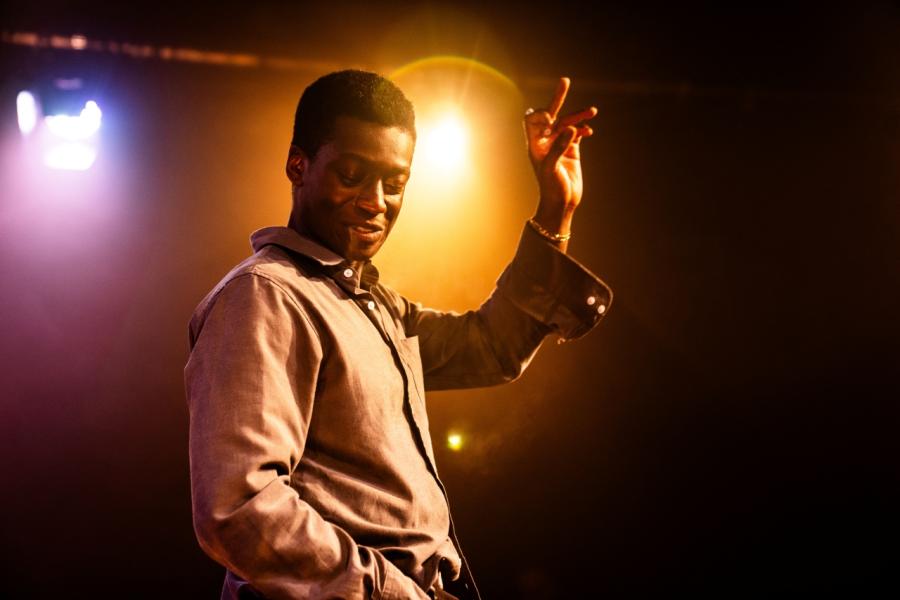
MILES., a two-hander with Benjamin (Benji) Akintuyosi as Miles Davis and trumpeter Jay Phelps in a host of roles, including himself – is a show which works remarkably well.
Remarkably, yes. Akintuyosi only made his professional acting debut in this role in a run of the show in Edinburgh last summer. Jay Phelps is above all known as a fine trumpet player and a music producer rather than as an actor. And the subject, Miles Davis – this show is carefully placed just ahead of the centenary of his birth in late May – was a complex and in many ways a disputed figure.
One reason why the show is so effective is that there is a palpable and authentic affection for Miles’s music underpinning the whole venture. Oliver Kaderbhai, writer-director-producer, explains his love of the music in the programme, and also that the death at 65 – the same age at which Miles Davis died – of a family member who was an inspirational jazz educator in Cornwall, Andrew Bilham, had brought such feelings to the fore and had reinforced his keenness to pursue the Miles venture which Jay Phelps had proposed to him and to :DELIRIUM.
Another favourable ingredient is what we can actually hear. Whereas we receive a deluge of information about who Miles Davis was, the show MILES. never feels like a lecture. And that is because we actually experience the sound of Jay Phelps’s fine trumpet playing right there in the room, it’s in the same air that we share. It’s one thing to be told about Miles’s sound and about how strong and assertive and yet floaty and vulnerable it could be. But it is quite another to truly hear and feel it, to be able to check back to the reality of it, through the trumpeter’s improvising fluency as he interacts with the original recording – Will Tonna deserves a shout-out for the sound design.
Another smart step by writer/director/producer Oliver Kaderbhai is to have found a way to keep coming back to considering the recording sessions for the 1959 masterpiece Kind of Blue. It really helps to have that as the focus rather than to be sucked into the perennial debates about which periods of Miles’s work are better or more interesting. He was to go on experimenting and leading pioneering work throughout the rest of his life, but the topic is a constant source of quite dry debate. The question is not ignored, and the theme of an artist developing her or his identity as a constant quest is a central theme, but the decision to focus in on the musical personalities of the musicians involved in the classic recording and what each of them brought to it is a blessing.
And then there are the issues which dominated films such as Stanley Nelson’s Birth of the Cool (2020) or Don Cheadle’s Miles Ahead (2016), the abrasive and combative sides of Miles’s character, the cruelty, the womanising... In MILES., these are present, but are included in a more diffuse way, and that works because the focus is elsewhere.
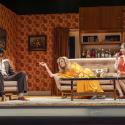
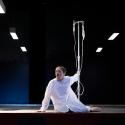
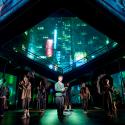
There are other very nice touches: Jay Phelps is suited out as a dapper Clark Terry, and later made into a charismatic Dizzy Gillespie (set and costume design by Ellie Wintour), the youthful love affair with Juliette Greco is touchingly represented with clever use of video projection (credit Colin J Smith). On the other hand, the arcane symbolism of Miles reaching into a Babygro... and finding a boxing glove inside it was, I admit, lost on me.
Above all, MILES. draws the audience in with the belief in the genius of the music, and the focus which Benji Akintuyosi, brings to reconciling the character’s contradictions. After its well-received launch run in Edinburgh, this short season at Southwark Playhouse Borough got off to a good start with a standing ovation at the press night. It is also selling well. Recommended.