As last week’s news evidenced, genocide never really goes out of fashion. So it’s only right and proper that art continues to address the hideous concept and, while nothing, not even Primo Levi’s shattering If This Is a Man, can capture the scale of the depravity of the camps, it is important that the warning from history is regularly proclaimed anew – and heeded.
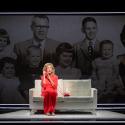
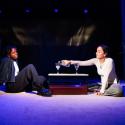
With just a few bleak, snowy back-projections of Silesia’s woodland near Auschwitz (it was enough to chill my soul with memories of a visit 34 years ago) and a lone cellist (Gemma Rosefield) to accompany her on stage, Samantha Spiro (pictured below) reads us a story. It’s more Grimm than grim to begin with, but soon the fairytale morphs into a nightmare. The shadow of the trains, rolling over straight, unbombed railway lines with their cargo of “goods”, falls across the narrative and we know where we are.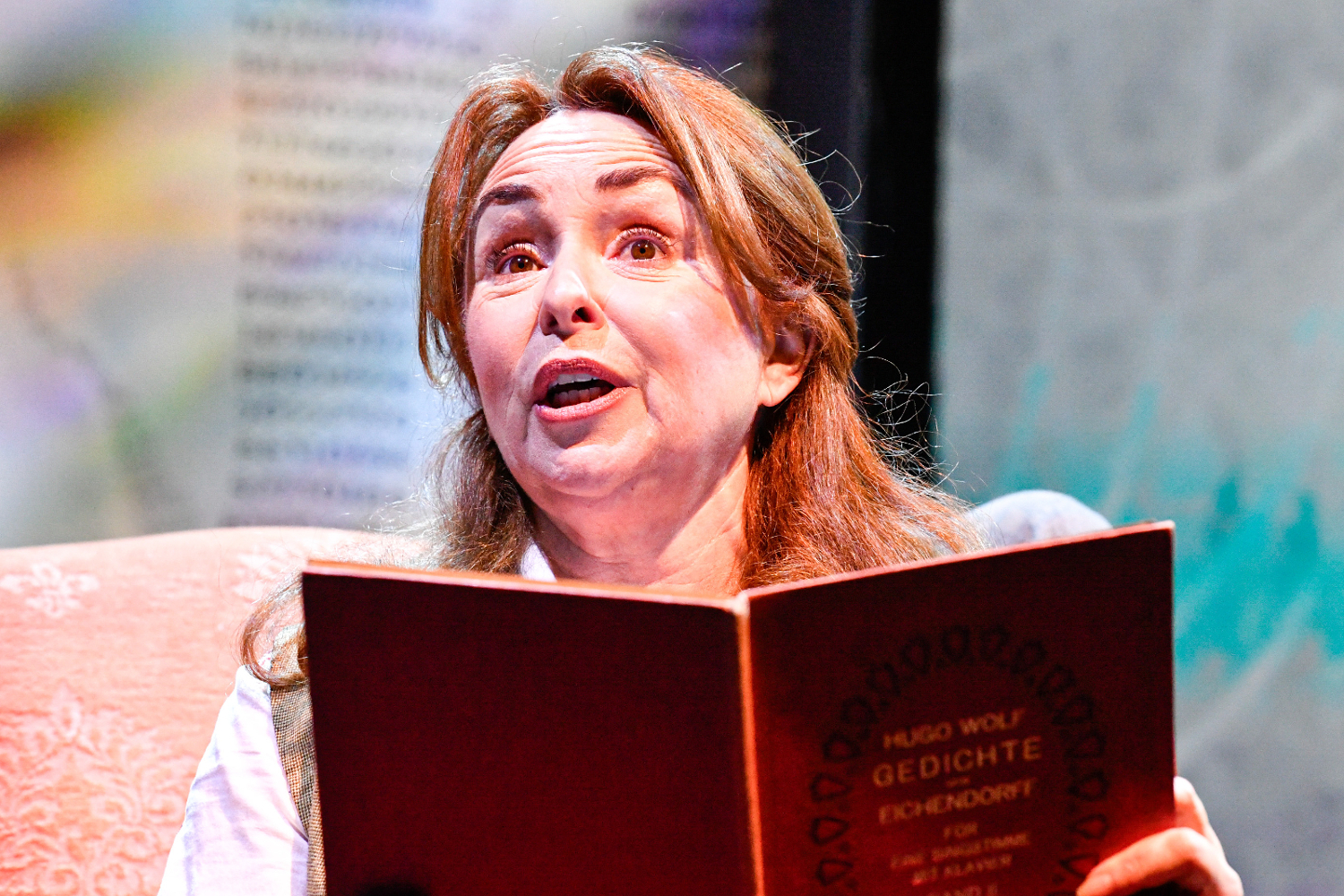 Soon to be released as a major animated movie, Jean-Claude Grumberg’s novel draws on his family history of transportation to the death camps. There’s a slightly uncomfortable coda that complicates the “truth” of everything we heard, but it’s really just an underlining that the specific story is less important than its standing as an exemplar, not just for the millions of victims of the Holocaust. It also leaves us with the triumph of love that underpins the show’s bittersweet conclusion.
Twins are born in France, but their parents are rounded up and packed on to one of those terrible trains to take them to near-certain extermination. The mother can suckle only one baby, so the father takes the heartbreaking decision to throw the girl, wrapped in his prayer shawl, through the bars of the cattle truck’s window into the snow, towards a woman who is the kid’s only, slim hope.
The father survives through a combination of his job as a shaver of heads, but mostly iron will and dumb luck, and the baby survives through the love of the woman and the two men who, eventually, find compassion in their hearts. We guess that these three, against all odds, will meet when the slaughter abates – and they do – but we cannot guess the outcome of that encounter.
Samantha Spiro’s reading brings the text to life with the minimum of different accents and visual characterisation (I was reminded of a low key episode of the BBC’s long-running children’s programme, Jackanory). Crucially, she largely lets the words speak for themselves. That’s a wise decision by director, Nicolas Kent, who also translated the work. There’s plenty enough to grip the house in the unfolding tale, but the unfussy baldness of the staging creates the sense of a testament, a witness statement, a window on unknowable distress and fear.
Don’t take my word for this sparse production's power to compel one's full attention. I saw a matinee attended by 50 or more kids aged about 14, all in uniform, all excited at the prospect of an afternoon out of school. "They're going to spoil it for everyone, scrolling through Insta and wriggling about," I thought to myself, as the lights went down on the 80 minutes all-through reading. But I was wrong.
- The Most Precious of Goods at Marylebone Theatre until 3 February
- More theatre reviews on theartsdesk