I came to Medea because 26 years back, the Field Day Theatre Company in Derry - started by Brian Friel and Stephen Rea - asked me to a version of Antigone. Entitled The Riot Act, it was staged in the Guildhall in Derry in September 1984 and toured Ireland after that. It has been produced several times since then, most recently at the Gate Theatre in London.
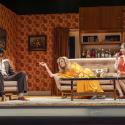
The following year the Open University Arts and Civilisation course asked me to do a version of Prometheus Bound – it was broadcast that year and published by Faber as Seize the Fire. I didn’t do any version of a Greek play after that, until last year a friend of mine - the great Shakespearean scholar, Jim Shapiro, who teaches at Columbia University in New York - mentioned that he thought most translations of the Greek classics were very stilted and lacked vocal pitch and cadence. I thought I’d try Medea and set to work. I sent it to Barrie Rutter, whose company Northern Broadsides I greatly admire. He took it and it opens tonight at the Oxford Playhouse.
 As with the two previous plays, I aimed in doing my version for what Robert Frost calls "sentence-sound". Frost says that a sentence is "a sound in itself on which other sound called words may be strung". His poetry is rich in such vernacular, spoken sounds – in the classic pastoral "Mending Wall" where he begins the poem by saying, "Something there is that doesn’t love a wall," a perfect spoken line. And in "Stopping by Woods on a Snowy Evening" he begins, "Whose woods these are I think I know./ His house is in the village though." A musing, deft, spoken line. I aimed for such effects as I worked on my version, and though I did my Antigone sometimes in Northern Irish dialect, I’ve moved on since then and my Medea is in Standard English, though I do use the word "lunk" in the Nurse’s opening speech – "lunk" is used in the north of Ireland to mean "an unbearably, hot, still day", and it seems to have come over with the Vikings. Otherwise, as I say, I’ve kept the language Standard. I’ve aimed for short, terse lines, and have for the most part avoided the iambic pentameter.
Medea is one of the great classical Greek tragedies, and Medea is the greatest female part in all Greek drama. She is a powerful, highly intelligent woman, and the play’s feminism must be why when it was entered for a competition during Euripides’ lifetime it came last. The play begins with the Nurse’s speech. It is a very hot day, still and death-like. The Nurse talks about Jason, Medea’s husband, and Medea’s early adventures on board the Argo, and their stealing the golden Fleece.
 The Nurse is both warm and anxious, and she says that she wishes Medea and Jason had never met. Medea would never have tricked King Peleus’s sisters into killing him, nor would she have fled to Corinth with Jason and left her home. In Corinth she is a foreigner and the butt of racial prejudice. The Nurse says that Medea was happy in her new life in Corinth with Jason and their two fine sons. She obeyed Jason in everything, and this was for the best, but the house is full of hatred now as he has fallen in love with King Creon’s daughter and intends to marry her.
The play consists mainly of angry dialogues between Medea and Jason, and near the end she poisons Jason’s new lover and her father Creon. She also kills her two children. It is a very powerful and upsetting tragedy, which has often been performed. I am greatly looking forward to Northern Broadsides production.
- Northern Broadsides' production of Medea is at the Oxford Playhouse 2 - 6 February and then tours to Coventry, Richmond (North Yorkshire), Liverpool, Halifax, Glasgow, Scarborough, Newcastle-under-Lyme and Salford until 17 April. More details here.