Simon Sebag Montefiore is a historian in a hurry - as well he might be when there’s a whole millennium to fit into an hour. A year ago we had his three-parter Jerusalem - The Making of a Holy City, now we’re well into Rome - A History of The Eternal City: no mean feat, given that these are major, impeccably researched and made projects. At least there’s no need for a costume change: Montefiore is back in his panama and chinos, outfit of choice for summer filming that lends him an almost Forsterian élan.
Rome - or at least, things loosely Roman - has been cropping up a fair amount recently. The BBC at the Coliseum again? Welcome back, signore. Sunday's Rome’s Lost Empire had Dan Snow getting up to all sorts of energetic things and proving why that one went out on One. Next week Montefiore is moving into the Dark Ages, which just happens to be the title of the current four-parter from another redoubtable Four-er, Waldemar Januszczak (who's at the opposite end of the sartorial spectrum, presenting the whole thing in rather ghoulish black).
No hours-long banquets here, and there’s little largo in the soundtrack
Montefiore describes himself as both a historian and a tourist, but it’s the former role that dominates (Kenneth Clarke rests undisturbed, though). Rome may be the city of la dolce vita, but he’s wearing out the shoe leather here on steps Palatine and Spanish to challenge any Japanese tour group – and delivering his pieces to camera admirably without a stumble on the forum's uneven floor.
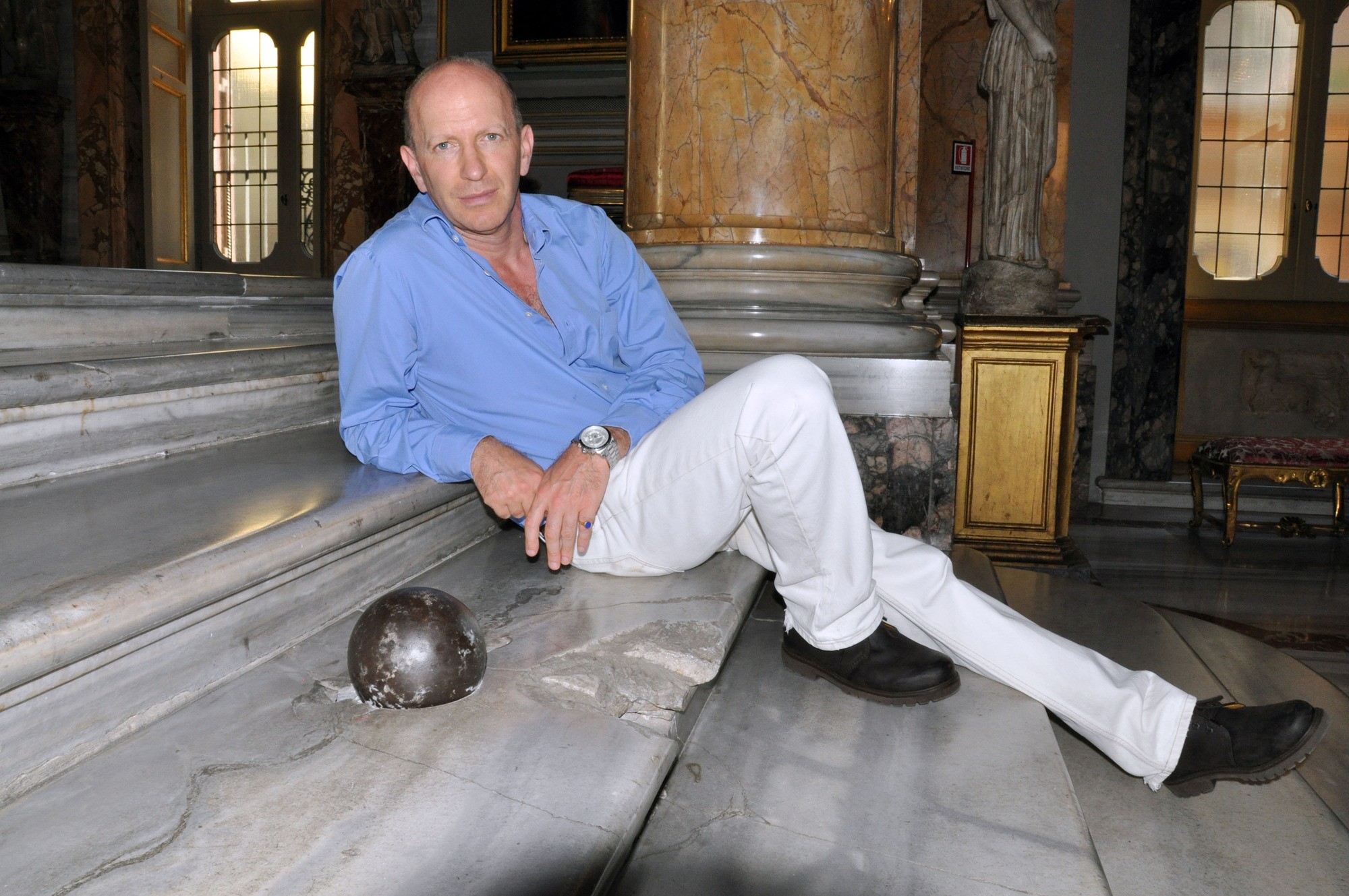
Any hint at slacking is rather charmingly dictated by narrative - when he flags down a taxi it's alluding (I think) to fleeing citizens, while grabbing a pizza slice has something to do with hungry hordes. No hours-long banquets here, and there’s little largo in the soundtrack, either (he gets a lie-down, with a cannonball, in part three, though, pictured below right, BBC/Nick Holden-Sim). It’s all happily summery, until historical storm clouds loom and thunder-and-lightning shots duly darken the screen. That's except for a rather gimmicky stunt at the end of part two to convey impending historical upheaval, when they set light to a car and get the fire brigade in to put it out (a thing of budgets past, you’d have thought?).
 It’s not just knowledge and conveying a sense of being there that define these BBC Four presenter-led series, but the intonations used to convey it all - the attempts to express how really fascinating it is, as well as a bit, er, strange.
Montefiore's from the less-is-more school, engaged drollery and mild surprise his notes of choice, and there’s no adventure for adventure’s sake. The nearest we get is a wander through the sewers (still very much functioning) that’s justified in showing the importance of those cloacal regions in ancient city planning. What might have induced a whole string of “wows” in a different host has Sebag admitting only to a half-hour panic attack (spare your thoughts, actually, for the cameraman who managed to film his subject from the other side of what must have been a crowded ladder). Similarly he observes with detachment the “intense passionate devotion” of believers kneeing their way up the Scala Sancta, the staircase supposedly from the palace of Pontius Pilate brought back to adorn the newly-Christian capital: others would surely have been down on their popliteals before we could say “divine intercession”.
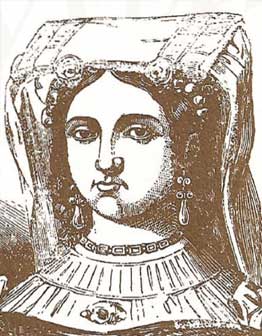 The format's weakness is that our journey though history becomes a bit like speed chess, making the points where the narration halts for a breather the significant ones. We get the traditional intrigues of statecraft and the nuances of religion(s) here, through familiar figures like the (frequently bad) emperors and good guys like the reticent Gregory, who was lured back from his monastic cell to extend Christianity to the corners of the empire. But few could honestly say they’d heard of Marozia, a highly distinctive member of a 10th-century “tribe of sex-mad megalomaniacs” (looking remarkably innocent, left). She seems to have bedded most of the popes and royals of her day, and apparently gave rise to the word “pornocracy”. We’ve already had Julius Caesar described as a “balding adulterer”. Any guesses how the final episode of this Roman saga will end next week?