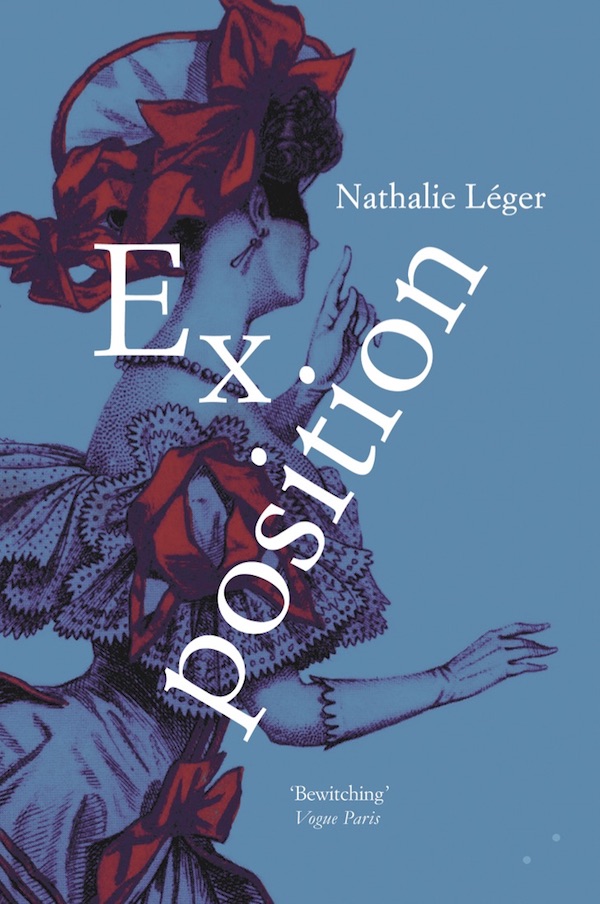
Nathalie Léger’s superbly original Exposition is a biographical novel meditating on the nature of biography itself. Its plot – if indeed its 150 pages of intense reflection bordering continuously on stream of consciousness can be called a plot – is an account of the life of Virginia Oldoïni, better known as the Countess of Castiglione. Specifically, the narrator (a half-fictional version of Léger herself) is fascinated by the visits Castiglione made to be photographed in the same Paris studio over four decades – turbulent years which saw her reach the height of power and influence and ultimately the very depths of isolation and poverty. Amanda DeMarco’s vibrant translation, if a little overfaithful to the original French at times, successfully renders Léger’s intensely visual style, capturing her trains of thought and many digressions with precision and flair.
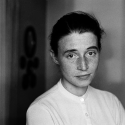
Any book describing the life of the Countess of Castiglione, whether non-fiction, fiction or the curious mix of the two that it is here, is constantly vulnerable to the risk of relaying gossip. Castiglione was, after all, a highly significant and well-known figure in the French salons of the latter half of the nineteenth century: famous for her beauty, she was for some time a mistress of Emperor Napoleon III. The danger would thus be to become too fascinated with the many popular narratives surrounding Castiglione and forget about the woman herself. Léger, though, is well aware of this, and Exposition is in many ways a homage to the person behind the reputation, irrespective of whom she may have taken as her lover. By focusing on the photos of Castiglione taken by Pierre-Louis Pierson, Léger draws insights from what they hide or reveal about the life and identity of such an enigmatic figure.
 But just as much as we learn facts, consider rumours and encounter mysteries in the life of Castiglione, the figure that slowly comes to prominence is the narrator herself. What Léger proves to her reader is that within every biography there is autobiography. This is a highly stylised, highly self-reflexive, highly Woolfian biography that reveals as much about the identity and obsessions of its narrator as it does about the Countess. As we are told at a poignant moment towards the end (where the narrator is examining one of the many images of Castiglione), ‘I don’t know what of it is her and what is me’.
Léger’s book (in DeMarco’s translation) is not what one would call an easy read. At its most fundamental level, it is an intellectual and emotional examination of identity, feminine beauty and representation, all the while remaining a fascinating piece on the nascent practice of photography in the nineteenth century. All this is told in fragments through an ekphrastic, occasionally erratic style. But this stream-of-consciousness-esque narrative draws us in, places us alongside the narrator and ensures that her obsession becomes our own.
It would be a challenge indeed for anyone to read this book and not seek out photos of Castiglione. But it is similarly challenging to forget the book’s author. One wonders just how autobiographical it really is, wonders if the photos of Castiglione are not a form of mirror enabling the narrator – and perhaps Léger – to ask questions about her own life.
- Exposition by Nathalie Léger trans. Amanda DeMarco (Les Fugitives, £12)
- Read more book reviews on theartsdesk