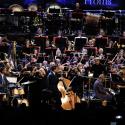
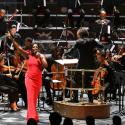
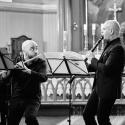
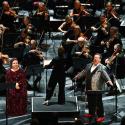
The idea of recording an album with Tenebrae has been bubbling away for a number of years. Nigel Short and I first worked together in 2007 when I asked him to direct the vocal consort for a UK tour I was doing with my own group. Since then we have worked together on a number of projects and regularly discussed the idea of a collaboration with Tenebrae.
The juxtaposition of saxophone and voices has been central to my work as a composer, arranger and performer for almost 30 years. The way sound can morph from one to the other in an almost imperceptible way has fascinated musicians from all genres for over a century. Johnny Hodges & Ella Fitzgerald, Stan Getz & Astrud Gilberto and John Dankworth & Cleo Laine have all brought their own unique approaches to this combination of forces.
My own concept of sound derived from my days as a chorister. That aesthetic has always been central to the way I approach the saxophone, aiming to phrase and resonate like a singer. I enjoy the way there is so much common ground between the two, but also how they are also able to depart from each other and explore their own uniqueness.
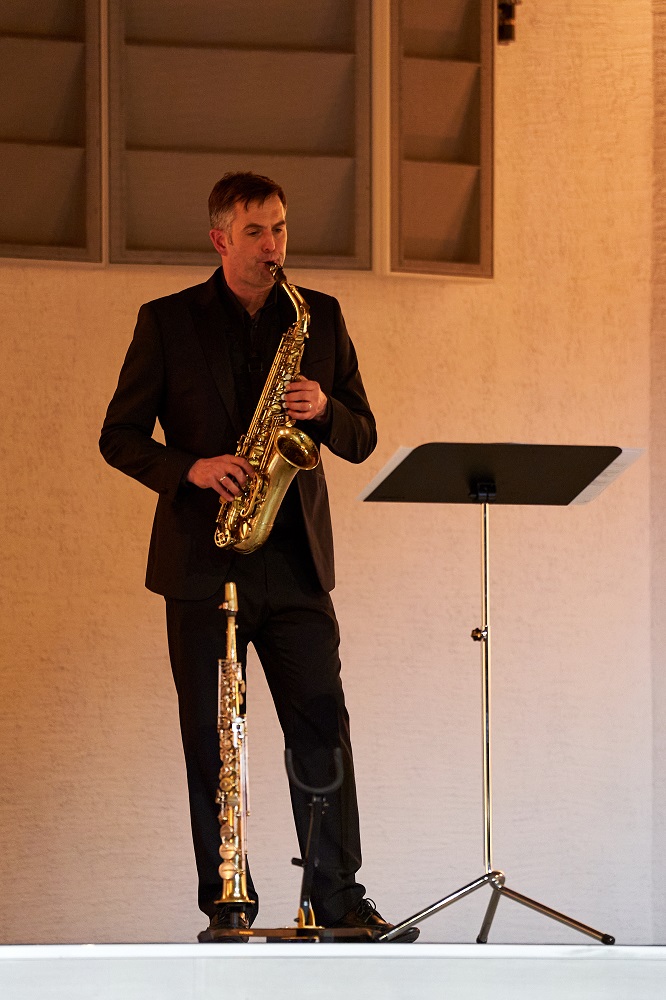 Adolph Sax’s invention was born from a desire to create a hybrid between woodwind and brass; an instrument which could produce the same levels of sound as a brass instrument but with the warmth and intimacy of a woodwind instrument. Despite the obvious similarities in appearance to a brass instrument, the instrument very much behaves like a member of the woodwind family, particularly the oboe. The bore is conical but with a much wider flare than that of the oboe, meaning the instrument has an exceptionally wide dynamic range. But as well as dynamic range, the bore shape means it is possible to resonate to a very high degree using the same anatomical structures as a singer, utilising the throat, oral, nasal and sinus cavities to mirror the frequencies of the reed within the body. This is the reason saxophonists can have such distinctive sounds, and one of the main draws of the instrument to many players.
The repertoire in this collection spans a number of centuries, but there is very much common ground in the way each piece invites the listener to a place of stillness and reflection. The arrangements at times ask the saxophone to sit within the ensemble as another voice, but at other times call it to rise out of the texture in a more soloistic way. Equally the voices move from their traditional role of embracing and conveying text, into that of a multi-person harmonic instrument.
Much of the material has been written and arranged especially for this project, but other pieces have been reworked for this combination. An example is Renouncement which was the title track from my 2007 album. It’s a setting of a very moving poem by Alice Meynell, and the original scoring included organ and tubular bells. The challenge in adapting that piece was how to incorporate the organ bedrock of sound, often sustaining long drones and producing moments of extreme power, for a consort of 6 voices. The piece takes on a very different personality, but I’m always amazed at the amount of sound a vocal ensemble can make if you get them in the appropriate registers. For me the piece gains in intensity in this format rather than becoming something smaller. 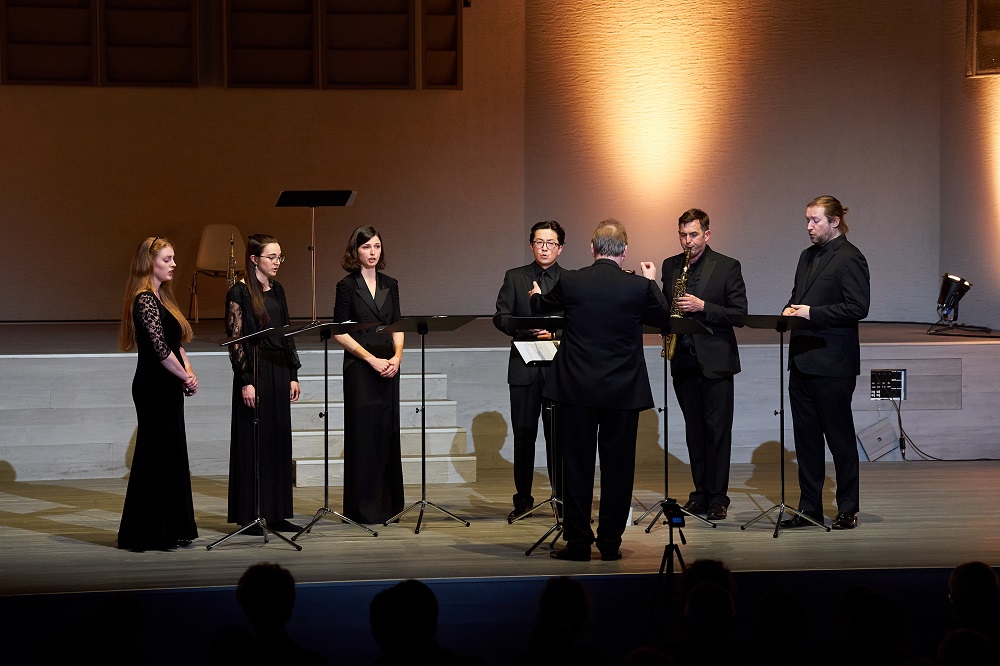 During the process of creating arrangements of some of the timeless repertoire we have included here, I was extremely conscious of ‘gilding the lily’ and tampering with things that are perfect on their own. I’ve never attempted to employ ‘clever’ re-harmonisations, or to try to and make pieces unrecognisable, but instead I have tried to keep the originals intact and simply frame them with textures already found there. Why try to alter the key elements of a piece when those are the elements that have drawn us to it in the first place? But I have permitted myself to add descants! As a chorister we all waited patiently for the final verse of a hymn when a descant would rise up from the texture and soar across the congregation, the hairs on the back of our necks standing on end. Descants have always had a big place in my writing.
It’s such a privilege for me to hear these pieces brought to life by one of the finest choirs I know, and I hope the listener will find stillness and reflection in the album.