As a generalist (or dilettante) who writes about world, jazz, pop and classical music, I have no doubt that 10 years ago Andreas Scholl was one of the great voices of the planet alongside names like Abida Parveen from Pakistan and Caetano Veloso from Brazil, a vocal Sun King. From an early age he had had success upon success, audiences gave him huge standing ovations, women swooned over him (OK – slightly older women like my mum, who followed him around Europe).
And all this singing in a countertenor, castrato, feminine high register. In pop music, of course, this was par for the course; you could say all the best stars had an element of androgyny, from Elvis to Bolan and Bowie, and high voices in men like the Bee Gees sold millions. Androgyny in pop was sexy, and Scholl was actually a rather virile exponent of vocal sexual indeterminacy.
Whereas a decade ago people talked of being knocked out by Scholl, here the power was more introverted, but no worse for that
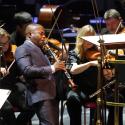
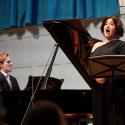
Last night, having not seen him for a few years, I found Scholl a different figure – rather withdrawn, certainly quieter. I have no idea why that should be - life events, illness, his reported dalliances with heavy metal suggesting a certain existential angst, or simply anno domini. It was billed as “Andreas Scholl sings Pergolesi”, but if you missed the opening Vivaldi Stabat Mater you wouldn’t have seen him at all for the first half, in which as well as a sensitive, soulful opening, you got Wassenaer’s Concerto Armonico No 2, parts of which scampered along not so much at presto as at headbanging speed - you imagine a conductor would have reined in the Academy of Ancient Music ensemble.
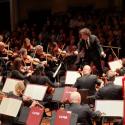
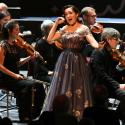
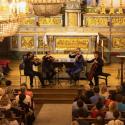
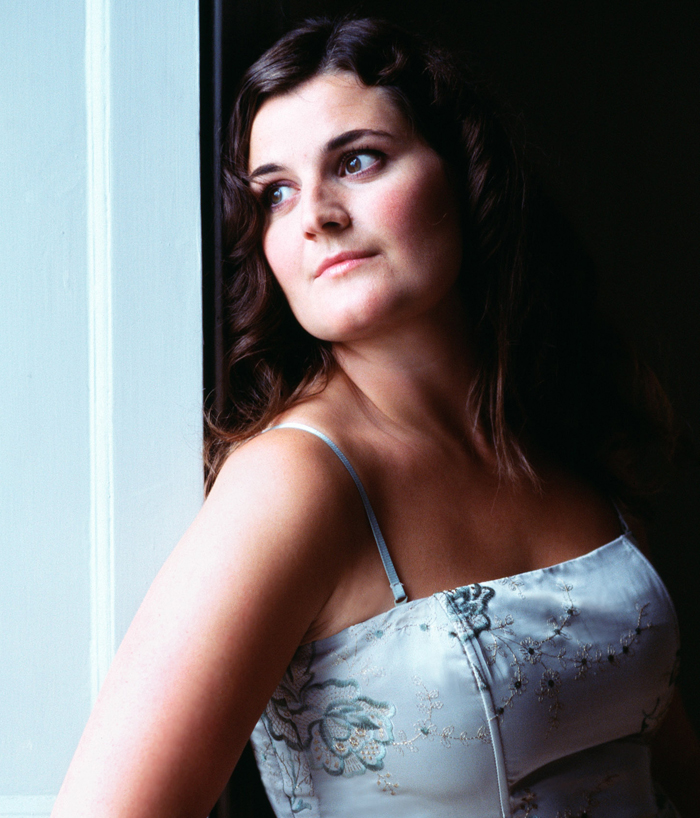
The AAM were a good foil to Scholl, though, organic and quite earthy. I was going to say they had no outstanding players, as a compliment, in that they really sound like a collective, and make the music sound freshly minted, impressively enough for an outfit 40 years old. In fact, when director and lead violin Pavlo Beznosiuk began to assert himself and take on some of the flashier runs, it was actually a little disconcerting because it undermined that feeling of a democratic band energy. Vivaldi’s Salve Maria was sung by the brilliant Swedish soprano Klara Ek (pictured below by Sussie Ahlburg), who seemed a little uncomfortable, perhaps at the thought of hogging the limelight in a show which was billed as Scholl’s.
The second half saw more Wassanaer (a Dutch aristo who wanted to remain anonymous, and whose authorship of the Concerti Armonici has only recently been established) and then the main event, Pergolesi’s Stabat Mater. The duet of Scholl with Ek was sublime – as Jean-Jacques Rousseau said of the opening, it is “the most perfect and touching duet to come from the pen of any composer,” and it was hard to argue with that. Scholl was not on all evening, but was like a 40-year-old Premier League footballer who is on the bench for half the match and may have lost a couple of yards, but makes up for it with impeccable timing, empathy and intelligence.
 Pergolesi was one of those doomed youths like the modern 27 club of Hendrix, Cobain et al, and this piece was written as he wasted away with tuberculosis. The setting of the Virgin Mary seeing her son being tortured was and remains an emotional and spiritual test of sorts – if this doesn’t move you, or you can't move an audience with it, something is missing.
Scholl mixed soul and superb technique, even if Ek had to rein in her voice not to overpower him. His voice may not have the decibels of yore but it is the voice of experience and full of humanity. The AAM's was not a cleanly accurate sound, but had some rough edges and they played with sincerity. As they say in Argentina, the best tangos have to have some dirt, some mugre. Whereas a decade ago people talked of being knocked out by Scholl, this time the power was more introverted, but no worse for that. Scholl is apparently a Scorpio with a Piscean moon, both water signs, and there was more ocean and tide than fire or air. A decade ago he would have got a big and immediate standing ovation; the reaction from a sold out audience last night was deservedly warm but more thoughtful.