

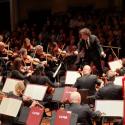
Concert one-offs can be experiences to last a lifetime (immediately springing to mind is Jakub Hrůša’s BBC Symphony Orchestra Shostakovich 11). But this has been a year above all for the best of festival planning, the sort where you feel enriched by connecting threads. So my starting point is the same as Graham Rickson’s top CD choice: the way Arvo Pärt’s 90th birthday was celebrated at the peerless Pärnu Music Festival in Estonia.
That extended beyond the top-quality concerts of Paavo Järvi's superband, the Estonian Festival Orchestra, the performers featured on the CD: there was, for example, a spellbinding mostly-Pärt sequence from Vox Clamantis in the Estonian (Greek) Orthodox Cathedral of the Transfiguration, and Fratres in a version for eight cellos in the annual chamber gala. But the EFO's programmes overall, after a slightly disappointing choice of repertoire last year, were also back on the very highest form. The revelation for me was how Iveta Apkalna's magisterial organ role fused with the deepest string sound in Poulenc's profoundly moving Organ Concerto (Apkalna, Järvi and members of the EFO pictured below by Kaupo Kikkas).
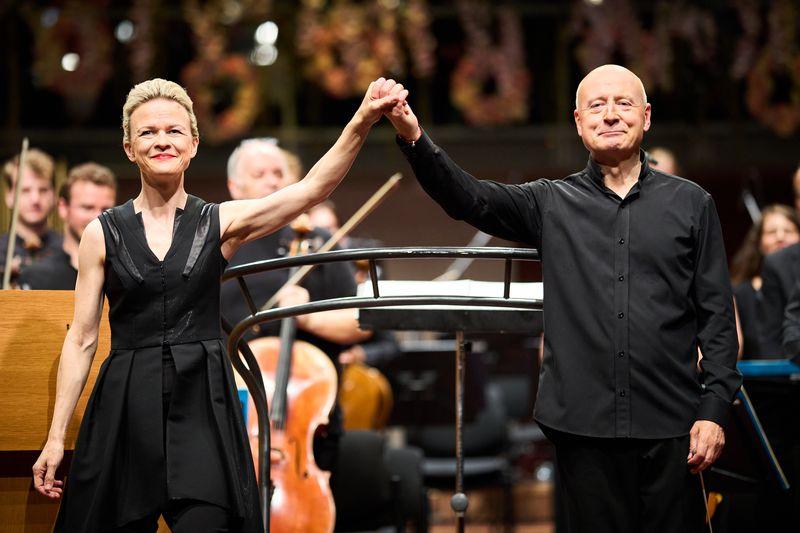
There was a searching, free-ranging interpretation of Beethoven's Violin Concerto with Vilde Frang and two performances of his Seventh, an electrifying approach which lived in the moment but was offset by super-sophisticated playing from the international ensemble. I was lucky to hear its equal when Riccardo Muti gave us the shock of the new in the Fifth Symphony at this year's Ravenna Festival with the freshness of his Cherubini Youth Orchestra. As for Pärnu, you can watch every concert on the festival's TV channel.
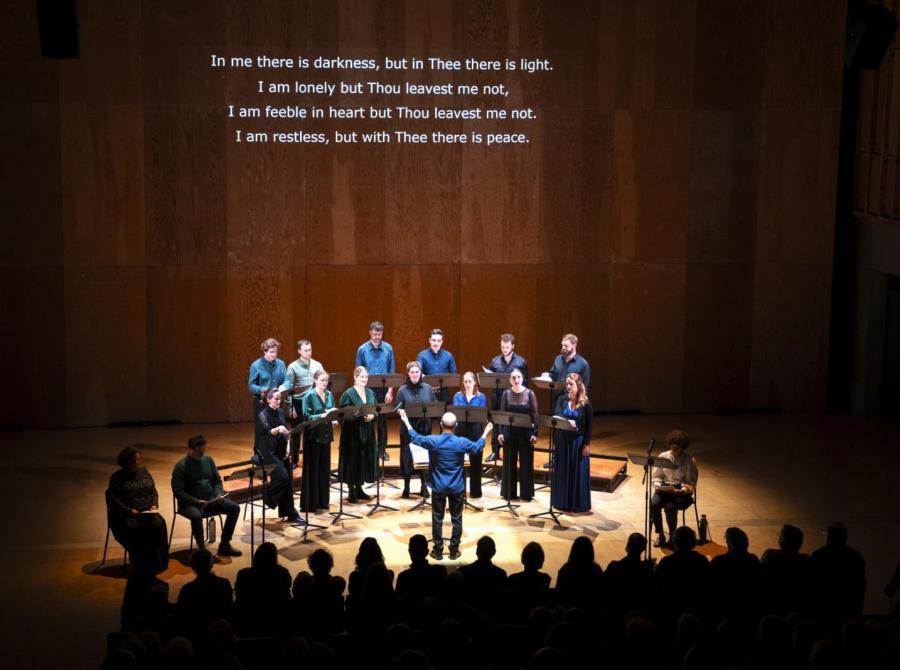
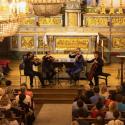
The festival sensibility needn't run to a huge number of concerts. At Snape, on Remembrance Weekend, two hugely thoughtful programmes in the Britten Pears Studio complemented each other beautifully. A homage to the White Rose movement pioneered by Dr Alexandra Lloyd with Sansara under Thomas Herring (pictured below) ran an astonishing gamut and kept the balance of words and music tight and right.
The next afternoon, a young tenor new to me, Liam Bonthorne, and equally fine pianist Benjamin Mead interwove Cheryl Frances-Hoad's vivid settings of Ian McMillan's poems about First World War survivors, Magic Lantern Tales, with Britten's Soutar cycle Who Are These Children: spellbinding indeed. National tenor-treasure Allan Clayton ensured a gripping ten minutes in an event of the main Aldeburgh Festival, resonating with kaleidoscopic world premieres, in Tom Coult's Black Shuck Lament. This vibrant fantasia on a legend linked to the atmospheric venue, Blythburgh Church, stood out even in a rich gem of a programme with select players of the Dunedin Concert.
Back on familiar Britten territory, a former top treble now establishing himself as a rare tenor, Laurence Kilsby, gave us a truly transcendental perspective on Britten's Serenade with John Wilson and Sinfonia of London strings at the Barbican; this is also a top choice for Alexandra Coghlan.
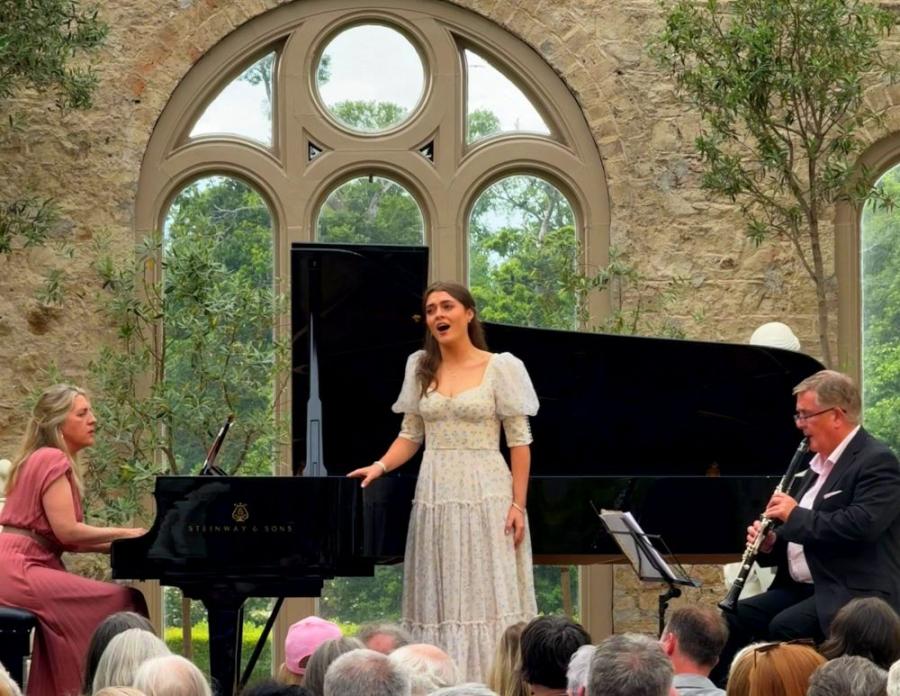
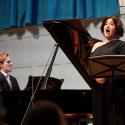
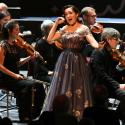
Newcomer of the year is rife with possibilities: my top of the list are Kilsby, Bonthorne, pianist Mead and an unusual choice in soprano Ava Dodd, who should have got a mention in the Best of Opera as Micaëla in ENO's Carmen revival, a characterisation of urgent projection and perfect diction, but who gave an even more remarkable demonstration of budding stardom as a recitalist starting tense but soaring freely by the end of an appearance at Kilruddery House as part of the Dublin International Chamber Music Festival (pictured above by Luca Soners with Dearbhla Collins and clarinettist John Finucane in Schubert's "The Shepherd on the Rock"). Sebastian Scotney's choice in the newcomer category is a 22-year old Austrian mezzo I can't wait to hear, Anja Mittermüller. Her Wigmore Hall recital with Richard Fu can still be watched on YouTube. Bernard Hughes singled out bass Daniel Venning from a Royal Academy Song Circle concert, also at the Wigmore Hall.
Top of the "why have I never heard this live before" category for Bernard was a Royal Festival hall hybrid Messiah, for me Brahms's typically rich First String Quartet in the vibrant hands of the Cuarteto Casals, also at the DICMF. Further south in Ireland, Finghin Collins' annual New Ross Piano Festival was another of those total packages which head the year's experiences. I treasure first acquaintance with an endlessly resourceful jazz piano duo, Stephanie Trick and Paolo Alderighi, in a revelatory afternoon interlude. Central, though, were three consecutive evenings showcasing a top pianist in the first half, another in a piano quintet, the discovery in this case being Bloch's First Piano Quartet with Lisztian supreme Daniel Lebhardt: a dark stunner of a work with a transcendent epilogue.
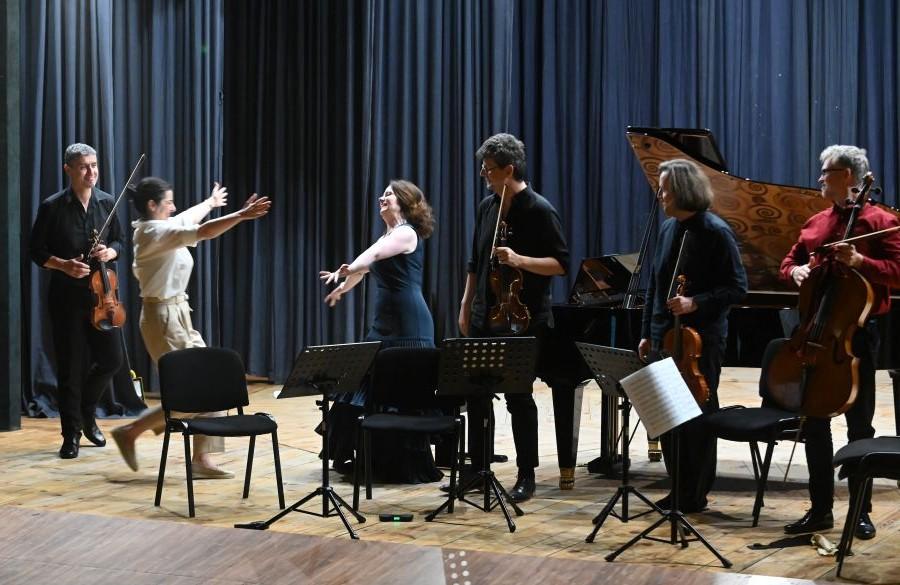
Piano quintets were also at the core of the Off the Beaten Path Chamber Music Festival in the gorgeous village of Kovachevitsa at the heart of Bulgaria's richly wooded Rhodope Mountains, masterminded by the liveliest and friendliest of native musicians. It was good to discover specimens by Bridge and D'Indy, but contemporary treasure (and festival board member) Dobrinka Tabakova's Stone Path Quintet (the composer greeting pianist Lora Tchekoratova at the end of the performance pictured above by Jordan Simeonov) was the undoubted highlight - until the end of the festival, when master cellist Alexander Somov set the finale of Mendelssohn's Octet on fire.
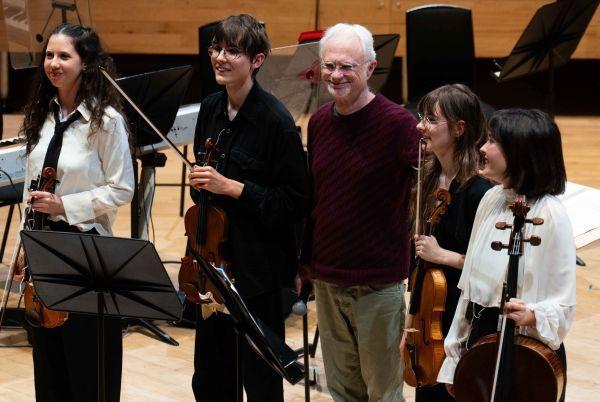
Around the UK, Robert Beale admired Huw Watkins' gamesome Concerto for Orchestra premiered by Manchester's Hallé and its conductor emeritus Mark Elder, and was a lucky witness to the orchestra's John Adams weekend, which included the composer conducting his own classic Harmonium among other works as well as a chamber concert given by students from the Royal Northern College of Music (Tako Tkabladze, Joe Steel, Emily O'Dell and Lola Garcia Marquez of the Emerz Collective pictured below with Adams by David Hughes/The Hallé).
Stephen Walsh's highlight was Cardiff-based new music ensemble Uproar's programme of "works inspired by or referencing Ligeti's Chamber Concerto, a refreshing, well organised sequence of pieces that sometimes even outstripped their supposed model."
Simon Thompson had a rich time at this year's Edinburgh International Festival, admiring Pappano's LSO performance of Vaughan Williams' A Sea Symphony, which I'd found a little restricted in the Barbican - though the same team's Britten Violin Concerto with Janine Jansen and Shostakovich 10 later in the year scoured the soul - and the Budapest Festival Orchestra's Bartók Miraculous Mandarin (complete), which "brought a dirt-under-the-fingernails nastiness that was missing from their Proms appearances. The finest thing of all, however, was a performance for only two pianists that felt cosmic in terms of both scale and vision: Pavel Kolesnikov and Samson Tsoy making the Queen's Hall's rafters ring in a transcendent performance of Messiaen's Visions de l'Amen."
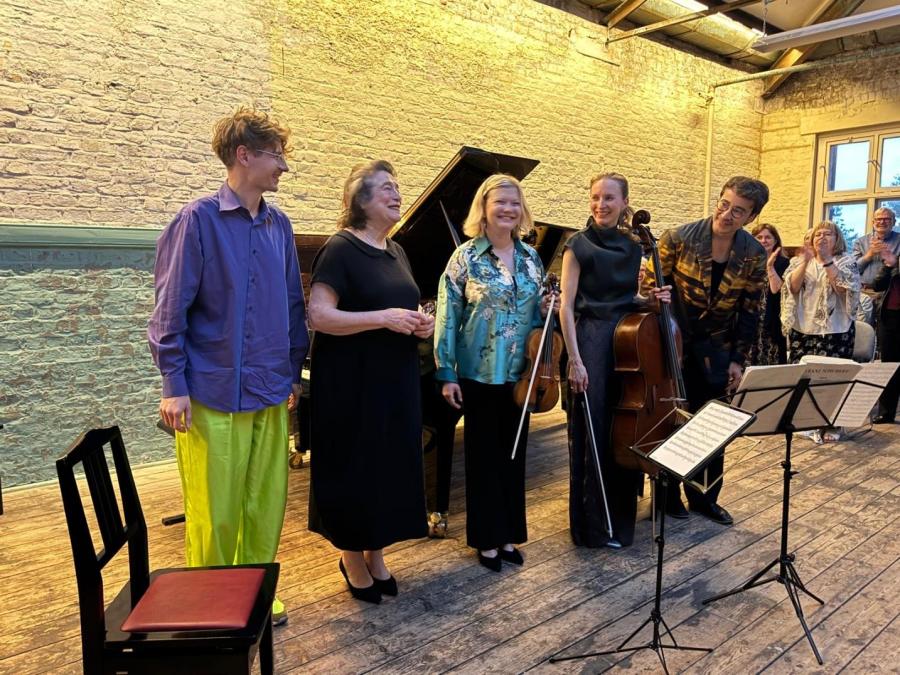
I wish I'd been able to catch more than the third concert in the Schubertiade masterminded by Kolesnikov and Tsoy at their now-revamped East London haunt, the Ragged School Museum, with the greatest colleagues in Elisabeth Leonskaja, Alina Ibragimova and Marie-Elisabeth Hecker (the five pictured above), but what I heard was pure gold. As for more Messiaen, Rachel Halliburton has recently been wowed by Ensemble Mi's alternative superclub performance of the Quartet for the End of Time.
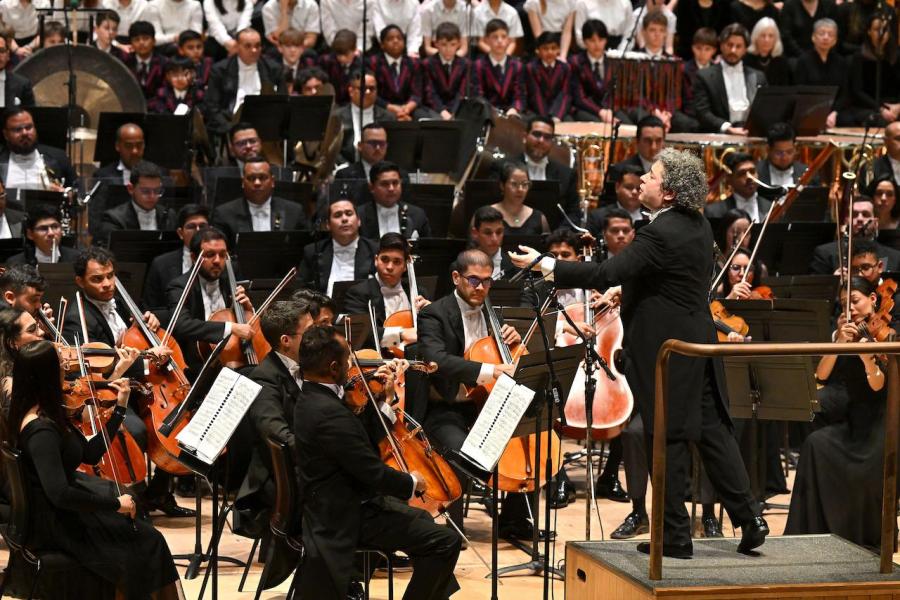
Rachel was also electrified by Gustavo Dudamel and the Simón Bolívar Orchestra of Venezuela in Mahler's Third Symphony (pictured below by Mark Allan), "taking the Barbican by storm with the composer's great exploration of the cosmic order, ascending from raw paganism to the sublime". Another mix of vocal and orchestral ambition, Kullervo, was only one highlight in Hannu Lintu's cannily programmed Sibelius festival with the Lahti Symphony Orchestra, launching a three-part celebration of the composer and his contemporaries.
So we reach the epic scale at last, though once again Peter Whelan kept Irish Baroque Orchestra and vocal forces relatively small in a Dublin performance of Bach's B minor Mass, superb soloists also making up the choir of 10 crowned by Hugh Cutting's lacerating performance in the "Agnus Dei"(that Cutting can do the opposite extreme, fireworks in Handel opera, has already been referenced in the operatic Best of...). Whelan had bigger vocal forces for the IBO's Proms debut, a delicious performance of Handel's Alexander's Feast. That countertenor's presence here, too, led me to the perhaps excessive statement that he's the best of his kind on the planet - but I stick by that.
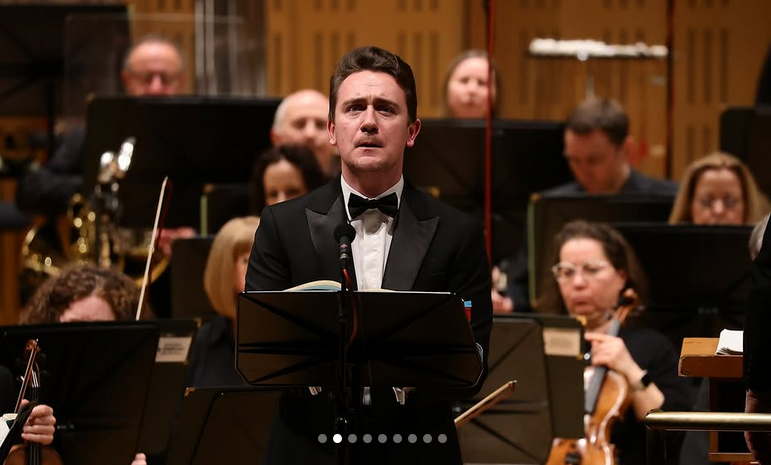
Cutting's 2024 place in the IBO's annual St Matthew Passion was taken this year by the equally compelling Helen Charlston in another superb line-up. Over at the National Concert Hall, previous reservations about James MacMillan's St John Passion were swept aside, above all by a breakthrough performance from young baritone Seán Boylan, another newcomer of more than just promise (pictured below by National Symphony of Ireland).
Klaus Mäkelä once again confounded the naysayers in his knockout second Prom with the Royal Concergebouw Orchestra and a perfect concerto partner, Janine Jansen. Boyd Tonkin welcomed the partnership of Sheku Kanneh-Mason and the Czech Philharmonic under Semyon Bychkov in a third Shostakovich triumph to match Pappano and the LSO in the Tenth and Hrusa with the BBCSO in the 11th.
If those were blockbusters full of revelatory detail, intimacy informed my last two symphonic choices of the year: Vilde Frang and Vladimir Jurowski with the London Philharmonic convincing us that Schumann's Violin Concerto, disdained by Clara, is up there on its own terms among the greats, and Beth Taylor applying all a Lieder singer's armoury to Elgar's Sea Pictures in a winning portrait of the composer conducted by Jurowski's now-admired successor at the helm of the LPO, Edward Gardner. The immediate future is bright for all our national orchestras.

Comments
Classical Review