The returns queue gets longer and so does the wait – considerably longer than the 69 minutes of programmed music in this the second of the Daniel Barenboim Beethoven/Schoenberg series. But what a satisfying two–course meal it was: Schoenberg’s “transfigured night” of desire and confession, Verklärte Nacht, and Beethoven’s grandest piano concerto, No 5, “The Emperor”. Two perfect pieces in dramatic juxtaposition and the reassuring feeling that nobody on the planet knows them better or is more acutely aware of their importance in the greater scheme of things than the man whose hands were shaping every last note from memory.Familiarity is not always a good thing with Barenboim. He can – and his performance of Schoenberg’s Pelleas und Melisande
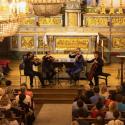
two nights before was a good example – become too objectively analytical and disengage somewhat from the emotional import of the music. But that was certainly not the case with Schoenberg’s ravishing string masterpiece Verklärte Nacht. As a seasoned Wagner conductor, he gave the muted “forest murmurs” of the opening an almost surreal dimension, and what followed as layer upon layer of divisi string sound sharpened our sense of what harmony can achieve was a redefining of the word “febrile”.
The 25-year old Schoenberg was intuitively drawn to Richard Dehmel’s highly charged poem because it sought to explore on some metaphysical level the psychological and emotional turmoil that the woman’s revelation of infidelity and pregnancy might unlock. Schoenberg was able to go even further in purely musical terms infusing his piece with a potentially toxic mix of eroticism, disquiet, and hurt. And the really amazing thing about the Staatskapelle Berlin’s performance was just how spontaneous and in the heat of that moment it felt.
This is a wickedly difficult piece to pull off – but you’d never have known it because, put simply, this is how it is when the technique ends and the music begins. The shocks – such as the juddering tremolando in string basses that sounds and feels like the bottom quite literally falling out of the young lovers’ world – still carried the potency of surprise while those increasingly hushed moments of acceptance and forgiveness brought diaphanous half-lights and exquisite arpeggiated dapplings. It can rarely have sounded so sheerly beautiful.
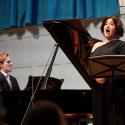
Beethoven’s “Emperor” Concerto felt joyously uncomplicated by comparison – though from a practical point of view Barenboim really had his work cut out now. Piano and orchestra are so well integrated, so richly allied, in this concerto that to direct from the keyboard demands the most audacious sleight of hand – or rather hands. Many were the occasions where it was necessary for Barenboim simultaneously to conduct with one hand and play with the other: the timpanist, for instance, needs precise information about the unwinding tempo in the closing pages and he needs to see as well as hear that. That’s a high-wire act for Barenboim right there and he kept the drummer and his right hand in more or less perfect alignment.
But I would be lying if I didn’t say that there were moments where this conflict of interest subliminally impacted on Barenboim’s keyboard performance, splitting his focus and concentration and some notes along the way. Still, the abiding spirit of the piece, the swagger and fire of it, was gratefully conveyed and there was a genuine sense of wonder when that minor-key musical box effect in the second subject of the first movement found contentment (and balmy horns) in the switch to the major.
Best of all – and typical of Barenboim’s nose for musical characterisation – was the transition from slow movement to finale where the insouciant invitation to the dance in muted strings completely wrong-foots us when the ballsy rondo theme kicks up its skirts.