Contrast and variety are as vital in a three-ballet programme as in a well-built sandwich. Typically that might include textural interest, a spicy element and something substantial in the middle. Alchemies, the Royal Ballet’s latest triple bill, ignored that time-tested formula with the result that not one of the three works by Wayne McGregor registered as strongly as it should. Granted, the final item was a world premiere, so management couldn't have known exactly how it would turn out. On paper, Quantum Souls (terrible title), with its wall of onstage percussion instruments surrounded by wrestling figures, seemed likely to deliver a tumultuous climax. That it didn’t, despite a great deal of noise and punishing physicality, left many with the sense of having witnessed a clash of base metals rather than the emergence of gold.
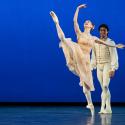
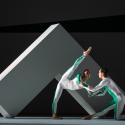
The evening’s opener, the unassumingly named Untitled, 2023, did rather better. The ice-sharp lines of the artwork by the late Cuban minimalist Carmen Herrera conspired with McGregor's angular choreography like a sloosh of tingling mouthwash. Picking up the grass-green and white of the backdrop, jacquard leotards designed by Burberry made the dancers (pictured above) look even sleeker than they already were, to the extent that some seemed almost to disappear when they turned sideways. And for once, the fractured dance language that has become the default for McGregor found an immediate correspondence with both the visual frame and his chosen music – two works for large orchestra by the Icelandic composer Anna Thorvaldsdottir, the first of which put one in mind of icebergs and the grinding friction as they jammed their vastness one against another, while the teeming life of the seabed bubbled and fizzed below.
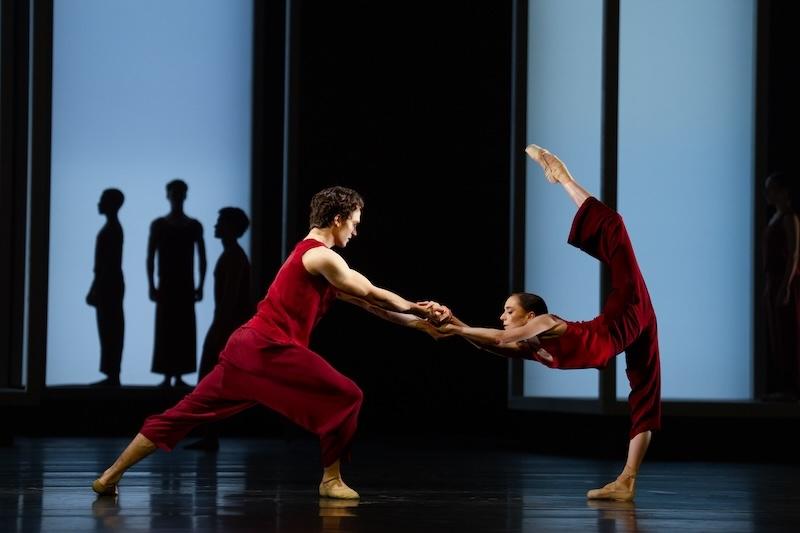
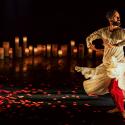
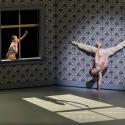
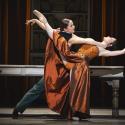
Sir Wayne is a great believer in the richness of experience that can come from not knowing what a piece is about, relinquishing the conventional idea of meaning. He calls it “somatic cognition”, and it's hardly unique to looking at dance. Untitled, whose title gives nothing away, shows how this can work. Yet Yugen, the second work of the evening (pictured above), came laden with screeds of explanation, including the texts of six biblical psalms in Hebrew along with a translation. The work is a cultural muddle, or ecumenical triumph, depending on your point of view. Leonard Bernstein’s Chichester Psalms, for choir and orchestra, was commissioned in 1963 for a thoroughly Anglican choral festival, and includes bits of music that didn't make the cut for West Side Story. Onto this McGregor layers his own title, "yugen", a term from Zen Buddhism that is untranslatable other than to imply the evocation of beauty through simple means. Simple this certainly isn't.
But the piece did deliver a spot of emotional warmth (relative, that is, to the chilly cerebrality of most of McGregor’s work). The aural heft of the Royal Operas Extra Chorus helped, as did the clashing pomegranate reds of Shirin Guild’s costumes. The movement had flow and curve, and an extended duet for two men was surprisingly tender – could this have been a guardian angel leading the other through the valley of death? Yet for all these qualities, the piece felt like more of the same with its endless succession of small groupings – duets, trios and foursomes. These dancers are fabulous, but even fabulousness can lose its shine when it follows a similar pattern ad infinitum.
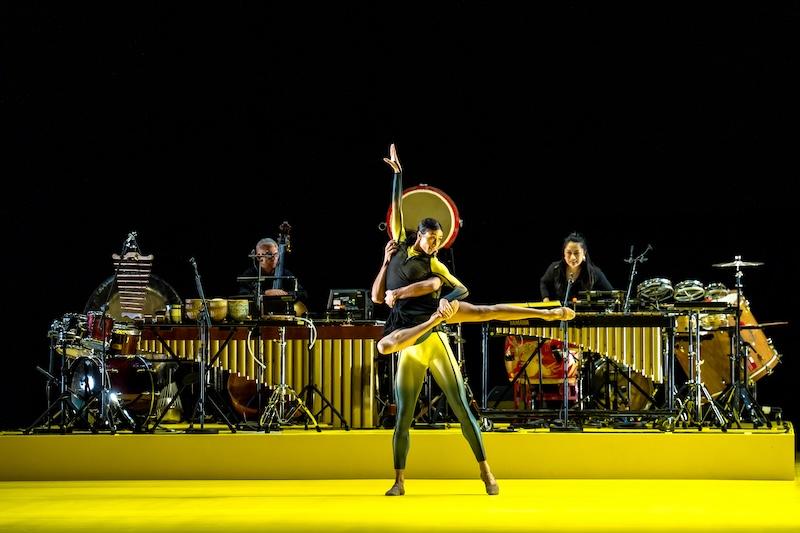
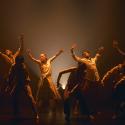
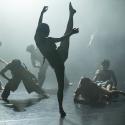
The new piece, the closer (pictured above), at first looked likely to break the mould with its bank of dimly lit percussion instruments straddling a darkened stage, the cast of 12 gently warming up around it. Bushra El-Turk’s score involved both a string orchestra in the pit and two musicians on the stage. One of these was the double bassist Tony Hougham – awkwardly hidden by drum kits and barely audible. The other was the diminutive percussion virtuoso Beibei Wang – also largely screened by the hardware which she variously stroked, cajoled, pummelled and all-out attacked non-stop for half an hour. This should have been enthralling but for the almost total disjunct between music and dancers. They may as well have been in another theatre. And again, for all the startling shapes and thrusts of the choreography in those myriad duets and trios, and for all the startling flexibility and fearsome energy of the dancers, tedium set in. Half an hour in the Royal Opera House has rarely felt so long. I nevertheless hope Quantum Souls gets another run, but in a mixed programme. Context is all.