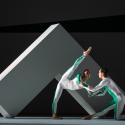
No one divides opinion quite like Wayne McGregor, Sir Wayne since 2024. He’s the closest thing to Marmite on the ballet scene. Either you’re excited by the brave-new-world qualities of his work – the forefronting of science and new tech, the diminution of emotion, the physical contortions, legs up past the ears every two minutes – or it leaves you cold.
Woolf Works was his first full-length work for the Royal Ballet and is already old enough for the current revival to feature almost none of the dancers who helped create it in 2015. In practice, it feels less one three-act ballet than three one-act ballets, disparate in style and approach, just as Virginia Woolf reinvented herself as a novelist in each of the three books McGregor took as his inspiration: Mrs Dalloway, Orlando and The Waves.
It’s not hard to see why the choreographer felt an affinity with this writer. An iconoclast and innovator, she was fascinated by the possibilities of simultaneous timelines and fragmented time, by androgyny and bisexuality. More, at a time of tumultuous geopolitical and social change, she constantly questioned her own role and purpose as an artist. Drawing on Woolf’s letters as well as her novels, McGregor found in the personal his principal theme.
The tone of Woolf Works is set, startlingly, in the opening minutes, by author’s words in her own voice – earnest and precise, quaintly plummy – as she reads from her essay "On Craftsmanship", broadcast by the BBC in 1937. She speaks about words themselves, and how their "echoes, memories, associations …" have been "out and about, on people’s lips… for so many centuries". How, she asks, "can we combine the old words in new orders so that they survive, so that they create beauty, so that they tell the truth?" It is precisely this challenge that McGregor faces, only for him the old words are the familiar structures of ballet.
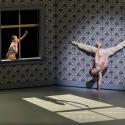
Those who insist on knowing who’s who and what’s what should probably stay away from Woolf Works. Even those who’ve read the novels are at no great advantage. In the first part, based on Mrs Dalloway, the character of the author and the character of her main protagonist are represented by the same dancer (Natalia Osipova in the opening night cast). Undistinguished by any change of costume, creator and creation are merged. At one point the figure we imagine to be Clarissa Dalloway dances an anguished pas de deux with Septimus, the shell-shocked First World War veteran whose narrative in the book runs parallel to Clarissa’s, which is to say that they never meet. McGregor and his dramaturg Uzma Hameed may have wanted to suggest an autobiographical element in Woolf’s writing, her grief over the real-life fate of shell-shocked soldiers, but it’s asking a lot of an audience to follow such musings.
That said, McGregor succeeds well in conveying the brittle, agitated world of Clarissa Dalloway, her intrusive memories and present anxieties. Characters dash about suggesting both the hurly-burly of the chaise longue and Edwardian existential angst. Max Richter’s score, mixing orchestra with electronic elements, ups the tension still more with its ticking clocks and frantic changes of time signature.
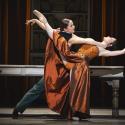
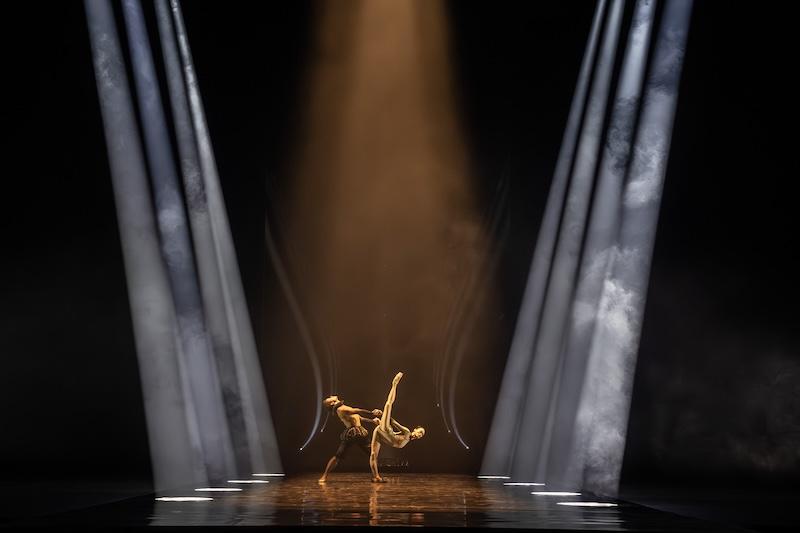
The middle section, based on Woolf’s time-travelling, gender-bending fantasy novel Orlando, removes the author from the picture and goes flat out for big effects: lasers, dry ice, and music that chugs in block chords in a massive, long-drawn-out crescendo before cutting out and starting to build again. This is an old post-minimalist trick now rather tiresome. Moritz Junge’s costumes, though, are fabulous, a riff on Elizabethan dress with its ruffs and farthingales but made in a bronze metallic fabric (pictured above) that glints and flashes with every gesture.
Looking through production photos after the event, I was aware of there having been far more inventive twists in the endlessly leaping and twizzling choreography than I had registered from my seat in the house. The dancers whizz by so fast that you don’t take half of it in. As a prestissimo pageant on the theme of time-travel this does the job, but after a time struggles to keep the attention.
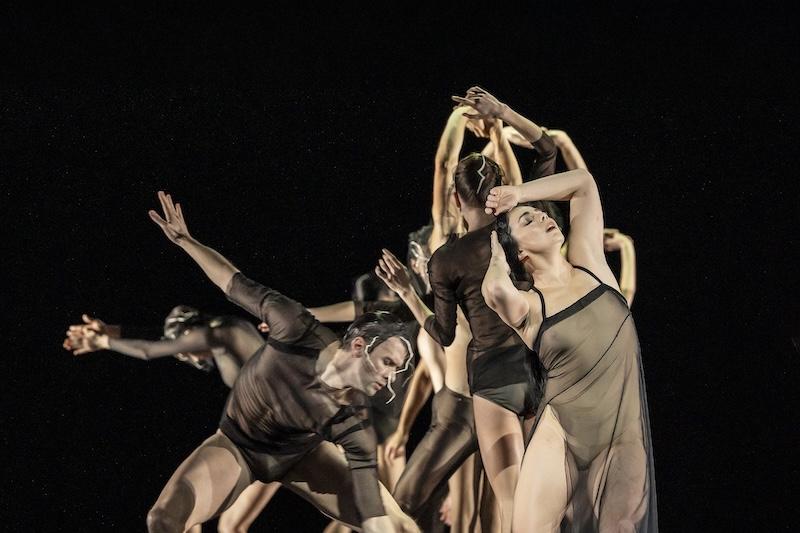
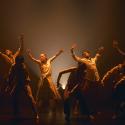
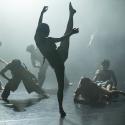
In the concluding section, drawn from The Waves, the author reappears. We hear a recording of the actor Gillian Anderson reading Woolf’s suicide note as Osipova and William Bracewell, as her husband Leonard, engage in a tender duet. There’s no rage, only a defeated sadness, which is an uncomfortable note on which to end a full-evening ballet. McGregor may have intended to suggest renewal and hope as the massed dancers disport themselves as ocean waves (pictured above) which finally engulf the Woolf figure (and again, with the surging repetitive music, go on surging, on and on), but for me that simply didn’t work.
With such a collage of erratic brilliance and longueurs it’s possible that the cinema relay will offer different views – close camerawork may well bring to the fore the subtleties of the Mrs Dalloway section, the most substantial and affecting part of this ballet. It’s also the only part likely to make you want to read or reread the original.