Spielberg’s new close encounter of the third kind asks for faith in humanity and extraterrestrial life which it struggles to earn, his old sense of wonder only fitfully sparking as he argues that, whether contemplating our neighbours or the cosmos, we are not alone.
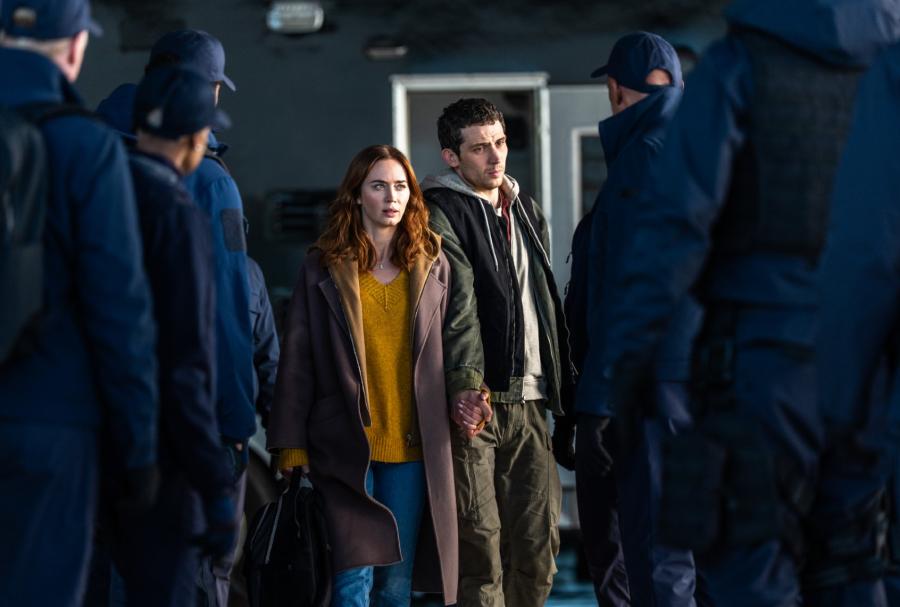
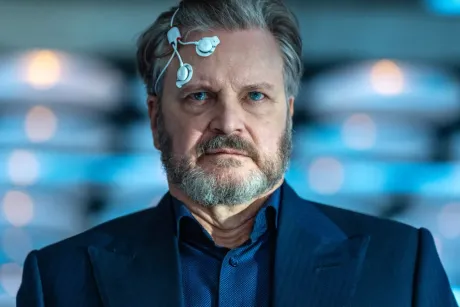
Jaws, Close Encounters and Spielberg’s later Munich all borrowed from the Seventies conspiracy thriller, and Disclosure Day too begins as Daniel (Josh O’Connor) pilfers copious buried alien evidence from the US government’s secret Wardex Corporation, taking startled girlfriend Jane (Eve Hewson) along on his flight from company boss Noah Scanlon (Colin Firth). Meanwhile, weather presenter Margaret (Emily Blunt, pictured below, left with O'Connor) talks in alien tongues live on air and shows empathetic knowledge of everyone she meets, leading to her separate pursuit across Middle America towards her and Daniel’s mutual fate.
Spielberg originated a story which seems almost as personal to him as adolescent autofiction The Fabelmans, concluding an obsession begun with the UFO believers and alien abductions of his amateur debut Fireflies (1964) and pursued through Close Encounters, ET and War of the Worlds. Screenwriter David Koepp shares responsibility for an unwieldy narrative and borderline risible exposition, as the approach of World War Three forms the sketchy backdrop to a niche and fantastical cover-up which our heroes treat with breathless reverence.
Just as Raiders of the Lost Ark once made Bond look old, Spielberg’s near future feels the stodgy product of a director whose sf imagination was forged in the Fifties. Disclosure Day certainly takes a swing at alien life's philosophical implications. Jane turns out to be a lapsed novitiate nun, there to ponder the prospect of “new supreme beings” deposing God, though the script’s grasp of theology is shaky. A government shown to have vivisected off-worlders meanwhile relies on toothless and inept goons led by Firth’s oddly cast villain. Less frightening than the federal gunsels fled by bike in ET, they can’t match One Battle After Another’s contemporary ICE-like raids and pulsating sense of crisis. Set in MAGA-leaning states such as Missouri (the Show-Me state, a sign notes), Disclosure Day deliberately avoids the divisive stand which cost Paul Thomas Anderson half his potential domestic audience. The problem overtaking Spielberg’s whole Old Hollywood-formed, sentimentally optimistic, good-hearted project is that it now offers a fantasy USA far removed from the fractured reality of cage-fights on the White House lawn.
Multiple car chases are worse than in Spielberg’s US cinema debut The Sugarland Express (1974), bar a nerve-jangling shunt into a train’s path, with Margaret’s subsequent panic attack in a piano-filled freight car as Hitchcockian as the suspense. Reflections earlier stream across the static car’s bonnet to give a sensation of movement, while traffic lights and shadows race across a motel ceiling shot at a Caligari tilt. Like the chordal leaps which enliven even innocuous McCartney melodies, Spielberg retains genius in his chosen language.
Regular cinematographer Janusz Kasmińksi favours big, intimate close-ups in a film rarely beholden to digital effects, often occurring on real sets and streets. Margaret and Daniel’s purpose is revealed on what looks like a soundstage, as if old-school cinema standbys can save the world. Firth’s telepath duel with rebel rival Hugo Wakefield (Colman Domingo), like his long-distance possession of Jane, recalls sub-King horror such as De Palma’s The Fury, a genre later unsettlingly mixed with Disney-cute CGI critters and saccharine childhood memories, as Spielberg runs through his repertoire.
Disclosure Day seems like several kinds of film roughly constructed from UFO pop culture and crowd-pleasing set-pieces. The unpredictable freshness of its sometimes kooky assembly requires disbelief’s Grand Canyon-spanning suspension, with crucial exceptions. The barnstorming Blunt fully invests in every phase of a highly original character, growing from a scatty weatherwoman into an empathetic messiah who she imbues with kindly but scary authority. She helps Spielberg to arrive where he wants to be, credibly summoning the gravity of his subject with a frisson of awe, and his old American conviction that humanity may yet be healed by benign immigrants from beyond the stars.