Fans of classic Hollywood movies are liable to suffer a stab of frustration these days, when polls or vox pops canvas people’s favourite films. Selections seem to skew towards the worthy; there’s a performative whiff to a lot of it. Those Criterion Closet Pick videos are a case in point: “Pixie Buttermore, breakout star of Slithering Zombies 4, selects Woman in the Dunes”. God forbid somebody should pick something from the Golden Age.
In this context, Some Like it Hot – now playing nationally as part of the celebrations around Marilyn Monroe’s centenary – stands out in the top 50 of Sight & Sound’s Critics’ Poll like a red carnation in a bed of white chrysanthemums. Yet if you were to select just one film to explain the appeal of cinema to a recently arrived delegation of aliens, you’d be hard pressed to find something more exemplary than Billy Wilder’s sly, multifaceted comic masterpiece.
But that’s just it: comedy isn’t taken seriously. Neither is Marilyn Monroe, really. Nobody could deny the unrivaled potency of her iconic status today, but the debate about whether she should be considered as an artist, as an actress of real talent, burns on (even though the answer is, incontrovertibly, yes). Tormented and complex, Monroe was famously difficult to work with on set, racking up take after take while her co-stars seethed and her director’s hair turned grey. But all concerned knew the trouble was more than worth it because the results were pure cinematic magic.
This isn’t a film you can start watching and then switch off. It bounds and bounces along with all the verve and rhythm of Monroe’s hips as she struts down the train platform that’ll entwine her fate with Tony Curtis and Jack Lemmon’s: “like Jell-O on springs”. There isn’t an ounce of fat on this film, and its delights are well distributed; but in terms of pure seductive pleasure, it’s hard to beat the train sequence.
Surrounded by flocks of frisky, pyjama-clad female musicians, the cross-dressing Curtis and Lemmon struggle manfully to maintain their gender fiction. As characters, they’re in a deep crisis; but as viewers, we’re in movie heaven. Celluloid has very rarely been put to better use than capturing Monroe in the bathroom scenes here. Lamenting how she always gets “the fuzzy end of the lollipop” whilst deploying a drum stick to vigorously smash up a block of ice in the sink, she is utterly mesmerizing.

It’s as compelling an example of the artform’s ability to engender identification and suspension of disbelief as you’re likely to find. We want to be on that train, at that party. We feel we are in that bathroom with them. We share the heat that's pulsing through Lemmon when Monroe asks him to check if her stocking seams are straight: “I’ll say!”
In fact there’s a potential thesis to be written on how each of the film’s three acts centres around a different form of transport: cars for the gangsters; trains for the musicians; boats for the lovers. There’s also the question, for modern rail users, of who would want to drink a cocktail containing ice that had been sloshed around the sink in a train toilet – even if it were served up by Marilyn Monroe.
Deceptively layered, Monroe’s performance offers a mirror for her own relationship with audiences: like Sugar Kane, she was often dismissed as a “dumb blonde”, but both the actress and the character were far more savvy than that sexist stereotype suggests. “Marilyn Monroe” was itself a role, one that the woman behind it could turn on like flicking a light switch; less successful perhaps were her attempts to turn it off again and still be seen. Monroe plays Sugar like a parallel for her own legend: her sweet surface ditziness conceals strength of character buoyed by an acute intelligence. She’s smarter than she looks, but she’s willing to act a certain way because she realises it’s the shortest path to what she hopes will bring happiness.
Monroe never found any lasting happiness, and she died tragically young. Those sad facts seem to blow away like morning dew, though, when we watch her. Calling what she had “screen presence” would be like saying Miles Davis was a dab hand at the trumpet. Her beauty, charisma, and – yes – sensuality, burn straight through the screen and into our hearts. She sparkles. She shimmers. She makes us feel good.
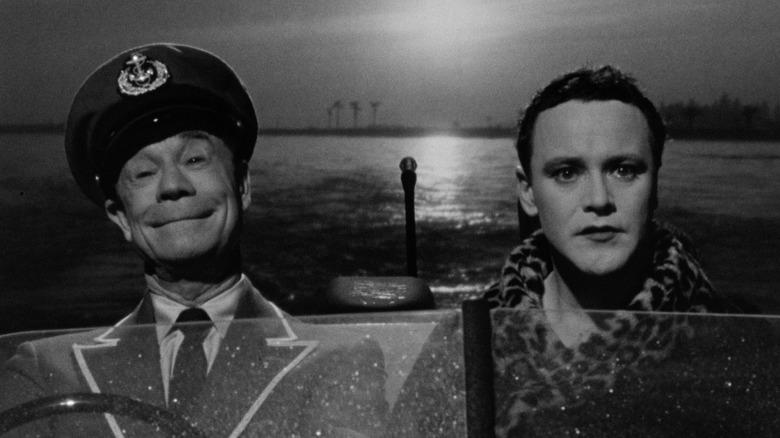
Ex-Vaudevillian Joe E Brown, with his beady eyes, Rudy Vallée records, and mouth wider than the Mason-Dixon line, gets the famous last laugh, countering Lemmon’s admission that he’s not a woman with “Well, nobody’s perfect”. But everybody is perfect here – not just Marilyn, but Brown and Curtis and Lemmon too. Even the presence of that weaselly ham George Raft can’t spoil the fun. Some Like it Hot is as close to perfection as film has ever got. Hop on board. Scoop up a cup of Sugar. Be happy.