The vertigo of lawlessness in Stalin’s Russia carries contemporary resonance in Sergei Loznitsa’s latest Soviet parable. As a Russian dictator invades a neighbour and erases his enemies and the US Supreme Court presides over an authoritarian rampage, paranoid purges and show trials no longer seem distant.
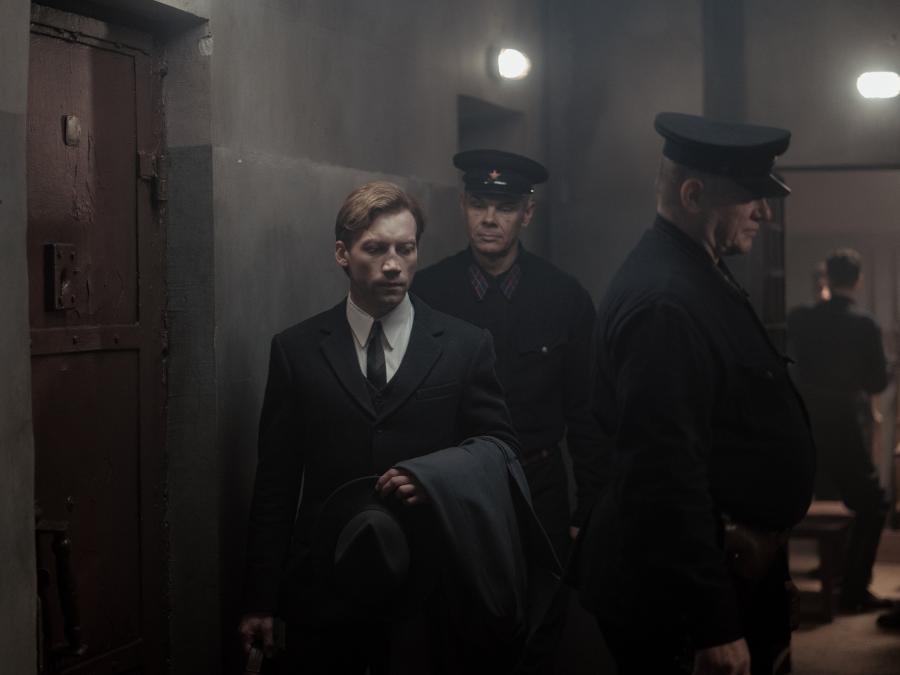
Two Prosecutors is based on gulag prisoner Georgy Demidov’s novel, and set in 1937 during the Great Purge. We are in a provincial jail where starving old men burn letters petitioning Stalin for mercy. Fresh-faced local prosecutor Kornyev (Alexandr Kuznetsov) has somehow received a message scrawled by his legal hero Stepniak (Alexander Filippenko) in his own blood, and arrives at the prison demanding answers. Loznitsa’s tight Academy frame cramps dank walls and Escher staircases, fisheye lens sloping the action like a slaughterhouse chute, in a literal bureaucratic maze. The young villager who sought her husband’s fate in a remote jail in Loznitsa’s A Gentle Creature (2017) only to falter outside its forbidding walls found Russia’s legal quagmire barely changed under Putin, and quests for justice in his films do not get Hollywood endings.
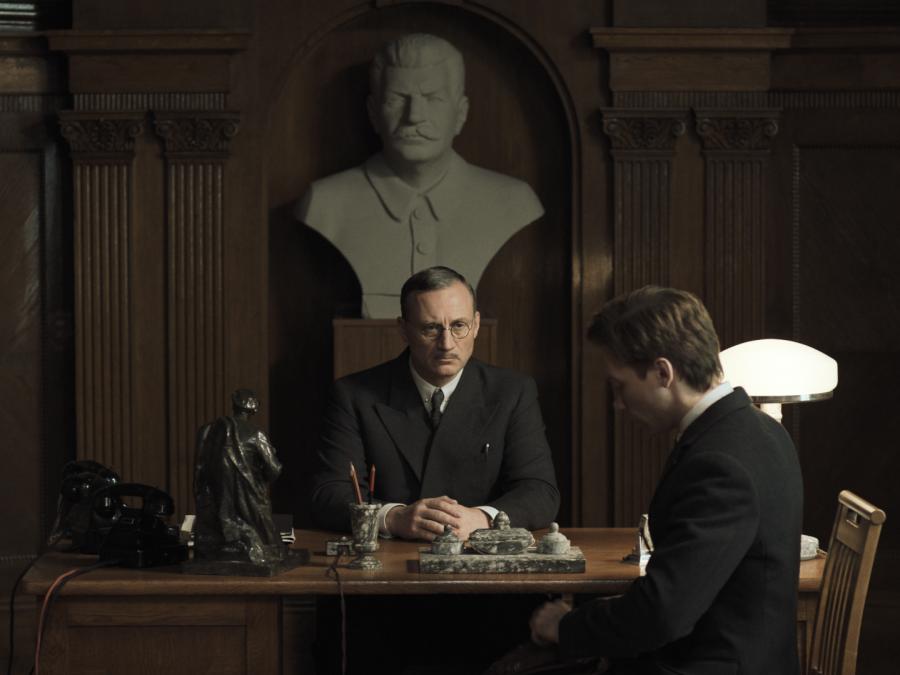
“Do you know where your predecessor is now?” the governor quietly asks Kornyev, implying he’ll be dispatched there next. Kornyev anyway insists on meeting the starved, scarred one-time hero of the revolution, and in a long, gripping scene the old man and his boyish disciple talk lingering ideals (“The Soviet rule of law is the great Bolshevik truth”) and hellish reality. Stepniak is irascible, even monstrous, but in describing his fall warns Kornyev that he risks the same fate. Undaunted, the lawyer sets off for Moscow to inform Procurator General Vyshinsky (Anatoliy Beliy, pictured below right) of the local apparatchiks’ crimes, little realising Stalin’s Inquisitor ordered them.
Loznitsa was raised in Ukraine under the Soviet Union, and though among the earliest filmmakers to protest Russia’s encroachments in Donbas (2018), his conflicted appreciation of Russian character and especially literature endures. Kornyev’s train journeys to and from Moscow have contrasting contours. Cheek to jowl with fellow passengers on the way in, an amputee Great War veteran (played like Stepniak by Filippenko) regales them with his own trip to the capital to petition Lenin. His lengthy spinning of this yarn, much like a Soviet Ronnie Corbett, turns the carriage into peasant theatre. “Hang on. Don’t rush me!” he exclaims, as the point shows little sign of arriving. “Don’t drag it out, peg-leg!” an old woman barracks. There is blacker implicit comedy in Kornyev’s enervating wait to see Vyshinsky, and his boss’s seemingly solicitous reaction to this bumpkin Soviet believer. Returned in the gilt-edged trap of first-class, he unwisely relaxes in the company of two sinisterly jolly engineers. The totalitarian absurdity is by now sickening, a disease incubating from the first frame.
Loznitsa is not only painting parallels with Putin, having intrinsic interest over many films in Stalin, as an anti-Nazi would Hitler. Then or now, his Russia is Kafka by way of Grimm, glinting with humane light before it’s snuffed out.