

The opening track initially seems straightforward. To begin “Sons of Art,” Michael Garrick runs up and down his piano keyboard. Norma Winstone adds wordless vocals which weave in and out of his sparkling arpeggios. Then, the bass arrives. Drums kick in. So do the tenor sax and trumpet. After a climax around the two-minute mark, what begins as pacific turns turbulent. The conventional has become unpredictably experimental.
To conclude the album, an extraordinary nine-minute piece which, on one hand, sounds like dawn breaking and, on the other, a collision between the contrapuntal and a free-jazz sensibility. Despite this nonconformism, it hangs together – it is tightly structured.
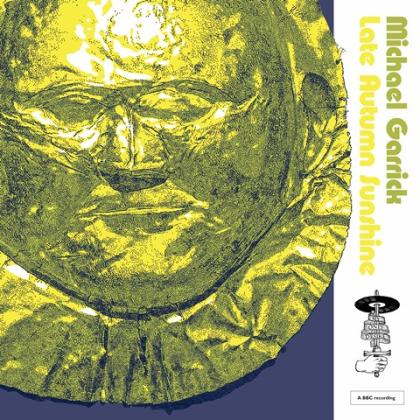
The above is the title track of Late Autumn Sunshine, a smart release available as a CD or double-album set. It collects two sessions Garrick (1933–2011) and his band recorded for BBC radio’s Sounds of Jazz show: the first broadcast on 25 November 1973, the second on 3 December 1978.
For 1973, the line-up is: Michael Garrick (electric piano, piano), Dave Green (bass), Henry Lowther (flugelhorn, trumpet), Art Themen (tenor saxophone), Trevor Tomkins (drums), Norma Winstone (vocals). For 1978, it is: Michael Garrick (piano), Jeff Clyne (double bass), Tony Coe (clarinet, tenor and soprano saxophones), David Horler (valve trombone), Henry Lowther (flugelhorn, trumpet), John Marshall (drums), Alan Wakeman (soprano and tenor saxophones), Norma Winstone (vocals).
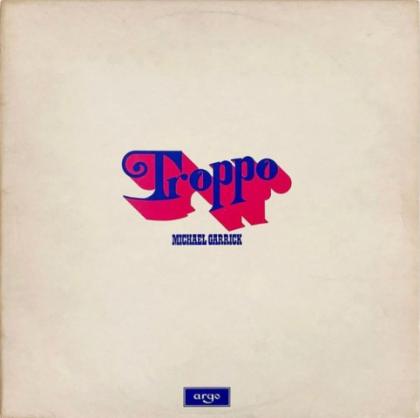
When "Sons of Art" was issued on record, on 1974’s Troppo album – a first-press is now a £500 item – Jazz Journal said in its September 1974 review that “‘Sons of Art’ is a tirade of raging extroversion.” The album had been recorded in October 1973 and Garrick, for the Sounds of Jazz session, was undertaking some promotion – albeit for an album which wouldn’t be out until the next year.
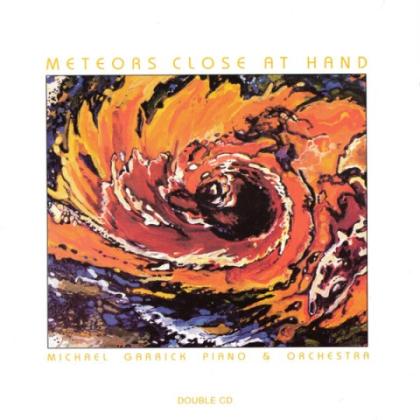
Although a version of the 1973 session’s “Lime Blossom” also appeared on Troppo, the other two tracks recorded for the BBC took an awful long time to reach the shops: “River Running” turned up on record in 1994 (on Meteors Close At Hand, credited to Michael Garrick Piano & Orchestra), and “Galilee” became available on an album in 2010 (on Remembered Time, credited to Nette Robinson with Michael Garrick Trio). Garrick clearly had a tendency to let his compositions prove, like bread dough.
From a time-shifting perspective, what was broadcast in December 1978 was similarly slippery. For record buyers, “Return of an Angel” had first surfaced on the 1965 October Woman album (£150 to £300 for a stereo first pressing), a set credited to the Michael Garrick Quintet Featuring Joe Harriott and Shake Keane. “Songs of the Ainur” eventually surfaced in a buyable form on the Michael Garrick Jazz Orchestra’s Tone Poems album in 2011 – the last album Garrick recorded and released within his lifetime. Pushing Garrick’s curious tendency to sit on his compositions even further, the astonishing “Late Autumn Sunshine” was never issued – this is its first-ever release. The same applies to the “Robin’s Rest,” also heard here and aired during the 1978 session.
A fluid continuum then? Is it best to see Late Autumn Sunshine as a snapshot of whatever it was Garrick chose to pluck from at that point? In contrast, the composer/pianist’s story is linear enough. As Daniel Spicer puts it in his essay for the new release, the avowedly self-taught Garrick “was already leading his own groups while studying English Literature at University College London and, after graduating in 1959, soon landed his first major gig as musical director of Poetry & Jazz in Concert. From 1961, as part of this series of performances, he accompanied poets including Adrian Mitchell and Spike Milligan, leading a quintet that also featured Caribbean ex-pats and questing jazz innovators, trumpeter Shake Keane and saxophonist Joe Harriott. By 1965, Garrick was right at the heart of the febrile British jazz scene, taking the piano stool in the ground-breaking and critically lauded Don Rendell-Ian Carr Quintet, a position he occupied until 1969.”
Added to and following-on from this were his compositional suites, long-form compositions, further music created to mesh with poetry, his work in music education, the innovative choice to integrate Winstone with the wind players, and the string of albums made with different configurations: collaborations, The Michael Garrick Sextet, Garrick's Fairground (a vocal-focussed ensemble), even what was credited as Garricks’ Strings Quartet (sic). There was more. Getting a handle on where he was at is difficult and made more so by, as his Guardian obituary noted, his “polymathic nature and desire to communicate his enthusiasm [which] sometimes led to difficulties; excessively prolix in his bandstand announcements, he could often exasperate.”
With respect to the latter trait, Daniel Spicer recalls seeing Garrick live in 2003: “Sat at the piano, he delivered long, rambling yet oddly erudite introductions to each tune that infuriated in their duration almost as much as they entertained with their sly humour. He also read some of his poetry, which he insisted on calling [in a moment of absurdity] ‘jazz pottery.’ A surreal raconteur and quintessential English eccentric, he seemed unlike any other jazz band leader I’d ever encountered.”
Michael Garrick was, then, integral to British jazz but untangling his course is challenging. Maybe it is best to take each element of his oeuvre on a case-by-case basis? And perhaps afterwards try and get to grips with what each says, both on its own and about Garrick overall as well as its relationship to the total picture? Whatever the knottiness, Late Autumn Sunshine is an absolute gem, a valuable addition to the British jazz maverick’s catalogue. Move fast – the vinyl edition of Late Autumn Sunshine is limited to 600 copies.
- Next week: a deep dive into the Rubycon – box set dedicated to Tangerine Dream’s March 1975 album
- More reissue reviews on theartsdesk
- Kieron Tyler’s website






Add comment