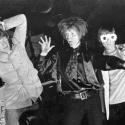
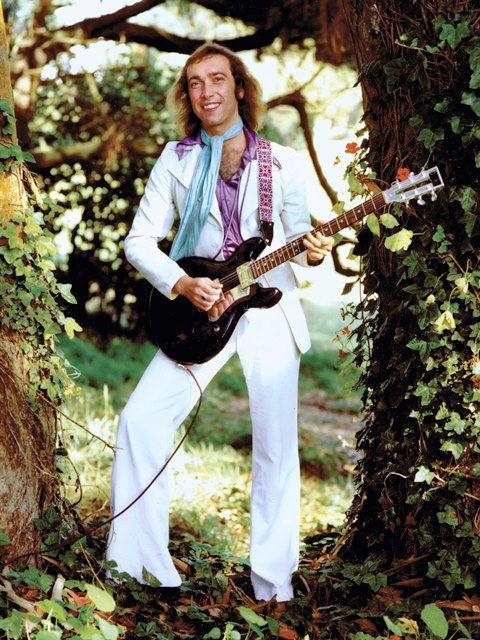
Pictured above is Sweden’s Ralph Lundsten. He might look like a guru or mystic but is actually a multi-disciplinary artist most well-known on his home turf for his pioneering electronic music. His first album, 1966’s Elektronmusikstudion Dokumentation 1 (made with Leo Nilson), was issued by national Swedish radio’s own label and recorded at the station’s electronic music studio. Lundsten (born 1936) began making music for soundtracks in the 1950s and has issued at least 38 albums.
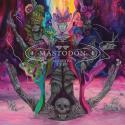
Lundsten’s “Bön 5 – “Förlåt oss våra skulder” (Prayer 5 – Forgive us our Debts) from the 1972 album Fadervår (Our Father) features on the new 16-track compilation The Microcosm: Visionary Music of Continental Europe 1970–1986. True to the collection’s title, it's a drifting, meditative mood piece eschewing overt melody and rhythm. The synthesisers sound like distant wind chimes, flutes and the glass harmonica. Crucially, 1982 saw Lundsten release an album titled The New Age.
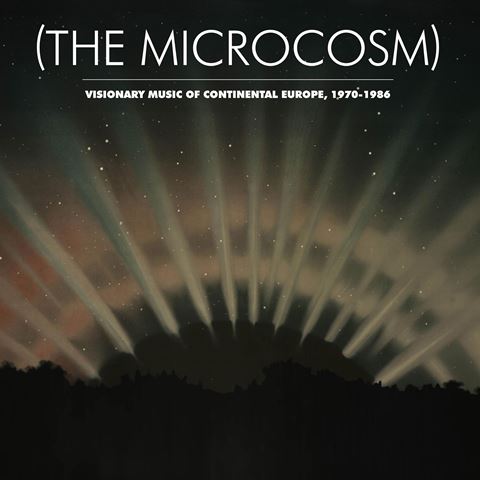 The Microcosm is the follow-up to 2013’s I am the Center, the benchmark exercise in defining and tracking new age music. That, though, largely began as an American phenomenon and had a path which could be (relatively) easily delineated. The Microcosm exists in a less cut-and-dried world, circumstances made all-too clear in the booklet's introductory essay which notes “at least one artist on this collection made it known they would not take part in any project describing their music as ‘New Age’.” The text goes on to discuss musics tagged as ambient, cosmic, Neuzeit (modern time) or visionary and states “the hope here is to unify the streams.”
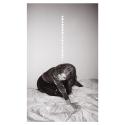
Ash Ra Tempel, Popul Vuh, Rodelius and Vangelis are the (again, relatively) everyday names collected. The less familiar include Lundsten, Robert Julian Horky (from Austria), Ariel Kalma (France), Francesco Messina (Italy) and Enno Velthuys (The Netherlands). Germany has most representatives but this is not a compilation of what could be called Krautrock, though it could pass for one of music made in its currents or slipstream. Nothing from Britain is included and Eno is mentioned in passing. Most tracks were originally issued on vinyl, but four were cassette-only: like much new age music. Bernard Xolotl’s (pictured below left) “Cemetary Wailing (Night Plateau)” wasn’t even released as such: it is drawn from a hand-annotated, self-compiled, shop-bought TDK cassette.
 Manifestly, the painstakingly compiled The Microcosm is a labour of love. It is well annotated and made even more special by its use of wonderful artworks by the earlier but simpatico painters Aleksandra Ionowa (Finland: 1899 –1980) and Étienne Trouvelot (French-born, but America-dwelling from 1852: 1827–95).
In seeking to define a strand of music by plucking single tracks from potentially huge back catalogues there is an ever-present danger that what’s heard is not representative of, say, Vangelis overall. It is one aspect of the particular artist. A slight disquiet with tracks perhaps being shoehorned-in to define something akin to a genre does lurk while The Microcosm unfolds. But no matter. This is an issue endemic to any multi-artist, style-specific compilation and only bubbles up as this is the first time this has been done with this particular music.
As for the music: it’s astounding. As such. All of it. The fact that this is a unified yet varied listen reflects another aspect of the care taken in the track selection. While best not to spoil the surprises, Deutsche Wertarbeit’s pulsing “Der Grosse Atem” stands out. Deutsche Wertarbeit (German Quality or German Craftsmanship) – the recording name of Dorothea Raukes – issued a single, eponymous album on the Sky label in 1981. From it, “Der Grosse Atem” grabs attention due to its immediacy and urgency. It as if the vision in Raukes’s head had suddenly manifested to unite her and her Korg 3300 synthesiser as one.
This is what The Microcosm: Visionary Music of Continental Europe 1970–1986 taps into. An unbridled need to express a sense of consciousness. Which is what the best music must be about.