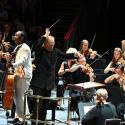
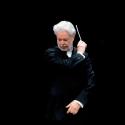
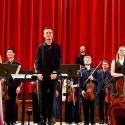
With the cuts still to bite deep, it's enterprising business as usual for both of London’s biggest concert-hall complexes and their satellite orchestras in the newly announced season to come. I use the word "complex" carefully, because as from September, the Barbican Centre, which already has access to LSO St Luke's up the road, will also be using the 608-seater hall constructed as part of its neighbouring Guildhall School of Music and Drama’s Milton Court development.
The Southbank Centre will soon be able to hold its head high about one reinstated asset which the Barbican Hall sadly can’t boast: by early next year, the Royal Festival Hall’s 60-year old organ should be fully restored and back in place. To celebrate, the Pull Out All the Stops festival kicks off in March with world premieres of works by Tavener and Maxwell Davies.
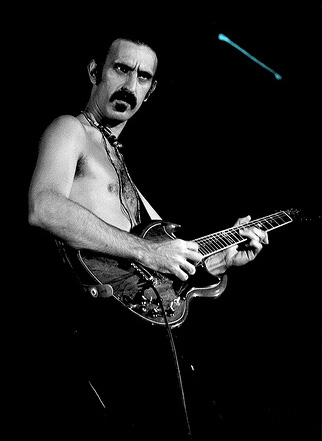 Not to be outdone in the Max stakes, the Barbican has the first performance of a new choral symphony, his Tenth, with Antonio Pappano conducting the London Symphony Orchestra. Premiere of the season, though, looks like being James MacMillan’s Viola Concerto over at the RFH. It might just be the special pleading that the ongoing The Rest is Noise Festival’s lionized author, Alex Ross, needs to take notice of MacMillan and put him up there where he deserves. The faultless Lawrence Power is the soloist, and Vladimir Jurowski conducts the London Philharmonic Orchestra. As good as a first for most of us will be the chance to hear Frank Zappa’s score for the 1971 surrealist film 200 Motels in October (Zappa pictured right by Mark Estabrook).
Jurowski is hoping to scale the heights again, starting with Britten – a performance of Peter Grimes starring Stuart Skelton and semi-staged by Daniel Slater, followed by the War Requiem and assorted rarities – and following on with John Adams’s dazzlingly varied millennium oratorio El Niño. Please God it will stand alone without anything like Peter Sellars’s accompanying film which so overloaded the first performances (as the composer now admits).
The other Southbank symphony orchestra, the Philharmonia, seems to be the less favoured of the two Rolls Royces at the moment and its largely more conservative programming is reflected by a Brahms series running from October to February, though if anyone can bring a fresh spark to these repertoire staples it will be Birmingham’s darling Andris Nelsons.
 Visiting Southbank orchestras include Pappano’s transfigured Accademia di Santa Cecilia, bringing with them Beethoven, Dallapiccola and Verdi (Pappano’s celebrated Requiem with authentic added fire from the Accademia chorus). Another Italian can't return too soon: this time Claudio Abbado is bringing with him not the Lucerne Festival Orchestra, which would have meant Bruckner's Ninth Symphony, but his nimble Italian-based Orchestra Mozart.
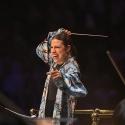
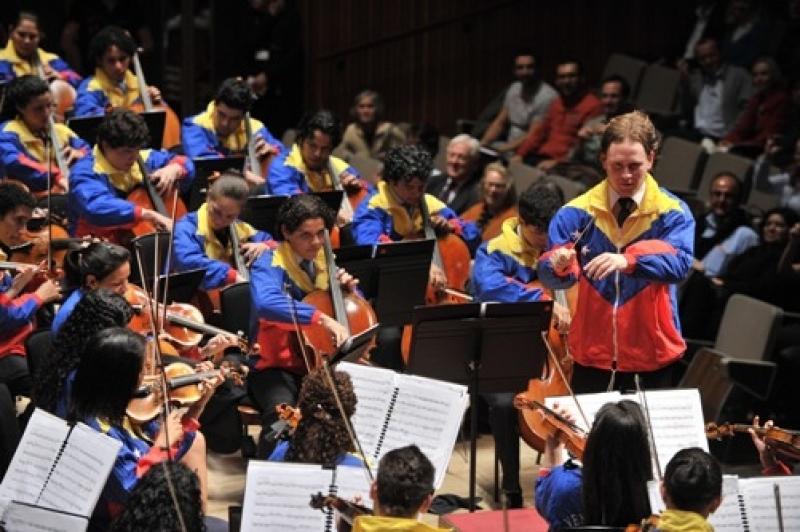
The world’s most sought-after orchestral partnership, Gustavo Dudamel and the Simon Bolivar Orchestra of Venezuela, will not be back, but don’t miss an equally engaging product of the Sistema, the Teresa Carreño Youth Orchestra and its similarly inspiring conductor Christian Vásquez (pictured above by Chris Christodoulou). In November, Philip Glass returns with his New York group alongside Steve Reich who joins the Colin Currie Ensemble.
 Back at the Barbican, the London Symphony Orchestra’s Valery Gergiev, who has just announced he will step down in 2016 – if only Robin Ticciati could succeed him, but he'll be busy holding the reins at Glyndebourne - runs the Berlioz gamut before turning to a later crazy genius, Scriabin, in the spring. The BBC Symphony Orchestra welcomes its new principal conductor appointed largely on the strength of a stunning concert last season, Finn Sakari Oramo, who will sign in conducting a new work by Tristan Murail and Mahler’s First Symphony. He’ll also round off a Villa-Lobos "Total Immersion" day and the orchestra will be taking part in a performance of Albert Herring under Steuart Bedford, coinciding with a Britten symposium in November.
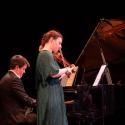
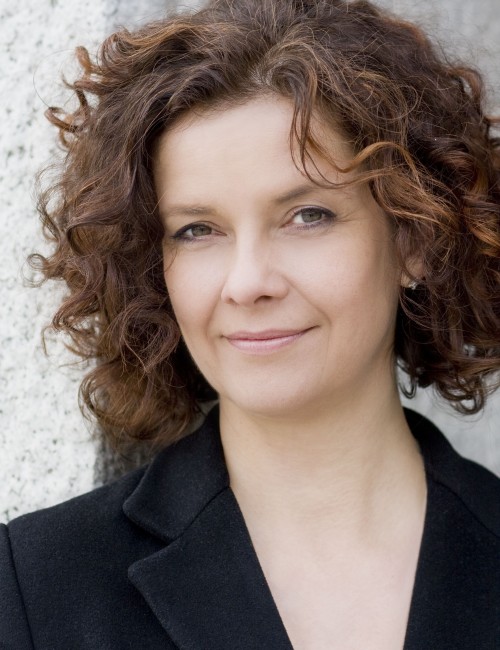
Paralleling the Southbank’s resident Orchestra of the Age of Enlightenment with its Haydn Creation conducted by Rattle, the Barbican’s Academy of Ancient Music has drawn star-power in the shape of Andreas Scholl and Angelika Kirchschlager (pictured above right by Nikolaus Karlinsky). There will be bold programming as usual from the Britten Sinfonia and European tradition from the Leipzig Gewandhaus Orchestra (more Brahms) and Amsterdam’s Royal Concertgebouw Orchestra. As usual, booking opens ever earlier to capitalise on the takings, so be quick as and when it happens - start dates tend to vary from one orchestra to another - or miss out.