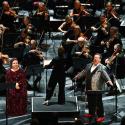
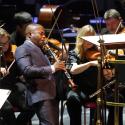
Although worlds away from festive mangers and mince pies, the BBC Symphony Orchestra’s pre-Christmas offering spread good cheer aplenty thanks to an absorbing programme of Austro-German repertoire that explored the outer reaches of Romanticism without ever quite leaving its orbit. The about-to-be-born Second Viennese School would circle a different sun from the one at the centre of Edward Gardner’s sumptuous programme – a lure that would soon draw in both Berg and Webern (though never Richard Strauss), but not quite yet.
Gardner’s decision to present Wagner as the father of modernism was persuasively argued, even if it made for a slightly awkward musical progression across the evening’s half-dozen works. It was a fitting idea to open with A Faust Overture (1840), a concert piece that harks back to Beethoven and glances sidelong at Berlioz; even, in the luminosity and warmth that Gardner and his players brought to the score, looking forward to Tchaikovsky.
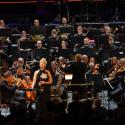
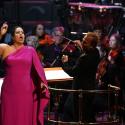
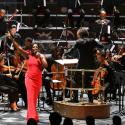
The same composer’s Wesendonck Lieder found Christine Brewer in resplendent voice, easily carrying above an orchestra at full stretch (although Felix Mottl’s orchestration is a model of restraint for the most part). The American soprano was in touch with her inner mezzo for the third song, “Im Treibhaus”: plush of timbre, she rode the waves of Gardner’s lush cello portamenti before vividly projecting the paradox that closes its astringent successor, “Schmerzen”, as the poet thanks Nature for the gift of sorrow. The final song, “Träume”, is an unmistakable dry run for Isolde’s Liebestod and its rapt coda might well have made way for the Tristan Prelude, but that had to wait until both Webern’s Passacaglia and the evening’s interval had run their course.
The Seven Early Songs are as user-friendly as anything Berg allowed to be published in his lifetime
Gardner allowed no false reverence to constrain his account of Webern’s chromatically succulent Opus 1; his unfettered reading of this ten-minute jewel for large orchestra seemed to unleash an improbable tang of Klezmer in the BBCSO’s playing. The Prelude to Act 1 of Tristan und Isolde, by contrast, took a while to get going and felt a little clinical by comparison. True to his theatrical instincts, Gardner had prefaced the second half by explaining to the audience that he wanted to effect a smooth segue from Wagner to Berg without any intervening applause. He got his way, although it was the Barbican’s hardened coughers who had the last word before Brewer could raise her voice to sustain the mood.
The Seven Early Songs, as user-friendly as anything Berg allowed to be published in his lifetime, have what wine connoisseurs would call (aptly in this case) “notes” of the youthful composer’s experiences and influences. Brewer altered the colour of her voice from Wagnerian oils to subtler pastel shades in order to tease out the Mahlerian undertones of “Traumgekrönt” and, appropriately in view of the work that would follow, Straussian flourishes in “Sommertage”.
Death and Transfiguration (Tod und Verklärung) appeals to the tortured adolescent in all of us, and on this occasion it did rather more: in its depiction of decline and demise followed by rebirth it exemplified the concert’s own thematic intent. Always a good wallow, Strauss’s perfumed view of death eschews the ugliness of life’s final throes for something altogether more palatable in which even convulsive agonies are cool; thence to the transfiguration, a six-note figure with more than a touch of the orgasm about it (“la petite mort”, perhaps). In the munificent hands of Gardner and his players it felt almost sinful, like dollops of Christmas pudding after a substantial five-course meal.