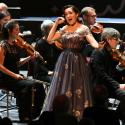
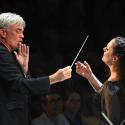
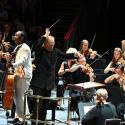
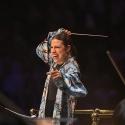
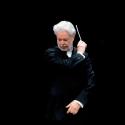
Vivacious Carolin Widmann clearly adores her fellow players in the Irish Chamber Orchestra, where her brother Jörg served as Principal Guest Conductor and Artistic Partner until 2021. His successor, Henning Kraggerud, has already set his idiosyncratic mark on the ICO, most recently at a bracing all-Mozart programme. Haydn brothers Joseph and Michael don't sell nearly as well in Dublin, it seems, but this concert deserved equal success at every turn, with violinist Carolin begging comparisons but bringing her own lovely style to a similarly well-calibrated programme.
When Michael lost a silver watch, she told us at the beginning of the concert, Joseph gave him a gold one. Silver and gold seemed an apt image for the two in this concert. Michael's Symphony No. 23 in D major is one of a mere 41 - like Mozart - as opposed to his older sibling's 104. It's a modest and pleasant 18th century specimen in its first two movements, though the Andantino takes the originality of Joseph to turn a stiff minor meditation into the major with the introduction of oboes, horns and bassoon. The finale is first-rate, though, with buzzing counterpoint around four notes, looking forward perhaps to the finale of Mozart's "Jupiter". All of it passed fleetly with stylishness and energy.
Carolin mentioned that there was a certain getting back in touch with her 10-year old violinist self in the fourth of Joseph's four violin concertos, which may actually be his first and is certainly simple compared to the others. To the child Widmann, though, the supreme interpreter brought freedom and elegant elaboration. There's no total disguising that the Adagio is generic (so too are several in Mozart's violin concertos), but another vital finale brought us back into orbit again, immensely enhanced by Widmann's playing in the tutti as well as the solo passages.
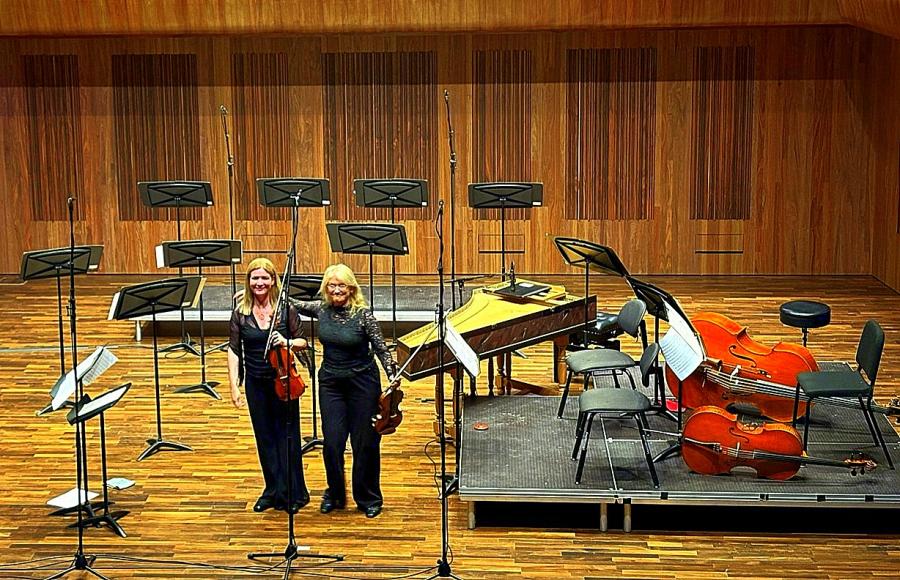
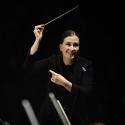
I always enjoy reading Michael Quinn's programme notes, but it seems rather restrictive to limit any "story" in Haydn's magnificently original "Farewell" Symphony, No. 45, to the gradual departure of the players in the famous Adagio sequence at the end, leaving only two behind at the end (the members of the Eisenstadt court orchestra were tired and wanted Nikolaus I to let them go home for the summer)."Agitated shop floor discontent" in the F sharp minor first movement? Not a bit of it: this was cosmic fury from the ICO as brilliantly driven by Widmann.
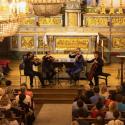
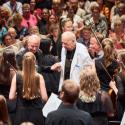
The long Adagio that follows, far from being about musicians grumbling and then accepting their "sorry lot", felt like walking on the moon, so eerily detached and hypnotic was this interpretation. The Minuet and Trio offers some of the typical Haydnesque wit, with superb work from the two horns in the trio, but the Finale begins with more Presto agitation, again searingly driven, before the Adagio leads the players away. I'm not sure that it's best played for comedy, though they all did it very well, Carolin raising a glass as she went, one violinist texting on her mobile phone. And the final duo was moving as it can be, despite the players delightfully milking the applause (Diane Daly and Oonagh Keoggh pictured above). More Haydn symphonies from this team, please, hard sell though it may be.