David Sington’s The Fear of 13 is many things – blisteringly immediate, compelling, emotionally devastating – but at times it may have you pondering whether it fits into any traditional “documentary” category.
Over the hour-and-a-half of its run, it has us readjusting our perceptions on that score, as well as teasing us slowly towards understanding its subject. The mystery starts with the opening screen title that tells us that, after two decades on America’s Death Row, a convicted murderer has petitioned the court that his sentence be carried out – that he be executed. The monologue that follows is the story of Nick Yarris, recounted in his own words; we’re told that the testimony has been verified. But is it a final interview given before that execution, or his story reprised in the words of an actor?
It’s the eternal paradox of documentary – the distinction between reality and artifice
Because the first and most striking thing here is the sheer professionalism of the “performance”: the combination and variety of timbre and rhythm is utterly gripping, which puts the result right up there with the best theatrical monologues (Harry Lloyd in Notes from Underground comes to mind from recent such offerings). It’s not a single-shot performance, however: visual elements – scenes of prison interiors, the story of Yarris’s escape, episodes from his youth, and the changing circumstances of his life in prison – are intercut in hauntingly spare images, while elements of sound and music, though used sparingly too, add considerable impact. But we don’t hear another voice, or indeed see another face, I think, throughout the duration of the work.
Yarris has one line which seems particularly relevant, “True storytelling is the telling of life” (the phrase might almost serve as a slogan for the BBC Storyville strand, which contributed to the production of Sington’s film, and where it will hopefully receive its UK small-screen premiere). Or, as the director himself has written: “We live the events of our lives as experience, but we recall them as stories.”
 That’s essentially the transformation that we see here – Yarris turning the 23 years he spent in prison, and his life before that, into narrative. Even here we may be wary: the skilled narrator – when a performer of such accomplishment – can equally be unreliable; we may wonder if we’re being taken in to accept his side of the “truth” (the objective truth, that is, as glimpsed in old newspaper cuttings documenting the events that we hear about).
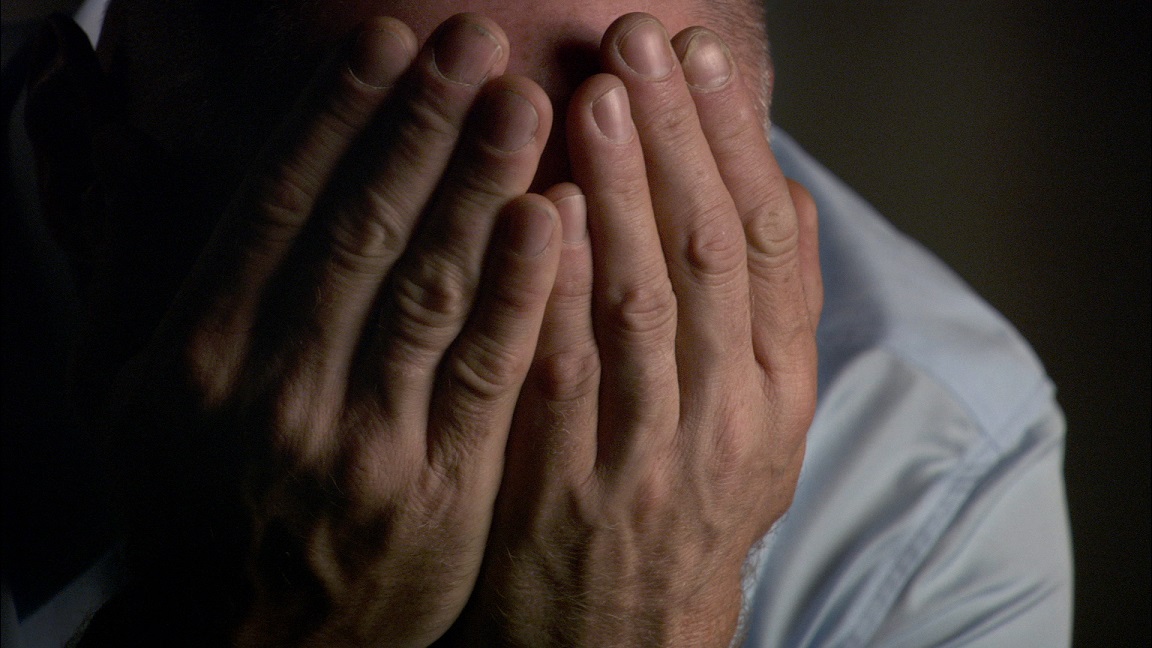
It’s the eternal paradox of documentary – the distinction between reality and artifice. For there’s no doubt that The Fear of 13 is a “construct”. All we see is Yarris, dressed in a crisp shirt (main picture), sitting in a single chair in an anonymous space (it might be, though doesn’t look like prison). Even if you know that the film was assembled out of four days of interview, there’s no answer to the question of directorial intervention.
Did Sington rehearse episodes with Yarris, and then select the best take of each? (With such a “performance” – that term contradictory in itself, in a documentary – it’s almost impossible to believe that everything we see on screen came first time.) How much did he manipulate the narrative order to create suspense and tension, in particular holding back the final, utterly devastating reveal? Collusion, collaboration, or what?
 Until the DVD comes out – unless you’re watching the film with a director’s Q&A – we’re going to be left guessing on such issues. As well as exactly how Sington found Yarris (further real-life details of his story can be found on Google, of course, but best to leave any such investigation until after viewing the film). We can only presume that contact was made, the director heard the story, felt that the protagonist could convey it in a manner that would grip, and that they established loose “ground-rules” for the process. Imprecations that the director could have made his film in a different way seem frankly irrelevant: he chose to make this film, this way. If you want to make a different film, find a different subject: Clive Stafford Smith’s Injustice is full of such Death Row tales.
Sington judged right: Yarris is almost preternaturally gifted at holding the viewer’s attention, his repertoire varying. He can adopt a seemingly casual tone: “I always wanted to tell somebody that,” he says about an early reflection on the different ways in which time seems to pass when you’re in solitary confinement, a cajoling tactic almost adopted from Coleridge’s Ancient Mariner. He’s formidably powerful when describing the prison atmosphere in the Pennsylvania jail where he’s incarcerated, its Quaker-inspired deliberate simplicity, the imposed rule of silence that is so poignantly broken in an episode involving two fellow inmates.
Then there’s the agony of the long years of tribulations over DNA analyses that make him into almost a contemporary Job (except that the environment from which he started, the one subject we don’t really hear much of here, doesn’t sound exactly auspicious). And the change of perception that came with his self-education, as he effectively taught himself to read and became absorbed in words and books. (The film’s title alludes to one of the words he discovered, “triskaidekaphobia”, though somehow its associations seem wider, referencing undefined expectations of bad luck.)
If any of the above sounds somehow abstract, The Fear of 13 is anything but. This story is as raw as they come, its impact compounded incrementally by the structure Sington has given his film.
Overleaf: watch the trailer for The Fear of 13