There will be blood. And expletives. And puppet sex that makes Avenue Q look positively monastic. But perhaps most shocking of all is that beneath the eye-wateringly explicit surface of Robert Askins’ provocative farce, which began life Off-Off-Broadway in 2011, lies a sentiment that makes this one of the cuddlier shows on the West End. Albeit one that features a graphically detached ear lobe.
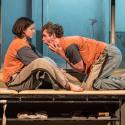
Askins’ play is based on childhood experience. Growing up in small-town Texas, he assisted his mother with puppet ministry – essentially telling Bible stories via Sesame Street. Like his protagonist, Askins struggled following the death of his father, falling into alcoholism. Jason (Harry Melling, pictured below) instead has Tyrone, the sentient sock puppet who begins to voice everything the cowed teenager can’t express, including lust for fellow student Jessica (Jemima Rooper), and resentment towards bullying bad boy Timothy (Kevin Mains) and evangelical Pastor Greg (Neil Pearson). It’s also a direct challenge to mother Margery (Janie Dee), who is zealously burying her grief in the good puppetry works of the “Christketeers”.
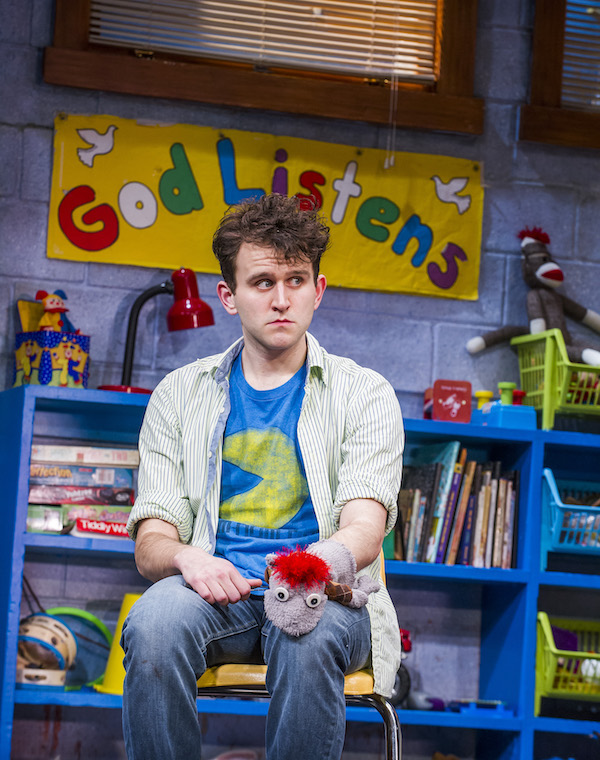 Red menace Tyrone makes a memorable first entrance, emerging from a mild Abbott and Costello skit to roar obscenities at Jessica. In a tour-de-force sequence from Melling, Jason later tries to reason with him, but the foul-mouthed id is out of the box. We’re soon into Exorcist territory, with Tyrone’s reign of terror – which includes a Changing Rooms makeover of the church basement (think crayoned pentagrams and crucified Barbies) – ascribed to external Satanic possession. Heaven knows it’s easier than acknowledging that these people are struggling, and the church may not be their panacea.
However, this is less Book of Mormon religious satire, more a general warning about the hypocrisy, self-destructiveness and ultimate futility of repression. Jason’s father ate himself to death rather than express his unhappiness, and his widow, after rejecting the pastor’s oily advances, secretly feeds a dark need to hurt and be hurt by engaging in violent sex with Timothy. But Askins’ message is muddled by the puppet’s descent into Grand Guignol horror. When does seeking cathartic release become monstrous? The vague take-away is that everyone should find a happy medium, which also applies to masculinity, as developing adolescent Jason seeks a balance between crippling shyness and nastily misogynist alpha male lechery.
This lesson comes during a heart-to-heart riotously undercut by puppet coitus, which renders their human alter egos awkward voyeurs. More could be done to address Jessica’s choice of avatar – the bookish brunette models her puppet on Dolly Parton – and generally to flesh out the supporting characters. Askins has created a series of increasingly outlandish set pieces, which, in Moritz von Stuelpnagel’s turbo-charged production, are frequently hilarious, but the whole lacks coherent development. A superfluous prologue and epilogue graft on blunt critiques of religion’s collective morality, while the serious issue of how to address mental illness – with or without ecclesiastical intervention – is sacrificed for bigger, broader and bloodier episodes.
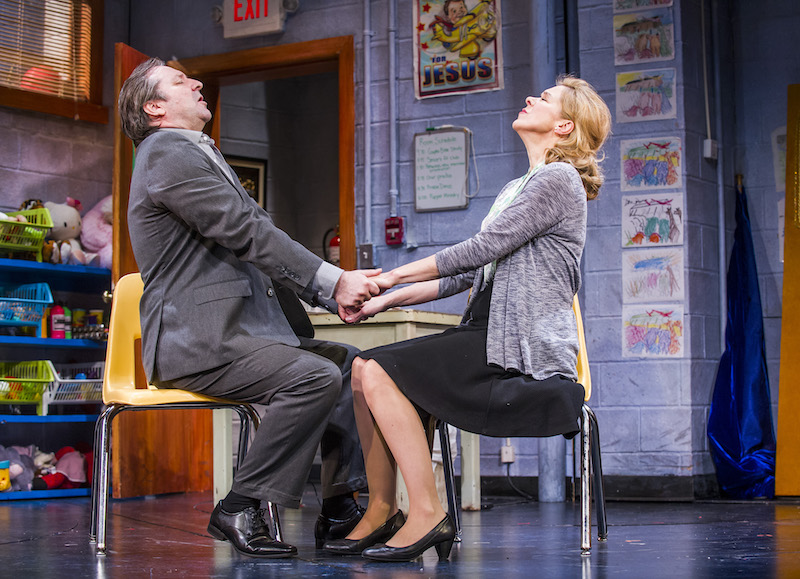 Dee (pictured left with Neil Pearson), herself a practising Christian, finds pathos in the bereaved Margery’s crisis of faith, and Mains is oddly touching as eager horndog Timothy, but they haven’t quite mastered the rhythm of their collaborative physical comedy. Pearson and Rooper, though underused, give strong, grounded performances as the lonely pastor and eminently practical Jessica. However, the real draw is Melling, whose rendition of the “Dr Jekyll and Miss Piggy” split personality is sensational – technically accomplished and deeply felt.
Beowulf Boritt’s revolving set ran into difficulty on opening night, and there are other kinks to work out over the run, such as inconsistent accents. Askins’ obsessive puerility won’t be to everyone’s taste – even if it does accompany a tale of growing pains – and his approach is frustratingly scattershot. But the exhortation to face our demons lands with real passion, even if it comes via the mouth of a diabolical puppet.