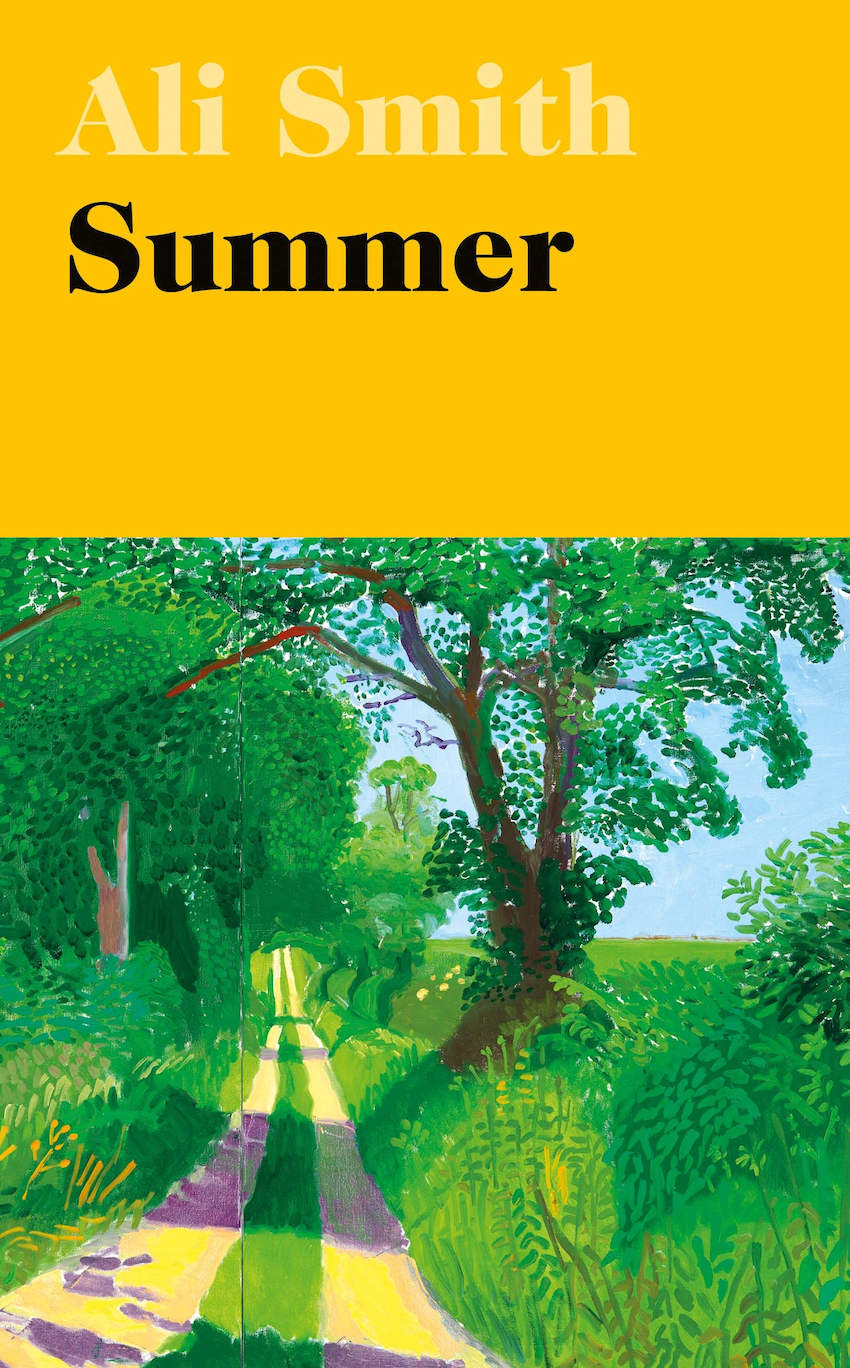
It is no surprise, given her Cambridge Intellectual literary style, that Ali Smith’s Summer is multi-layered, referential, and filled with cameos from giants in the fields of art and science. It is arguably the best of the four novels in her Seasonal Quartet, pulling through the threads from the previous three, without opting for easy conclusions or tying all the ends together neatly. Summer is also not as challenging as some of her texts can be, which (admittedly) is a bit of a relief.
Summer begins with Grace (former actress), her ex-husband and new partner who live next door, and her children Sacha (young activist) and Robert (a boy in the mould of Dominic Cummings et al). The siblings’ opposition initially seems too stark, too state of the nation, but this is softened by their love and sympathy for one another. Beyond the political dimension, one of the most peculiar things about Summer is how current it is. This is surely one of the first works of published fiction to describe a Covid-world. The Seasonal Quartet was sparked by the Brexit vote, but, depressingly, Brexit felt like nothing new, just a reiteration of old oppositions. This last book feels very fresh, because the pandemic is such a shock in itself. Smith has managed to achieve something that is particularly difficult – to write a fiction about the present without sounding naff. She has fallen a little into the pitfall of the hopeful, proselytising liberal, but this is tempered and questioned somewhat by the character of Robert. She writes him and other young characters very well, with nothing of the awkwardness of other older writers.
Summer echoes many texts (A Winter’s Tale, David Copperfield, the story of Hero and Leander, etc.), as well as the other novels in the quartet, and is underpinned by the story of Einstein in Norfolk. Smith’s Joycean trick of writing a novel that, seemingly linear, has cyclicality and an iceberg-like depth, allows for continuous literary detective work. To follow one strand, the book almost ends on Roughton Heath, near Cromer, where Einstein stayed during the war. Philip Glass collaboratively created Einstein on the Beach as a document of this time. When originally conceived, the piece was potentially going to be about Chaplin or Hitler, both present in Summer. Einstein’s exile is similarly another echo in the text. The opera is cyclical, with Einstein’s own ideas of connectedness explored. So is Summer itself. I could go on endlessly scrolling through Wikipedia, but you get the picture. There’s something very digressively Sebaldian about Summer as well, in particular its part setting in Norfolk.
Summer is a well written document of the present, its relevancy alone a motive for reading. There is a poignancy to it which steers clear of a trite ending but allows for moments of beauty and quiet perceptiveness along the way. It can sometimes seem a bit awkwardly obvious, especially when the wartime internment of Daniel Gluck is contrasted with the internment of political prisoner/refugee Hero (Anh Kiệt) in the present, but even this is relatively nuanced. Pockets of other stories within the larger arc are just as enticing as the main tale. Nothing feels superfluous, and all things are linked, no matter how obliquely.
- Summer by Ali Smith (Hamish Hamilton, £16.99)
- Read more book reviews on theartsdesk