

Not to be confused with Savages, the Oliver Stone film of 2012 about marijuana smuggling, Savage is a story of New Zealand street gangs: how to join and how to escape, which, when you’ve got the words Savages and Poneke (the Maori name for Wellington, where the film is set) tattooed on your face, like Danny, aka Damage (Jake Ryan), is not going to be easy.
There’s a lot of standing around in the dark beside fires in braziers in scabby back yards, beer-drinking, claw-hammer-wielding and endless grunting of the F and C words. Most of the gang-members, impressive though they look (many of them first-time actors) are too interchangeable in their toxic masculinity for us to care much what happens to them - and there's little variation in tone.
There are occasional green vistas, but this is not scenic New Zealand territory. It should be all the more interesting for that, and James L Brown’s cinematography, with its claustrophobic interiors, is darkly atmospheric, but the film doesn’t quite succeed in bearing the weight of its subject matter. 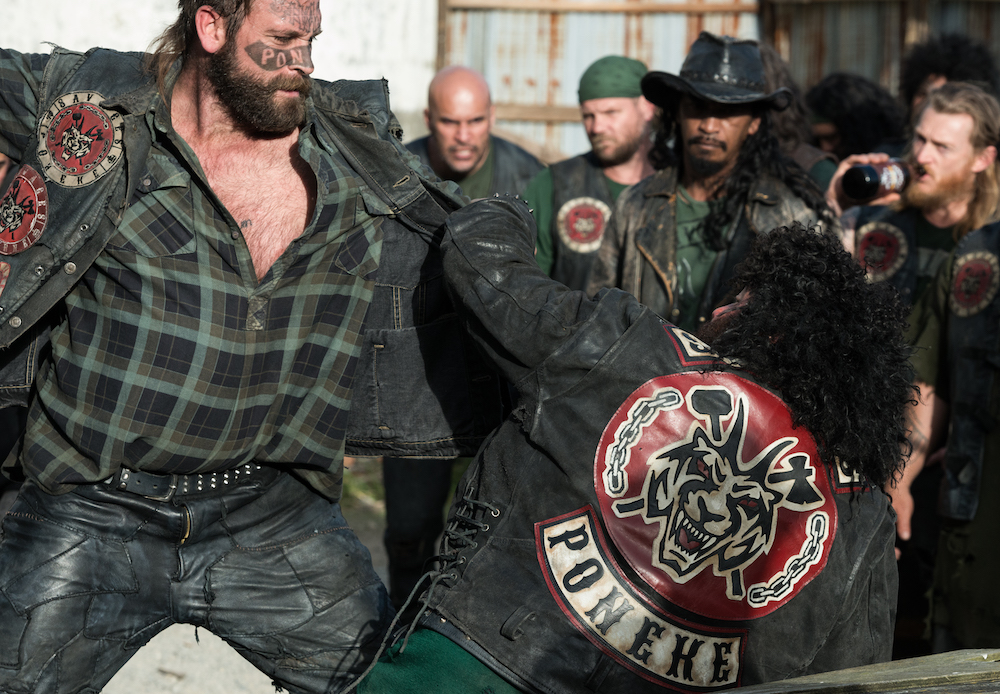 The strongest scenes in writer/director Sam Kelly’s debut feature (he based the Savages gang on the Mongrel Mob and Black Power gangs in the Porirua area of Wellington where he grew up) are those rooted in Danny’s childhood in the mid-Sixties, before he becomes savage Damage.
It’s a relief to escape the monosyllabic gang-bangers for the flashbacks of home, even if it’s a sad Dickensian set-up: violent, authoritarian father and cowed, loving mother who struggles to put meat on her family's plates (she can only manage mashed potatoes and carrots). Danny, a sweet-faced boy (played as a child by a wonderful Olly Presling) protects his sister from their dad’s attacks but in the end no one can protect him from being sent to borstal after he’s caught stealing food, hoping to keep the family afloat. He gets no thanks for trying.
This state-run boys’ home is a breeding-ground for gangs. It's a brutal place full of sadistic and abusive staff, and mainly Maori and Pacific Islander kids. Danny, a Pakeha (European) gives as good as he gets, beats up the teacher and meets Moses (Lotima Pome’e), his future gang mate and new brother in adversity. There’s a beautiful, mysterious scene where the boys lie on the floor, their heads emerging from the rows of cells, as the song “Calling my Children Home” plays in the background. It promises originality and depth but it's short-lived.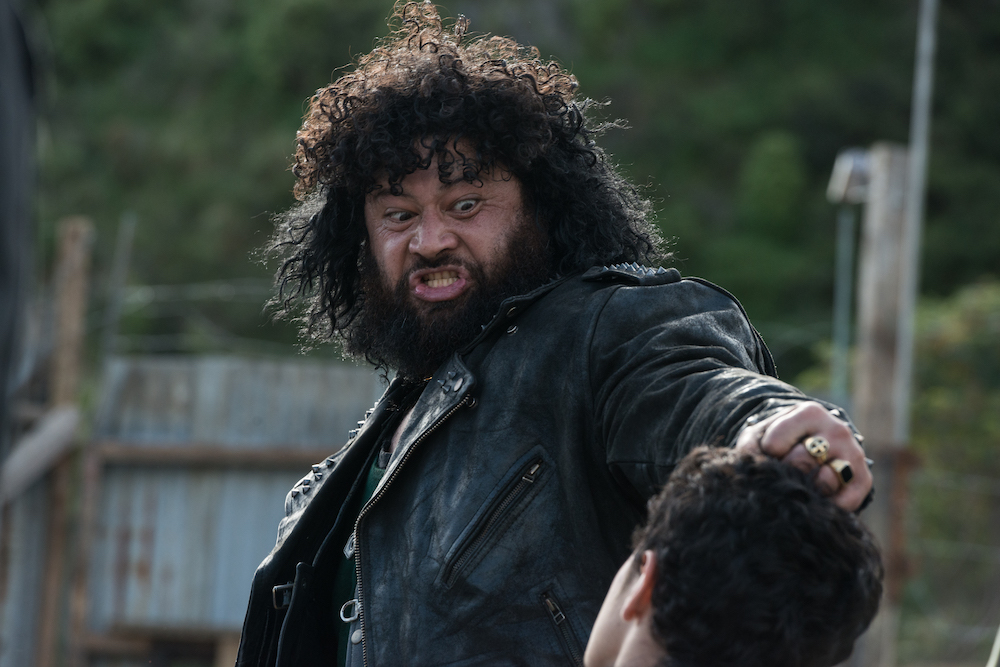 Soon Danny and Moses have taken off on their own, living rough, stealing cars and creating the Savages, though the details of survival in the Seventies are glossed over. “We’re just fuckin’ animals,” says Moses. “Society fucked us, you know what, fuck them. We’ll be someone.” Well, that’s clear. But although Moses (played as an adult by John Tui, pictured above) is president of the gang and Danny his sergeant at arms, life doesn’t get easier. There’s constant back-stabbing, treachery and bloody fights.
Danny begins to lose faith – no one likes him anyway, apart from Moses, perhaps because he doesn’t flinch from handing out brutal punishments, though he’s unable to carry out a killing ordered by Moses. He’s not capable of affection towards women – one valiant lady gives it a go but when she tells him to slow down and relax, he’s stymied and lets out a Savage battle-cry, which isn’t a turn-on. At regular intervals he drives home and observes his family from afar. He still longs for his mother. But as his brother Liam (Seth Flynn) tells him, “Mum doesn’t want to see you. Why would she? You’re just like the old man.”
It’s a depressing story, though Danny’s protection of Red (an impressive Poroaki Merritt-McDonald), a young “prospect” who’s suffering an abusive slave-like internship involving being beaten and picking up broken beer bottles before he is patched in as a full-blown Savage, allows a glimpse of redemption, as does Red’s love for his mild-mannered girlfriend who leaves the dangerous gang world to go and stay with her auntie, with Red in desperate pursuit. The final scene, a mother and child reunion, is too sentimental for its own good, and you wish Kelly had explored race and class issues - and whether gangs can transcend them - and let his characters develop with more subtlety.












Add comment