

Austrian novelist Stefan Zweig gets an acknowledgement in The Grand Budapest Hotel’s closing credits and if you’ve read Zweig’s Beware of Pity you’ll recognise why, Wes Anderson’s Mitteleuropa setting and penchant for flashbacks within flashbacks framing a complex narrative that becomes more affecting with repeated viewings. There’s an awful lot going on, the film’s 100 minutes taking in below-stairs hotel shenanigans, love story, murder mystery, prison break and a wildly extended chase, and though first released back in 2014, this Criterion reissue confirms its status as a modern classic. Set in the fictional country of Zubrowka, the story opens in the present day with a young girl visiting an author’s grave clutching a copy of the titular novel, jumping back to a 1985 sequence of the writer (Tom Wilkinson) reading an excerpt.
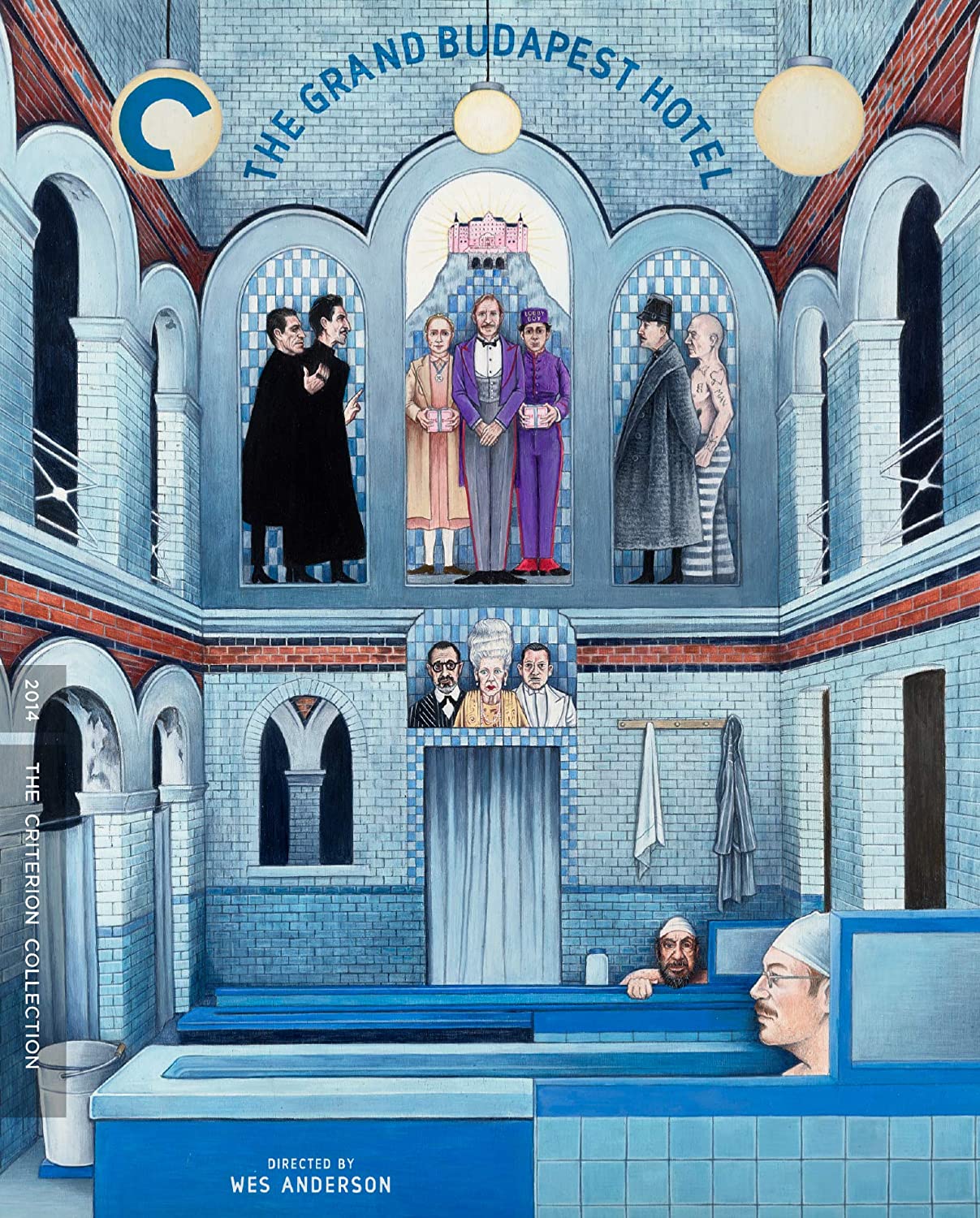 The teenage Zero (Tony Revolori) begins his career as a lobby boy under the tutelage of Ralph Fiennes’s Monsieur Gustave H., a charismatic dandy with a penchant for seducing elderly female guests. One of whom, a near-unrecognisable Tilda Swinton, dies unexpectedly, bequeathing Gustave a priceless painting. This MacGuffin is one of several nods to Hitchcock, with train journeys staged like those in The Lady Vanishes and a reference to the Mount Rushmore sequence in North by Northwest. That the plot is ridiculously convoluted shouldn’t bother anyone; the performances carry the film. Fiennes has never been better, and it’s fun to see him so visibly enjoying himself, Gustave’s hidden depths revealed as the action progresses.
The supporting cast is starry even by Anderson’s standards, with appearances from Edward Norton, Jeff Goldblum, Mathieu Amalric, Owen Wilson, Jason Schwartzman, Harvey Keitel and, inevitably, Bill Murray. Willem Dafoe’s hitman chills, and there’s a sweet turn from Saoirse Ronan (below, with Revolori) as Zero’s love interest. The verbal and visual gag count is high, most of the funniest lines snapped out by Fiennes at breakneck speed. The shadows lengthen: Edward Norton’s police chief becomes a genuine threat once fascists have commandeered the hotel, and there’s a poignant moment when Zero tells Gustave his back story.
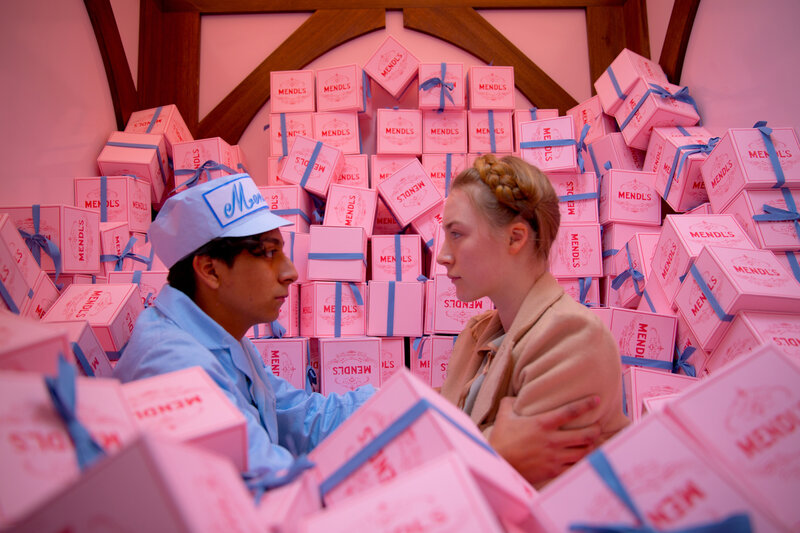 Different time periods are demarcated with different aspect ratios, and the art design is exquisite. The Grand Budapest’s wedding cake façade is a fake but the spectacular interiors are real, the vast lobby actually a disused department store on the Germany/Poland border. It’s alarming to compare it with the dilapidated late 60s Eastern Bloc incarnation, all exterior stucco removed and the foyer decked out in unappetising browns and oranges. So much care has been invested in the smallest of details, items such as cake boxes, bank notes, perfume bottles and ID cards totally convincing. And therein lies the wonder and magic of this film, that something assembled by Anderson with such ruthless precision can be so moving. Alexandre Desplat’s evocative, jangly score, all balalaikas and cimbalom, is a treat, and there’s a sly joke in the final shot, the reader paying tribute to a character we’re not really bothered about. Copious extras include extensive behind the scenes footage and storyboard animatics, plus a commentary with contributions from Anderson and Goldblum.









Add comment