Tenebrae in tenebris: put more plainly, a top choir that’s anything but shadowy, except when it needs to be, doing its bit for the darkness of Maundy Thursday. The thoughtful plaiting of Bach motets with three Tenebrae Responsories and other works by our top choral composer, James MacMillan, worked well until the last work on the programme. Then they had to go and spoil it all by premature ejaculation.
Personal context: as an agnostic, I value this stage in Easter week as a time for meditation on suffering, compassion and death, never more needed than now. Two year ago, when concert halls were firmly shut, St Mary's Abbot Church in Kensington was offering a Maundy Thursday service with a choir of five. The poignancy of candles lit and then extinguished, offering a space for reflection in the darkness at the end if you wanted it, struck me as the most moving Easter ritual I’d experienced.
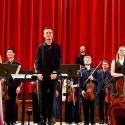
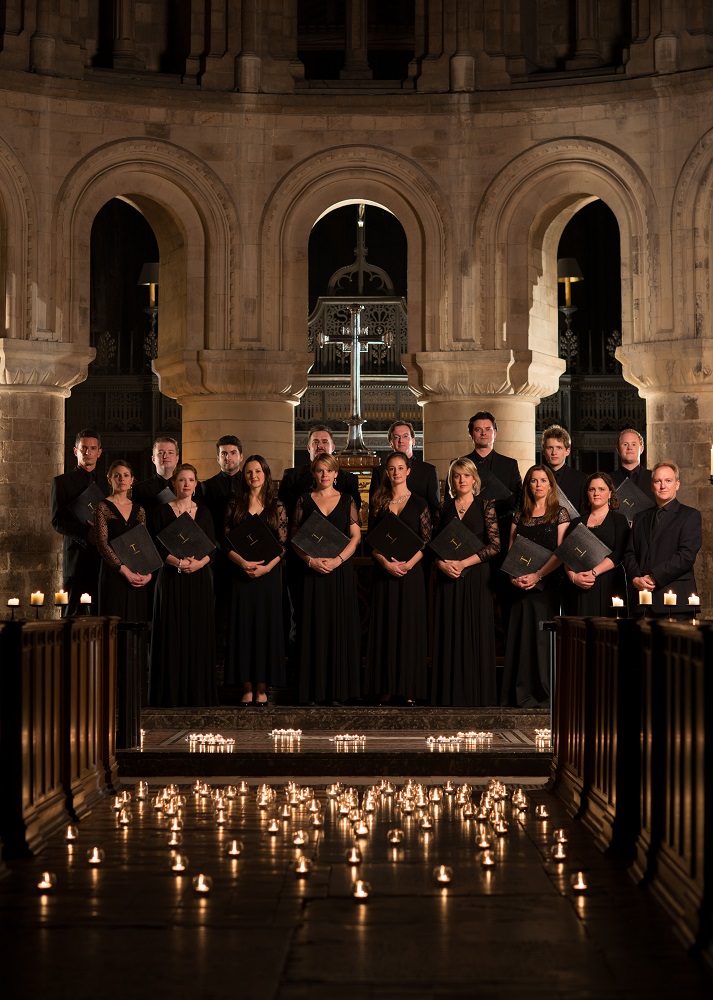 Here in St John’s Smith Square (Tenebrae pictured right at St Bartholomew's) candelabras around the concert platform suggested we might be in for similar atmospheric circumstances. But the candles turned out to be window dressing for filming; though it added to the occasion to see the chimney pots and pollarded London planes outside the big window slowly swallowed up by darkness, there was to be no snuffing-out of the light within. Instead, after the radiant beauty of MacMillan’s Henry Vaughan setting, I saw Eternity the other night, we were bounced rudely into Bach’s double-choir spectacular Singet dem Herrn. It might have been personal irritation at the circumstances, but I heard no real joy in the singing of the outer portions; maybe I’m still hungover from the elation of a Messiah from the Irish Baroque Orchestra and friends which had been acceptable for its great blazes on Palm Sunday before the week’s plunge into sobriety.
Undoubtedly, though, Tenebrae do the quiet stuff beautifully, so the central intermingling of chorale and “aria” could have worked in isolation at the end of the concert. In the overall programme, MacMillan came off better than Bach, where semichoruses for Komm, Jesu, Komm and Jesu, meine Freude really needed all individual voices to be of soloistic quality; not quite all were. The full forces gave us all the necessary strangeness and spirituality of MacMillan’s three Tenebrae Responsories and his equally challenging Miserere.
So widely does he range in style and effect that you’re sometimes caught wondering about the coherence. But the striking othernesses mostly hold, above all the trills and ornamentations so stylishly handled by sopranos; and the solo voice which ends “Jesum tradidit impius”, fading into the distance as the singer leaves the stage, truly haunted (alas, no credits; texts and translations were provided, but nothing about the performers).
Above all, you’re struck by the connections in linguistic resonance between the two composers, MacMilan by no means cast in the shade; his word setting, starting with startling “crucifixissent”s in the first Responsory, is just as potent as the way Bach punctuates repetitions of the words “komm” and “nichts”. Enlightening indeed; but the trouble was too much concluding light in what should have been prevailing darkness.