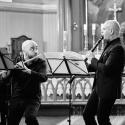
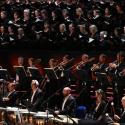
Vox Luminis, the vocal and instrumental group based in Namur and led by Lionel Meunier, continued their residency at the Wigmore Hall, hot on the heels of a memorable rendition of Bach’s B Mass at the Spanish Church a few blocks away, with an equally breathtaking evening of works by Bach and his predecessor as Thomaskantor in Leipzig, Johann Kuhnau.
There were two wonderfully celebratory Magnificats, the first by Kuhnau, and the second by Bach – his earlier version in E flat Major ( BWV243a). Although not specifically for Christmas, they have both traditionally been associated with the year’s most festive season. Kuhnau’s rarely performed work is a crowd-pleasing piece, held aloft by frequent and heart-warming interventions from four blazing trumpets and potent timpani. There are shades of parade-ground splendour here, but the call is for a heavenly host rather than a military one. Kuhnau's position as a precursor to the musical brilliance of J.S. Bach was in evidence, but his Magnificat, glittering with moments of contagious joy, could not rival the perfection that the later composer was to achieve.
Vox Luminis came into their own with the Bach cantata “Christen ätzet diesen Tag” (BWV63) – another piece in which tutti moments with scintillating brass and pounding percussion punctuated more reflective solo recitatives and arias. The essence of the ensemble’s approach to music-making lies in outstanding collective work. The word ‘ensemble’ reflects in this case most perfectly the theory and practice of togetherness. It is a word rooted in the idea of similarity, in this case the oneness of individuals amongst whom there is equality. In the cantata, as in the Bach Magnificat that followed, it would be inappropriate to focus on one name-checked singer rather than another, for they were not only uniformly excellent but equal, as were all of the instrumentalists. As in the best jazz, or in a hip-hop dance session in Detroit or Chicago, there were no stars, just brief moments of excellence appreciated by all in the ensemble. The shared enjoyment was palpable and helped create an exceptional atmosphere of collaboration. Lionel Meunier, not only surrounds himself with singers and musicians of a very high standard, but he has a remarkable instinct for casting the right voices to suite the emotional tone of each solo moment - recitative or aria. The piece featured crystalline sopranos, soulful altos and honey-toned tenors; voices that were never forced, expressed a perfect balance of technique and emotional expression. In the choral passages, which included the interpolations often included in the E flat major Magnificat, the individual voices always sounded distinctive – with a degree of separation that added to the richness and complexity of fugal progressions and harmonies.
The Wigmore Hall’s acoustic, enhanced by the sonic amplification and reach of the cupola that rises at the back of the stage, made the most of the ensemble’s sound, and the definition of the interwoven parts, though at times pushed some of the higher register notes - not least some of the sopranos and brass - to the edge of distortion. This might well be a function of the listener’s position in the hall, as some spots are sweeter than others, but for the tutti and forte moments in these works of glorious spiritual joy, the acoustic volume of the hall came close to over-reaching its ideal limits.
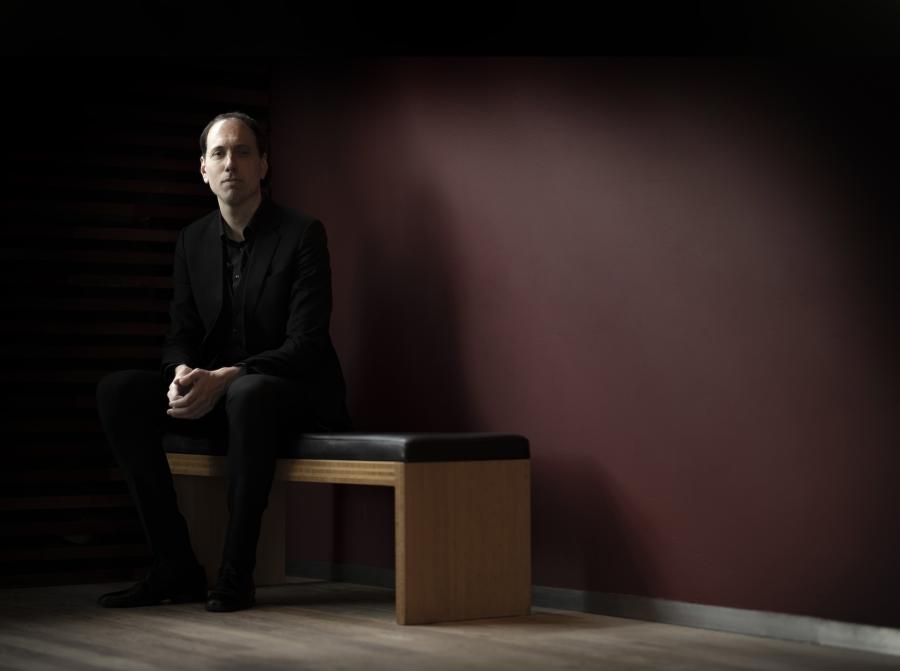
Lionel Meunier (pictured above) originally started Vox Luminis in 2004 as a pure passion project, a group of like-minded friends, who worked up one piece a year. That philosophy continues to inform his work today. There was tangible evidence – the often beatific look on a singer or instrumentalist’s face when the music or singing took off – of the shared joy that moves the ensemble. The continuo group were far more than an element in the background as they can be in other ensembles. Here, the grounding they provided drew strength from passion and a visceral understanding of their part in the harmonic and dynamic whole.
Lionel Meunier doesn’t really conduct – not in the usual sense of being a ‘maestro’, using ego to get the performance he desires. He is as if possessed, a kind of shamanic presence, enabling and inspiring from the back row, where he sings bass in the chorus. I was reminded, as they sailed so brilliantly through the Bach Magnificat, producing the kind of musical splendour that touches the spirit as well as the heart, of something the Africanist Robert Farris Thomson told me about some Bayaka singers I was filming in Paris 30 years ago. The singers – whose deeply spiritual and magical chants are directed at the trees of the forest that nourishes them – display one of the world’s great examples of polyphony, an ensemble of voices in which the individual vocal lines are all different, and only make sense when heard as part of a whole. Farris Thompson talked of “democracy in sound”. Perhaps not surprisingly, Lionel Meunier uses exactly the same words when describing the way Vox Luminis functions. He recognises that he has to be a leader but knows that the is sharing a vision with others, drawing strength from the singers and musicians, and channelling the energy that moves freely between them.
The quality of ensemble-work Vox Luminis (literally the voice of light) achieves inevitably draws the audience in, conjuring a kind of intimacy rare in music-making. This was not just a performance, but a collective experience in which the spirit at the heart of Bach’s music was being shared, a thrilling moment of illumination at the darkest time of the year.