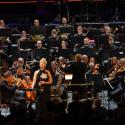
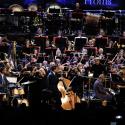
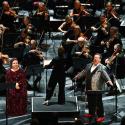
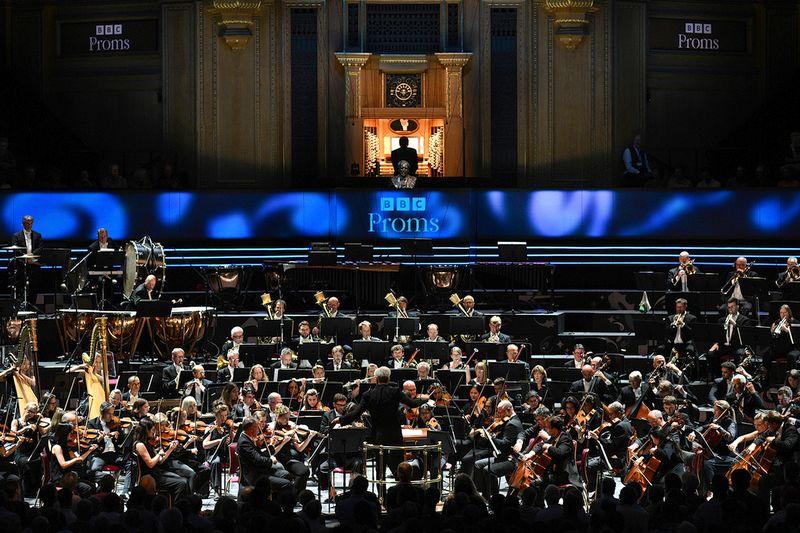
Had you been at John Wilson's Respighi spectacular on Friday, or heard it on BBC Radio 3/watched it on BBC Four, you might have perceived last night's journey up and down Richard Strauss's Bavarian alp as an extension of Albert Hall possibilities, complete with vast orchestra, offstage bands and full-blaze organ. While Wilson skilfully ran the gamut from ferocious blazes to the subtlest watercolour sketches, Edward Gardner encouraged the London Philharmonic Orchestra to go deep beneath the surface of Eine Alpensinfonie and takes its time in the long lines admiring the wonder of nature.
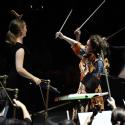
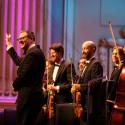
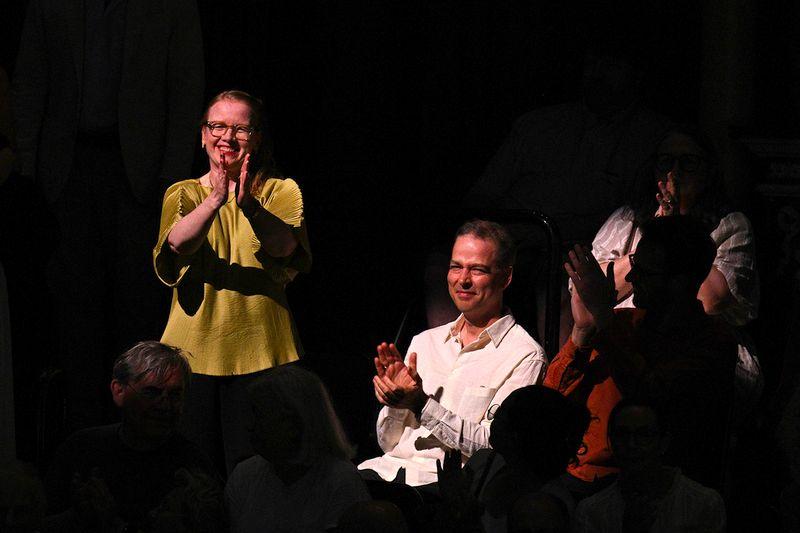
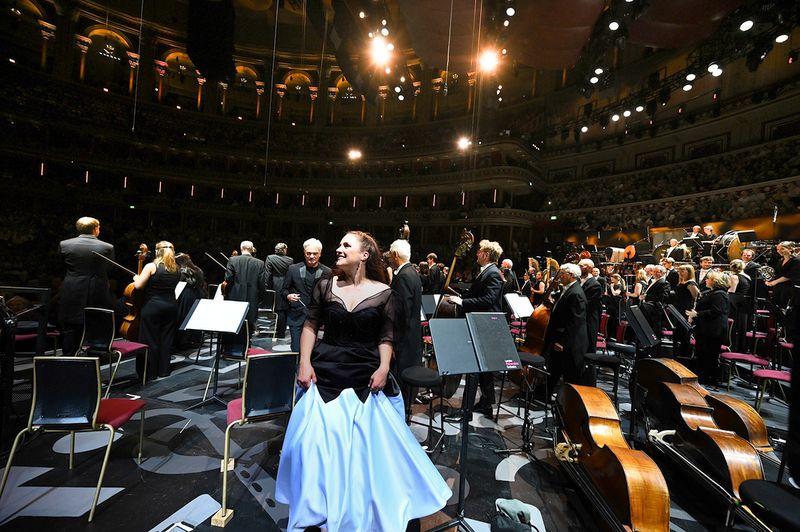
Norwegian composer Kristine Tjøgersen clearly does that too, though in a very personal way. Between Trees is mostly an effects-piece; the opening sounds are apparently "a squirrel eating" before we go underground to the root system and the fungal threads. It's partly a typical work of its time, more process than hook, but two-thirds of the way through, Tjøgersen (pictured below left applauding after the performance) decides to give romantic nature a look in too, with a touch of Sibelius in the horns, before reverting to type. Full marks to LPO woodwind especially for sustaining the fast-moving root noises. What it all adds up to I'm not sure, but it held the attention.
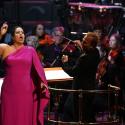
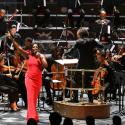
Soprano Louise Alder is one of the best musical communicators, and in her selection from Canteloube's Songs of the Auvergne, she expressed everything directly to the Prommers without the intervention of the music on a stand. Curiously it's not the famous "Baïlèro" which has the greatest impact; Alder's way with the words and the familiar twiddles in the orchestra couldn't conceal that it's overlong. To paraphrase Mrs Lovett in Sondheim's Sweeney Todd, querying Beadle Bamford as he works his way through "The Vicar of Bray", "how many more verses are there?"
The most exquisite number was the one with the fewest words, that of "La delaïssádo", "The Abandoned Shepherdess", where Alder and the orchestral spareness so atmospherically shaped by Gardner held the sad scene from first note to last. The rest was pure charm, Benjamin Mellefont matching Alder's artistry in his solo between the "Two Bourrées", the soprano deft with the comedy of "Lou Coucut" ("The Cuckoo").
Countless Alpine Symphonies on from when I first heard the work live - in the Royal Festival Hall, my companion defining its impact as that of "an angry rice pudding" - I've come round to the view that Strauss's last (1915) symphonic poem is possibly his most profound symphonic poem. Apart from the sheer feet of steering us in 45 minutes seamlessly from night to mountain peak and back to darkness again, the composer finds space for melodic reverie between the pictorialisms.
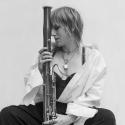
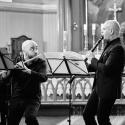
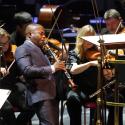
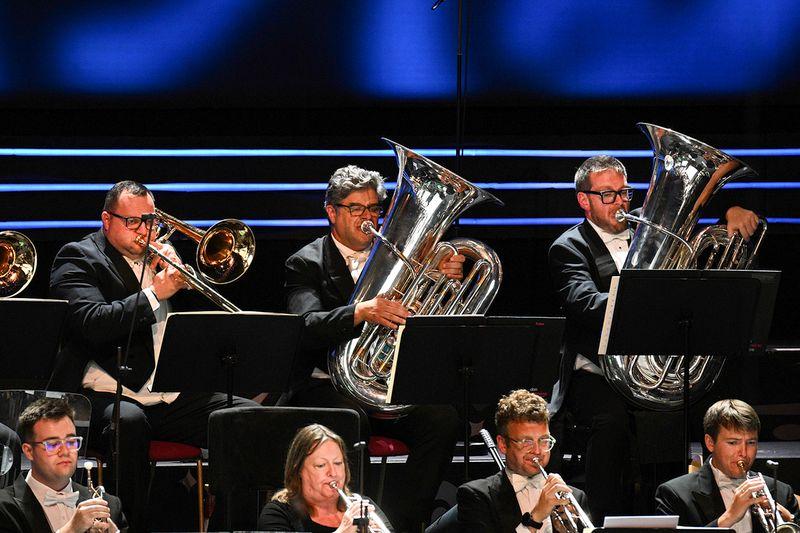
Brass daunted us with the mountain shape near the start, the two tubas (LPO veteran Lee Tsarmaklis and Ben Thomson, pictured below) revealing more of their parts, muted or otherwise, than I've ever heard. As for the horn-capped group calling across the valleys, there was good sense in having LPO principal Annemarie Federle, appointed in 2023 and still only 23, crowning their cries from the gallery: never have this lot sounded more lushly exuberant.
The profundity came from Gardner's encouraging the strings to take a more sustained view than usual of the Alpine world around them. It's become too customary to sprint through the chamber-musical passage before the mountaineers' wandering by the brook; this had ecstatic space. Same, too, for Ian Hardwick's wondering solo at the summit, given all the time in the world.
As textures thicken still further after the peak achievement, the Albert Hall became even more necessary to offer ambience to the menacing side of the mountain, organ thundering in for extra effect. Even so, Richard Gowers produced some very strange chords during the lengthy storm - justified, by the way, as I know from one raging the entire time I spent overnight in a mountain refuge - while the extreme demands placed upon the players showed in a weird squiggle on a trumpet top note (Tom Nielsen otherwise heroic) and the clarinet's squeal in the calm before the tempest petering out before its trilling end.
These would be candidates for patching if the live recording were going out commercially. But they're very small quibbles indeed given the breadth and beauty of the bigger picture. It always amazes me how Strauss steers us from sunset glow to darkest night again, the "dying" of the mountaineers' theme on strings suggestive to me that the climbing youth of Europe were being wiped out in multitudes at the time of the work's completion. Greatness? Absolutely, and Gardner realised it.