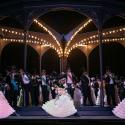
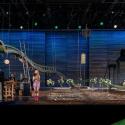
In the end, it’s all about the oranges. They adorn the programme that accompanies Harry Fehr’s intelligent new production of Handel’s Ariodante for Scottish Opera. More importantly, they’re prominent in designer Yannis Thavoris’s clinical steel-and-glass set, growing on carefully groomed bushes in six neat tubs, placed meticulously below warming light bulbs, protected from the gales and snow drifts outside by a wall of glass.
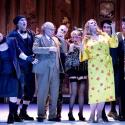
They're a simple but highly effective metaphor in Fehr’s deeply unsettling production, which relocates Handel’s opera – originally set in an unrecognisible, age-old Scotland – further north, in some wintry, puritanical, fundamentalist military state, full of bowing servants and pristine uniforms, and with the motto ‘Trust in the Lord’ etched immovably into the walls.
 Those oranges look charming at first, tended and cherished by scuttling servants, but gradually serve to encapsulate the claustrophobic, artifical world that Fehr has created for the opera, one governed by its own rules that have more to do with dogma than with nature. In this sinister environment, Handel's Othello-like tale of deception, jealousy and revenge plays out almost as though among children, hothoused like those oranges in this strangely antiseptic but horribly fascinating environment, and knowing little except its rules.
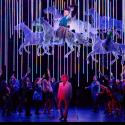
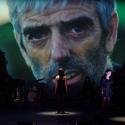
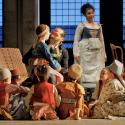
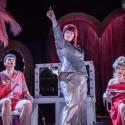
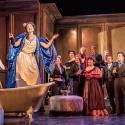
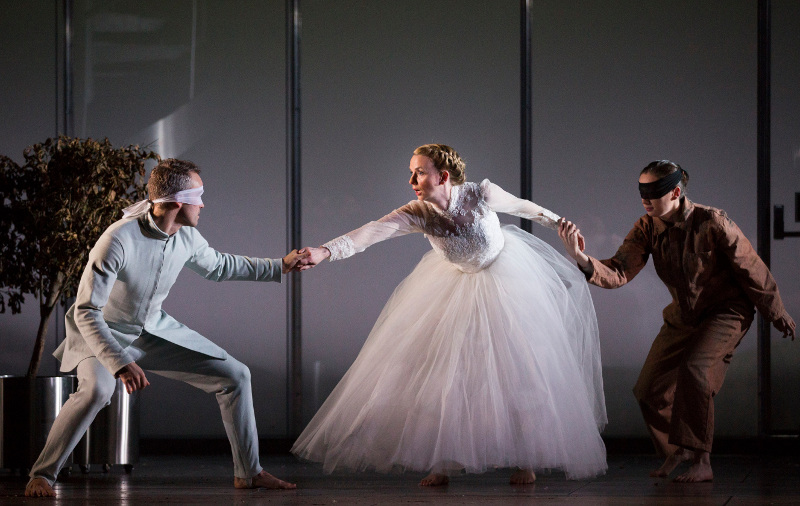
Fehr’s production is brave, unafraid of unsubtle imagery (a brief opening scene with two hanging bodies twitching on a gallows tells us all we need to know about this society), and very strong, both visually and conceptually. His cast is almost universally strong, too. Australian mezzo Caitlin Hulcup is convincingly boyish and baffled in the title role, a young lover mistakenly convinced he’s been wronged, with a broad vocal range (and particularly resonant lower notes) and a remarkably expressive performance of "Scherza infida", probably the production’s standout aria. Sarah Tynan (pictured above) is equally convincing as Ginevra, the leader’s daughter and Ariodante’s intended, disarmingly and slightly unnaturally beautiful in her immaculate robes and jewellery – who suddenly finds herself facing death after being accused of adultery. Tynan is clear and ringing with a bright soprano, and cracks up convincingly under the strain of it all.
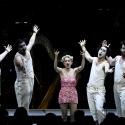
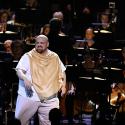
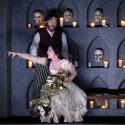
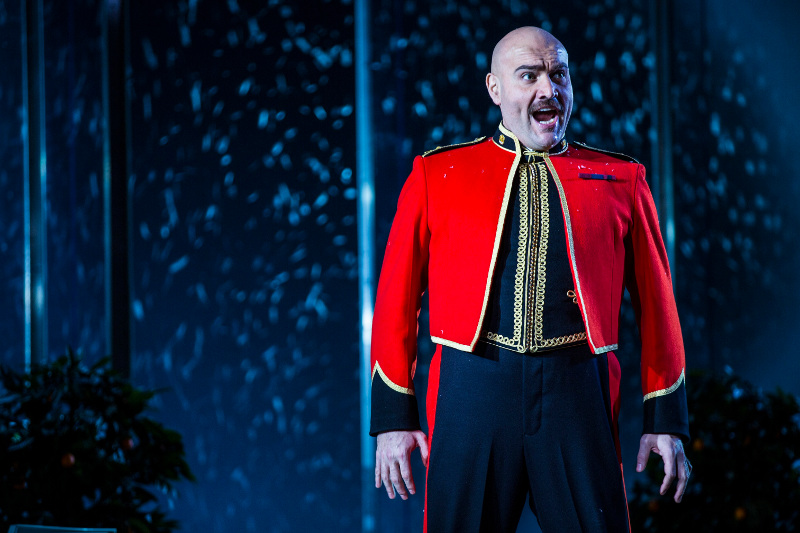 Neal Davies commands the stage as the community’s mostly benevolent leader, and tenor Ed Lyon gives a fine, nimble performance as Ariodante’s brother Lurcario. The one mystery, however, is the villain Polinesso, whom countertenor Xavier Sabata (pictured above) plays – inexplicably – as a kind of camp panto villan, with not-so-subtle nods and winks to the audience, throwing up all kinds of questions about the motivations behind his deceit. In the end, it just doesn’t add up.
Conductor Nicolas Kraemer, making his debut with Scottish Opera, does a creditable, sprightly job in the pit, but it’s still a fair way off the crisp, incisive, shapely performances almost taken for granted from period ensembles. In the end, though, it’s the questions that Fehr’s staging raises that stay in the memory. And when those magical oranges are replanted to mark a return to the status quo at the opera's supposedly celebratory conclusion, you can’t help feeling – well, trapped. It’s a seductive nightmare that Fehr has created, populated by some fine actors and singers nonetheless.