It’s not a crowd-pleaser like Albert Herring, nor wittily fanciful like A Midsummer Night’s Dream or macabre like The Turn of the Screw and certainly not the classic that Peter Grimes has become, and until three years ago Glyndebourne had never even staged Britten’s Billy Budd. But Michael Grandage’s 2010 production was a sea-changer. Aided by Mark Elder in the pit, the director made his operatic debut with devastating simplicity, reminding us all of the power of this uneasy tragedy. This anniversary year the production returns, and though there are some significant changes among the crew of the Indomitable, the drama cuts more keenly than ever.
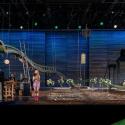
Embraced in the wooden hull of Glyndebourne’s intimate opera house it’s unnerving to find yourself staring into just such another on stage. Christopher Oram’s set invites the audience below decks into a claustrophobic cross-section of a British Man of War, trapping us inside this giant wooden rib-cage. We’re not even permitted a glimpse out onto deck and beyond for Billy’s hanging. The sea is a striking omission here, but then this is not an opera about the sea as Peter Grimes is; it’s an opera about men, whose evils and ideologies create the real landscapes that so fascinate the composer here.
 This is above all an ensemble piece. Britten’s orchestral writing – always so vivid – is rarely out of the foreground here as wind squalls bluster through the rigging and low brass mists loom over the water. The all-male chorus too are rarely absent from stage, their collective rhythms and rituals not just framing but fashioning the tragedy. Glyndebourne’s company is made for this kind of theatre, and though Andrew Davis can’t quite muster the same rhetorical clarity from the London Philharmonic Orchestra that Elder achieved, the singers bring their all – a physical force, when the whole chorus comes together, to equal Britten’s stormiest orchestral moments.
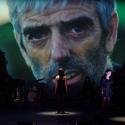
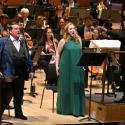
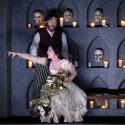
While the original Billy (Jacques Imbrailo, pictured right) returns, his gleeful energy radiating out among the dull greys and browns of the sailors, and bringing a vocal sophistication to match his dramatic innocence, there are big changes elsewhere. Mark Padmore (pictured below with Imbrailo) appears in his first major operatic role in the UK as Captain Vere. For a tenor so often associated with Britten’s music in the concert hall it shouldn’t be such a stretch, but Padmore’s is not a voice that has grown at the same pace as – say – Ian Bostridge’s, and there was a real question as to whether he would find the vocal space and power for the fury and passion of the latter sections of the opera. In the event he doesn’t quite, but his not-quite-success makes for a curiously plausible Vere – bookish and other-worldly against the hulking trio of Redburn (Stephen Gadd, voice aglow almost as much as his ruddy whiskers), Flint (David Soar) and Ratcliffe (Darren Jeffery).
 There’s no doubting the sinister force of Brindley Sherratt’s Claggart however, whose menacing physicality is offset by the beauty of his tone. His villain is all the more potent for his musical appeal, incongruous to magnificent effect in a moment such as his “Let him crawl,” of the recently-beaten Novice who cannot walk.
Elsewhere Peter Gijsbertsen’s Maintop is promoted to an excellent Novice, while Duncan Rock gives us a taste of what to expect from his Tarquinius in the forthcoming Glyndebourne The Rape of Lucretia as Novice’s Friend. Jeremy White’s Dansker is unusually gentle, and enormously touching in his final dealings with the condemned Billy.
Grandage’s operatic debut succeeds where so many fail by trusting the work he has chosen. Britten’s drama is so inherent in his music, itself so organic an extension of Forster and Crozier’s libretto, that it needs nothing else to work. You don’t even need to add water, as Glyndebourne have so elegantly proved here. This is production without revisionist agenda and without pretensions, a perfect piece of musical storytelling. It should be mandatory viewing for lovers and haters of opera alike.